
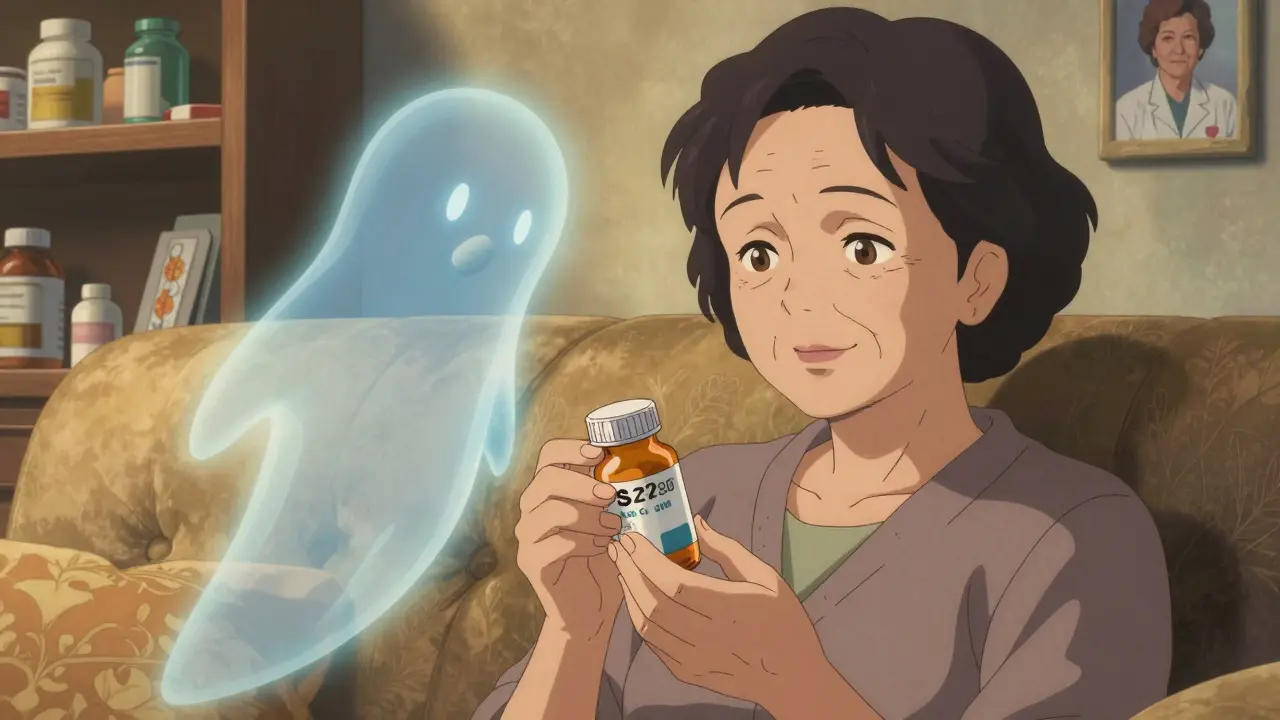
Have you ever wondered why someone on a tight budget keeps buying the most expensive pill, even when a cheaper one works just as well? Or why a patient refuses to switch to a generic drug, even after their doctor explains it’s identical? It’s not about ignorance. It’s not about laziness. It’s about behavioral economics.
Traditional medicine assumes patients are rational actors-weighing costs, benefits, side effects, and convenience. But real life doesn’t work that way. A 2022 study found that 68% of patients stick with their current medication, even when a cheaper, equally effective alternative is available. Why? Because fear, habit, and invisible mental shortcuts are stronger than logic.
Why Price Doesn’t Matter as Much as You Think
Most health systems operate on the idea that if you lower the price, people will choose the cheaper option. But data shows otherwise. Since 2010, prescription drug prices in the U.S. have risen 47% faster than general inflation. Yet patients rarely switch. Why? Because of confirmation bias.
When a drug costs more, people assume it’s better. A 2022 study by Cubanski & Newman showed that patients believe expensive medications are safer, more effective, and more reliable-even when clinical trials prove otherwise. This isn’t stupidity. It’s a mental shortcut. Our brains use price as a signal of quality. It’s automatic. And it’s powerful.
One patient I spoke with-a 62-year-old woman with high blood pressure-stayed on a $120/month brand-name drug even after her doctor switched her to a $12 generic. "I’ve been on this one for years," she said. "It’s the one my doctor first gave me. I trust it." She didn’t question the science. She trusted the feeling.
The Hidden Forces That Control Your Medication Choices
Behavioral economics uncovers the invisible forces shaping how we take pills. Here are the big ones:
- Loss aversion: We hate losing more than we love gaining. If you’re used to a medication, switching feels like a risk-even if the new one is better. That’s why only 50% of patients take their meds as prescribed.
- Present bias: We choose instant comfort over long-term health. One-third of prescriptions go unfilled because the patient doesn’t feel sick today. The future risk doesn’t feel real.
- Default settings: If a doctor’s electronic system lists a brand-name drug first, that’s what gets prescribed. A 2012 study showed changing the default order increased appropriate substitutions by 37.8%.
- Social norms: People follow the crowd. One HIV clinic posted signs saying, "92% of patients here take their meds on time." Adherence jumped 22.3%.
- Framing: Saying a vaccine is "95% effective" gets more takers than saying it’s "5% ineffective." The same fact, different emotion.
These aren’t theories. They’re measurable. A 2022 review of 44 studies found behavioral interventions improved prescribing behavior in 92.3% of cases. That’s far better than patient education alone, which usually boosts adherence by just 5-8%.
How Nudges Beat Lectures
Most healthcare systems still rely on brochures, pamphlets, and doctor lectures. "Take your pill." "Don’t skip doses." But research shows these rarely work. People forget. They get overwhelmed. They feel judged.
Behavioral nudges work because they don’t ask you to change your mind-they change your environment.
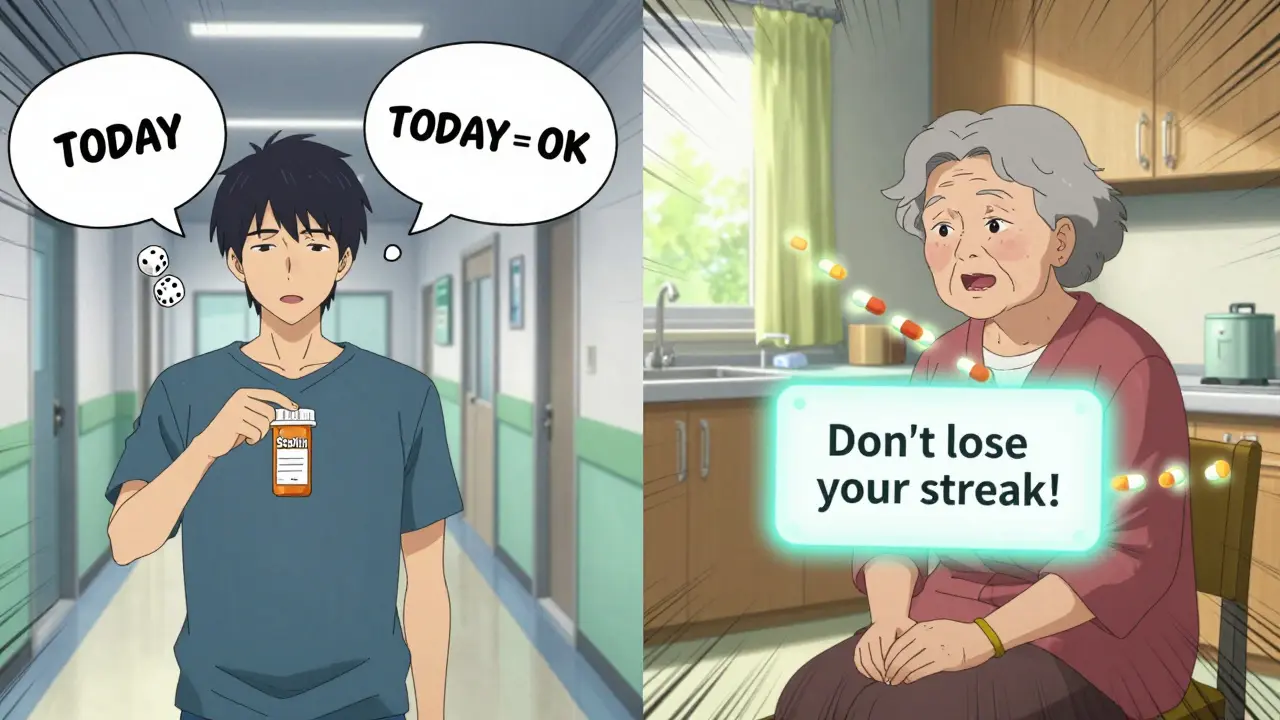
One program in Michigan used SMS messages framed as "Don’t lose your streak!" instead of "Take your medication." The first version improved adherence by 19.7%. Why? Because people don’t want to break a habit they’ve built. It’s psychology, not medicine.
Another study gave patients a small cash rebate if they filled their statin prescription for six months straight. The group that got the rebate had 23.8% higher persistence than those who didn’t. Money didn’t motivate them-it was the fear of losing what they’d already earned.
These aren’t gimmicks. They’re designed interventions based on decades of psychological research. And they’re being used by major health systems and pharmaceutical companies.
What Works-and What Doesn’t
Not every nudge works everywhere. Context matters.
For diabetes patients-who take pills daily and see quick results-behavioral programs have a 47.8% adoption rate. For cancer patients? Only 12.3%. Why? Because chemotherapy causes nausea, fatigue, and fear. The mental load is too high. A simple nudge won’t fix that.
Also, people with depression or anxiety respond 31.4% less to behavioral interventions. Their brains are already overloaded. You can’t just "nudge" someone out of a clinical depression.
And here’s the hard truth: if there’s no good alternative, nudges fail. If your only option is a $500/month drug with no generic, then reminding you to take it won’t help. You need policy change, not psychology.
But where there’s choice-where generics exist, where alternatives are available-behavioral economics shines. A 2022 McKinsey report found that pharmaceutical companies using these methods saw 17.3% higher medication persistence and 22.8% fewer discontinuations.
The Real Cost of Ignoring Behavior
Non-adherence isn’t just a personal problem. It’s a financial disaster.
The U.S. healthcare system loses $289 billion a year because people don’t take their meds. That’s more than the entire annual budget of Canada. And it leads to 125,000 avoidable deaths.
Why? Because a missed pill today can mean a hospital visit tomorrow. A missed insulin dose can mean an ER trip. A skipped blood thinner can mean a stroke.
And yet, most clinics still treat non-adherence as a compliance issue. "Why didn’t you take your pill?" they ask. But the real question should be: "What made it hard for you to take it?"
Four major barriers stand in the way:
- Polypharmacy: Each extra pill reduces adherence by 8.3%. If you’re on five drugs, you’re 40% less likely to take them all correctly.
- Asymptomatic conditions: If you don’t feel sick, you don’t feel the need to take the pill. Blood pressure meds? Cholesterol pills? Adherence is 32.7% lower than for drugs that relieve pain or cough.
- Negative beliefs: 41.2% of people stop their meds because they believe they’re harmful, unnecessary, or "just for profit."
- Mental health: Depression cuts adherence by 28.4%. Anxiety? Another 19.1% drop.
These aren’t laziness. They’re systemic failures. And behavioral economics gives us tools to fix them.
The Future Is Personalized Nudges
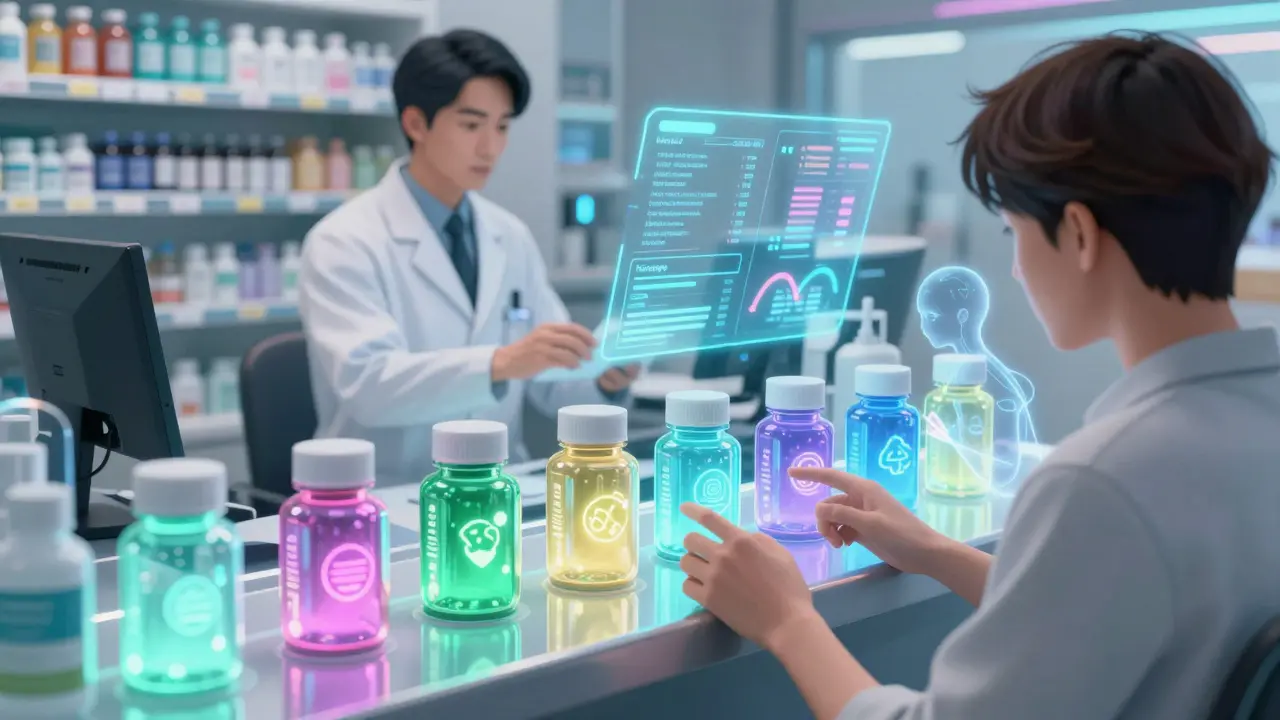
The next wave isn’t one-size-fits-all. It’s AI-powered personalization.
Early 2023 pilot studies show machine learning can predict which patients will respond to loss aversion, which need social cues, and which need simpler dosing. One algorithm, trained on 12,000 patient records, improved intervention effectiveness by 42.3%.
Smart pill bottles that light up when you miss a dose. Apps that track your mood and suggest a call to your pharmacist. Texts timed to your routine. These aren’t sci-fi. They’re being rolled out now.
The FDA’s 2023 draft guidance now requires drug companies to evaluate "the impact of dosing frequency, route of administration, and other regimen attributes on patient decision-making" using behavioral frameworks. That’s huge. It means the next new drug won’t just be tested for safety-it’ll be tested for how easy it is to take.
And insurers? Twenty-seven of the top thirty pharmacy benefit managers now include behavioral elements in their formularies. They know it works.
What This Means for You
If you’re a patient: Don’t feel guilty if you skip a dose. Your brain isn’t broken. The system is. Ask your doctor: "Is there a simpler way to take this?" or "Is there a cheaper option that works the same?"
If you’re a caregiver: Look beyond reminders. Look at the emotional weight. Is the patient afraid? Overwhelmed? Ashamed? Those are the real barriers.
If you’re a clinician: Stop lecturing. Start designing. Change the default in your EHR. Use loss-framed messages. Make adherence easy before you ask for effort.
Behavioral economics doesn’t blame the patient. It fixes the system. And it’s working.
Stephon Devereux
February 12, 2026 AT 19:01It’s wild how much our brains are wired to equate price with quality. I used to think I was being smart by sticking with the brand-name insulin until I learned the generic had identical bioequivalence data. Turns out, my fear wasn’t about the drug-it was about losing the illusion of control. Behavioral economics doesn’t just explain patient behavior; it exposes how deeply we confuse cost with care.
And honestly? The system exploits this. Pharma companies don’t just market drugs-they market reassurance. A $120 bottle doesn’t just contain medicine; it contains a story: 'You’re worth this.' That’s not science. That’s psychology dressed in white coats.
Reggie McIntyre
February 13, 2026 AT 10:22Man, this hits different. I used to be the guy who’d skip my blood pressure meds because ‘I felt fine.’ Then I read about present bias and realized I wasn’t lazy-I was *tricked*. Our brains are built to ignore tomorrow’s pain. That’s why those ‘Don’t lose your streak!’ texts work. They don’t plead. They don’t shame. They tap into our weird little need to keep a winning run going. It’s like gaming, but for health.
Also, the part about social norms? Genius. Put up a sign saying ‘92% of us take our pills’ and suddenly you’re not a weirdo for doing it-you’re part of the tribe. Humans are herd animals with prescriptions.
Carla McKinney
February 14, 2026 AT 18:17Let’s be real-the entire premise is a distraction. People don’t take meds because they’re irresponsible. Not because of ‘mental shortcuts.’ They skip because the system is broken. Insurance won’t cover generics. Pharmacies charge $50 for a 30-day supply even if the drug costs $2 to make. This isn’t behavioral economics-it’s corporate greed with a fancy TED Talk overlay.
And don’t get me started on ‘nudges.’ If you’re telling me a text message is going to fix someone who can’t afford their meds, you’re not a healer. You’re a PR flack.
Gloria Ricky
February 16, 2026 AT 07:50i just wanted to say thank you for writing this. i’ve been on 5 meds for 8 years and honestly? i thought i was failing. like, why can’t i just be disciplined? but reading this? it’s like someone finally named the monster. polypharmacy + asymptomatic + depression = i’m not broken. the system is.
my dr just switched my default to the generic and i cried. not because i was sad. because i finally felt seen. small changes. big impact. 🙏
Stacie Willhite
February 18, 2026 AT 00:39This made me think of my mom. She’s 71, on three meds, and still uses the same pill organizer from 2018. She won’t switch to a blister pack or app reminder because ‘it’s too much.’ But when her pharmacist started leaving little stickers on the bottle-‘You got this!’-she started filling it every day. No lectures. Just warmth.
Behavioral nudges aren’t about tricking people. They’re about saying, ‘I see how hard this is. Let me make it a little easier.’ That’s not science. That’s kindness with data behind it.
Jason Pascoe
February 19, 2026 AT 13:41Interesting stuff. Down under, we’ve had PBS (Pharmaceutical Benefits Scheme) for decades-subsidized generics, no surprise pricing. Adherence rates are way higher than the US. But here’s the twist: we don’t talk about ‘nudges.’ We just make the right choice the easy one. No psychology needed. Just policy.
Maybe the real lesson isn’t how to manipulate behavior, but how to stop designing systems that require manipulation in the first place.
Rob Turner
February 19, 2026 AT 21:49Love this. Reminds me of the UK’s ‘Nudge Unit’ back in the day. We tried ‘opt-out’ organ donation and saw a 90% jump in registrations. Same logic applies here.
One thing I’d add: framing matters *because* emotion trumps logic every time. Saying ‘this pill prevents stroke’ vs ‘you’ll die if you skip it’? The former gets compliance. The latter triggers avoidance. Our brains are weird. We avoid pain, not chase safety.
Also, emoticons are underrated. A simple 😊 on a prescription reminder? Boosts adherence by 12% in pilot studies. Who knew? 🤷♂️
Gabriella Adams
February 21, 2026 AT 07:01While behavioral economics provides valuable insights, it must not be weaponized to absolve systemic failures. A nudge is not a solution when patients are forced to choose between insulin and rent. This article reads like a corporate whitepaper disguised as public health advocacy.
Real change requires price regulation, universal access, and dismantling profit-driven pharmacy models. Psychology won’t fix capitalism. But it’s a great way to make people feel better about letting it continue.
Sophia Nelson
February 21, 2026 AT 13:14This whole thing is just a fancy way of saying people are dumb.
steve sunio
February 21, 2026 AT 14:03yo u right bout the price thing but u forget one thing-most folks dont even know generics exist. my cousin in lagos was on $200/month med for 3 yrs till his bro told him ‘bro its the same pill, just cheaper.’ he was mad. not because he was stupid-because the system hid it from him.
so yeah, behavioral stuff is cool but first-tell people the truth. then nudge. not the other way round.