
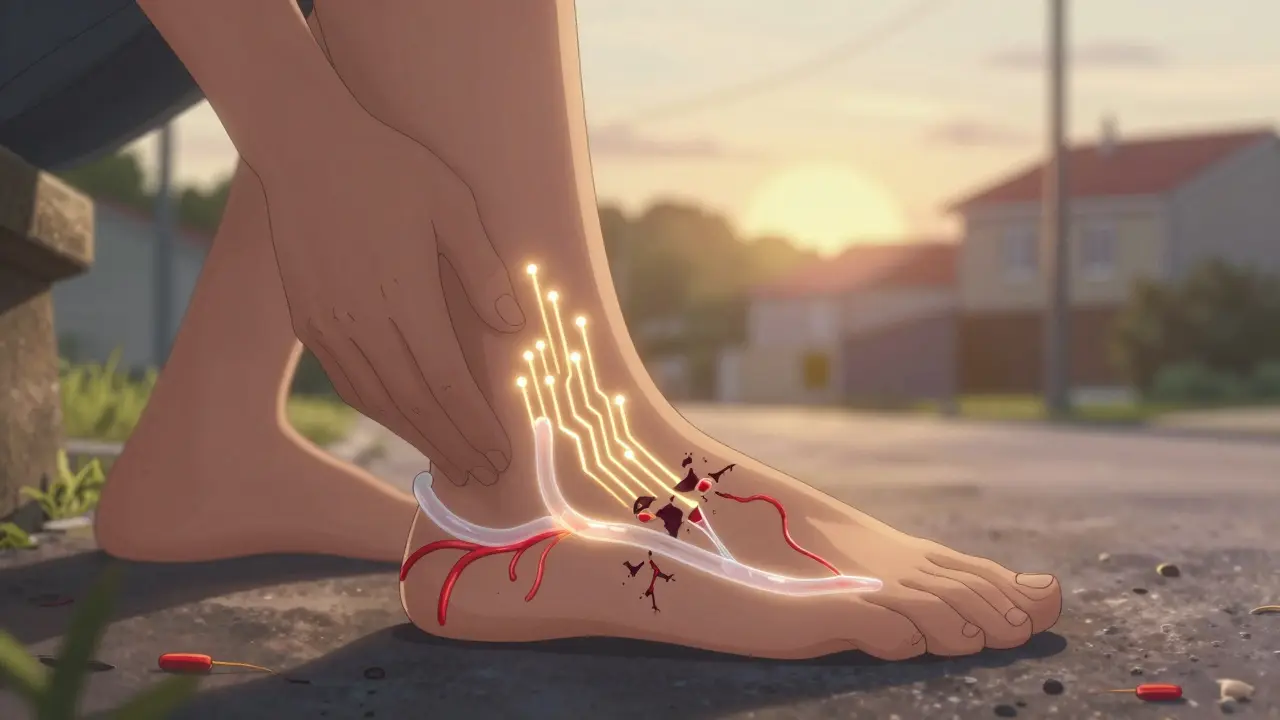
When your feet start tingling, burning, or going numb, it’s not just discomfort-it’s a warning. For people with diabetes, this is often diabetic neuropathy, a type of nerve damage caused by years of high blood sugar. It doesn’t happen overnight. It builds slowly, often without symptoms at first. By the time you feel the pain, the nerves are already injured. The good news? You can stop it from getting worse. And in some cases, you can even reverse the damage.
Why High Blood Sugar Damages Nerves
Your nerves need a steady supply of oxygen and nutrients to work right. When blood sugar stays too high for too long, it clogs up the tiny blood vessels that feed those nerves. Think of it like a garden hose kinked shut-the water can’t get through. Without proper blood flow, nerves start to die. At the same time, excess sugar in the blood triggers chemical reactions that directly poison nerve fibers. This is why the feet and hands go first-they’re the farthest from the heart, so they get hit hardest.
The numbers don’t lie. About 60 to 70% of people with diabetes will develop some form of nerve damage. Of those, 16 to 26% experience real, ongoing pain-burning, stabbing, or electric shock-like sensations. This isn’t just annoying. It disrupts sleep, makes walking painful, and increases the risk of falls. Worse, if you can’t feel your feet, a small cut can turn into a serious infection without you even noticing.
The Most Important Step: Lower Your Blood Sugar
No medication, no cream, no nerve stimulator will work as well as keeping your blood sugar in range. That’s the foundation. The Diabetes Control and Complications Trial showed that tight control cuts the risk of neuropathy by 60%. That’s not a suggestion-it’s the most powerful tool you have.
The goal? Keep your HbA1c below 7% (53 mmol/mol). That’s the average blood sugar over the past 2 to 3 months. Fasting glucose should be between 80 and 130 mg/dL, and after meals, under 180 mg/dL. Sounds simple? It’s not easy. Only about 14% of people with diabetes hit these targets. But every point you lower your HbA1c makes a difference. One study found that 25% of patients saw their numbness and tingling fade within a year of better control. The more severe the damage, the less likely it is to fully reverse-but even small improvements in sensation can mean the difference between walking safely and falling.
Medications That Actually Work
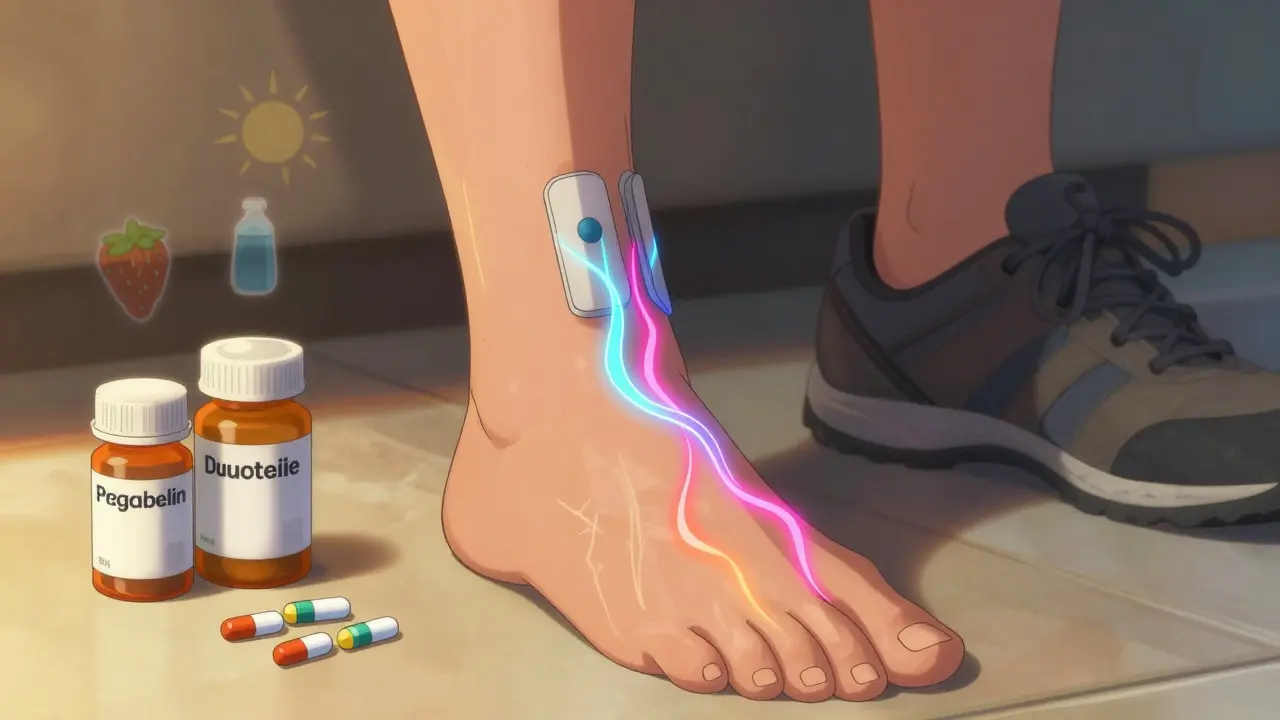
If pain is still there after you’ve gotten your blood sugar under control, medications help. But not all of them. The FDA has approved just two drugs specifically for diabetic nerve pain: pregabalin (Lyrica) and duloxetine (Cymbalta). They’re not magic bullets, but they’re backed by solid research.
Pregabalin works by calming overactive nerves. About 30 to 40% of people get at least half their pain relief. Side effects? Dizziness, drowsiness, and weight gain. Duloxetine, an antidepressant, helps by changing how the brain processes pain signals. In trials, 35% of users saw 50% pain reduction, compared to just 18% on placebo. But it can cause nausea, dry mouth, and fatigue.
Many doctors still start with older drugs like amitriptyline, a tricyclic antidepressant. It’s cheaper and often more effective-up to 60% of people get meaningful relief. But it’s risky for older adults. It can cause confusion, urinary problems, and heart rhythm issues. Use it only if other options fail and you’re under close monitoring.
For moderate pain, tramadol is sometimes used. It’s a weak opioid, so it helps, but it’s not safe long-term. About 8 to 12% of users develop dependence. The CDC warns against using it for more than a few months. Tapentadol is similar-effective, but with the same risks.
Topical Treatments: Less Risk, Fewer Side Effects
If you’re older, have kidney issues, or are already on five other medications, oral drugs can be dangerous. That’s where topical treatments shine.
The capsaicin 8% patch (Qutenza) is applied by a doctor once every 3 months. It works by burning out the pain-sensing nerves in your skin-temporarily. In studies, 40% of patients got 30% pain relief. No dizziness. No weight gain. Just a bit of burning during application.
Lidocaine 5% patches are available over the counter. You stick them on the most painful spots-like the bottom of your feet-for up to 12 hours a day. They numb the area without affecting your whole body. Great for localized pain. No interactions. No brain fog.
And avoid NSAIDs like ibuprofen. They might seem like a quick fix, but they raise your risk of heart problems and can damage your kidneys-something you already have a 30-40% higher chance of developing with diabetes.
Non-Medication Approaches That Work
Medications help, but they’re not the whole story. Many people find the best relief comes from combining treatments.
TENS units (transcutaneous electrical nerve stimulation) send small pulses through your skin to block pain signals. One study showed 83% of users improved their pain scores, compared to just 38% with fake devices. They’re cheap, portable, and safe. Try one for a month-you might be surprised.
Nerve blocks involve injecting numbing medicine near the affected nerves. They give fast relief, but it only lasts 2 to 6 weeks. Useful for flare-ups, not long-term.
For people who haven’t responded to anything else, peripheral nerve stimulation (PNS) and spinal cord stimulation are emerging as game-changers. A small device is implanted under the skin to send gentle electrical pulses that interrupt pain signals. One study found not only did pain drop, but patients who’d been numb for years started feeling sensations again. That’s huge. It’s not a cure, but it’s the closest thing we have to restoring function.

Lifestyle: Your Long-Term Shield
Here’s what most people overlook: movement and food matter as much as pills.
Walk 30 minutes a day. Swim. Ride a bike. Yoga works too. Exercise improves blood flow to your nerves and helps your body use insulin better. You don’t need to run a marathon-just move regularly. Studies show people who stay active have less nerve damage over time.
Diet? Eat whole foods. Vegetables, fruits, beans, lean meats, whole grains. Cut out sugary drinks, white bread, and processed snacks. Inflammation from bad food makes nerve pain worse. One clinic survey found 65% of patients felt better when they combined medication with diet and exercise.
Stress makes pain feel worse. Try deep breathing, meditation, or journaling. Even 10 minutes a day can lower your pain perception. Chronic stress raises blood sugar and tightens muscles-double trouble for neuropathy.
What Doesn’t Work (and Why)
Some treatments are popular but lack proof.
- Supplements like alpha-lipoic acid or B vitamins? Some studies show small benefits, but nothing strong enough to recommend them over proven treatments.
- Acupuncture? Might help a little for some, but results are inconsistent.
- Herbal remedies? No reliable data. Some can even interact dangerously with diabetes meds.
And don’t wait. If you’re having symptoms, don’t assume it’s just aging. See your doctor. Early action is what stops neuropathy from becoming disabling.
What to Expect
There’s no single solution. Most people need a mix: better blood sugar, one or two medications, movement, and maybe a TENS unit or topical patch. It takes time. You might try three different drugs before finding one that works. Side effects are common. Don’t give up. Talk to your doctor. Adjust. Try again.
And remember: the goal isn’t just to stop pain. It’s to protect your feet, keep you moving, and keep you independent. That’s worth the effort.
Can diabetic neuropathy be reversed?
In mild cases, yes-especially if caught early. If you bring your blood sugar into target range and stick with it, some nerve damage can heal over 6 to 12 months. Sensation may return, and pain can fade. But if nerves are severely damaged or you’ve had symptoms for years, full reversal is unlikely. The focus then shifts to stopping further damage and managing pain.
Why do my feet feel numb instead of painful?
Nerve damage doesn’t always cause pain. Sometimes, it kills the nerves that send sensation. That’s why you lose feeling in your feet. This is actually more dangerous than pain-it means you can’t feel cuts, blisters, or infections. That’s why daily foot checks are critical. Numbness doesn’t mean it’s getting better. It means the nerves are failing.
Is pregabalin or duloxetine better?
Both are effective, but they work differently. Pregabalin calms overactive nerves and is often better for nighttime pain. Duloxetine helps with both pain and depression, which is common in chronic pain patients. Side effects vary: pregabalin causes drowsiness and weight gain; duloxetine can cause nausea. Try one for 4 to 6 weeks. If it doesn’t help or side effects are too strong, switch to the other.
Can I use ibuprofen for diabetic nerve pain?
No. Ibuprofen and other NSAIDs don’t work well for nerve pain. They’re designed for inflammation, not nerve damage. Worse, they raise your risk of heart problems and can harm your kidneys-both already at higher risk with diabetes. Stick to treatments proven for neuropathy.
How long does it take to see improvement after better blood sugar control?
You might notice less pain or tingling within 3 to 6 months. Full improvement can take up to a year. The key is consistency. One study showed 25% of patients had noticeable improvement in sensation after one year of stable blood sugar. But if you slip back into high ranges, the damage can return.
Are nerve blocks safe for older adults?
Yes, when done properly. Nerve blocks use local anesthetics, not opioids, so they’re generally safe for older patients. They’re temporary-last 2 to 6 weeks-but useful for flare-ups or as a bridge while waiting for other treatments to take effect. Always have them done by a trained specialist.
Can exercise make neuropathy worse?
Not if you choose the right kind. High-impact activities like running can hurt your feet if you have numbness. But walking, swimming, cycling, and yoga are safe and helpful. They improve blood flow, lower blood sugar, and strengthen muscles that support your joints. Start slow. Check your feet after every session. If you have open sores or ulcers, avoid weight-bearing exercise until healed.
Managing diabetic neuropathy isn’t about one magic fix. It’s about layers: control your blood sugar, protect your nerves, treat the pain, move your body, and stay consistent. It’s hard work-but every step you take now protects your future.
Lorna Brown
March 13, 2026 AT 06:39It’s wild how much we overlook the simple stuff-blood sugar control-isn’t just a number, it’s the foundation of everything. I’ve seen people chase miracle creams and supplements while ignoring the one thing that actually moves the needle. The data doesn’t lie: 60% reduction in risk with tight control? That’s not luck, that’s biology.
And honestly? The fact that 14% hit those targets says more about our system than our willpower. We treat diabetes like a diet problem, not a neurological emergency. We need better support, not just more pills.
Rex Regum
March 13, 2026 AT 19:39Oh here we go again with the ‘just control your sugar’ sermon. Like people don’t already know that. I’ve got a cousin on insulin, metformin, GLP-1s, and still gets neuropathy. So yeah, congrats on the 14% club-you’re preaching to the choir who’s already trying. Meanwhile, the other 86%? They’re just trying to survive another night without screaming from their toes.
And don’t get me started on pregabalin. I’ve seen people gain 40 pounds on that stuff and still feel the pain. This article reads like a pharma ad disguised as advice.
Kelsey Vonk
March 15, 2026 AT 11:57Thank you for this. So much of what’s out there is either too clinical or too scary. This felt like a conversation with someone who actually gets it.
Also, the part about movement? I started walking 20 mins after dinner last month. Not because I was told to, but because I noticed my feet didn’t feel like they were full of glass anymore. Just 20 mins. And now I’m doing yoga. 🙏
It’s not perfect. But it’s something. And that’s enough for today.
Emma Nicolls
March 16, 2026 AT 03:04Ive been living with this for 12 years and i swear the lidocaine patches are a game changer. no brain fog no dizziness just quiet feet. also walking daily changed everything. not saying its easy but its worth it. 💪
Jimmy V
March 16, 2026 AT 04:57Stop wasting time on supplements. Pregabalin or duloxetine. Pick one. Wait six weeks. If it fails, switch. No fluff. No hype. No ‘maybe’-this isn’t a meditation app. You have nerve damage. Fix it with what works. And yes, exercise. Not because it’s trendy. Because blood flow is oxygen. Oxygen is life.
Also-no ibuprofen. Ever. You’re not a 25-year-old with a sprained ankle. You’re a diabetic with failing nerves. Act like it.
Richard Harris
March 16, 2026 AT 13:37I found the TENS unit surprisingly helpful. Not a cure, but it gives me back a bit of control. I use it while watching tv. Quiet. Easy. No side effects. Also, the capsaicin patch? Scary at first, but after the burn? Peace. Still trying to get my HbA1c under 7. Slow progress. But progress.
Kandace Bennett
March 17, 2026 AT 16:13OMG I LOVE THIS POST!!! 🥹✨ Like, seriously, why isn’t this on every doctor’s wall? I’ve been telling my friends for YEARS that walking + no sugar = less burning feet. And yes, Pregabalin is a beast but it WORKS. Also, don’t even get me started on how people think ibuprofen fixes nerve pain 😭🫶 You’re literally poisoning your kidneys. Please, for the love of all that’s holy-READ THE ARTICLE. 🙏💖
Tim Schulz
March 18, 2026 AT 04:58Wow. A medical article that doesn’t sound like it was written by a pharmaceutical rep. Shocking. I mean, who knew that ‘lower your blood sugar’ was the actual solution? I guess we all just forgot because it’s not a pill you can patent.
Also, ‘try a TENS unit’? That’s your big innovation? A $50 gadget from Amazon? Meanwhile, people are getting foot amputations because no one told them to walk. 🤦♂️
But hey-at least we’ve got emojis now. 🙃
Sabrina Sanches
March 18, 2026 AT 15:19I just want to say... thank you... for writing this... I’ve been scared... for so long... but now I feel like... maybe... I can still... have a good life... with this... 🌿