

When your pharmacist hands you a pill bottle with a different name than what your doctor wrote, it’s natural to wonder: is this the same thing? You’re not alone. Nearly 9 out of 10 prescriptions in the U.S. are filled with generic drugs. They save billions every year, and for most people, they work just as well as the brand-name version. But what happens when there are three different generics for the same drug - all with different prices, different labels, and maybe even different effects? How do you choose?
Why Generics Are Not All the Same
All generics must meet strict standards set by the U.S. Food and Drug Administration (FDA). They must contain the same active ingredient, in the same strength, and the same form - whether it’s a pill, capsule, or injection. But here’s the catch: while the active ingredient is identical, the inactive ingredients - like fillers, dyes, and coatings - can vary. These don’t affect the drug’s purpose, but they can change how quickly the medicine enters your bloodstream. The FDA requires generics to prove they are bioequivalent to the brand-name drug. That means the amount of drug absorbed into your blood (called AUC) and how fast it gets there (called Cmax) must fall between 80% and 125% of the brand-name version. This isn’t a 20% margin for error - it’s a confidence range. In practice, most generics match the brand within 3% to 5%. But when you’re dealing with drugs where tiny changes matter, even a 5% difference can be significant.Therapeutic Equivalence: The FDA’s Secret Code
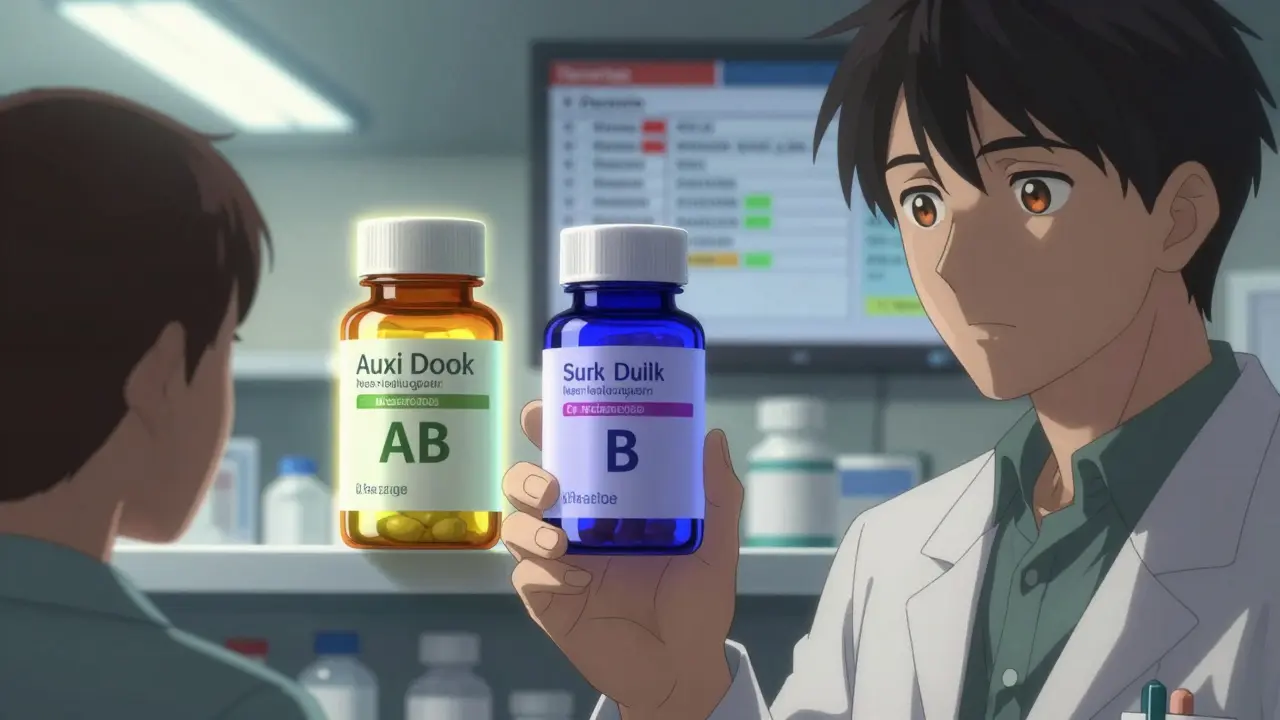
The FDA doesn’t just approve generics - it rates them. You’ll find these ratings in the Orange Book, a public database that lists all approved drugs and their equivalence status. Look for the letters AB next to a generic. That means it’s been tested and confirmed to work just like the brand. You can swap it in without worry. But some generics get an B rating. That doesn’t mean they’re bad. It means the FDA couldn’t confirm they’re fully interchangeable. This usually happens with drugs that have a narrow therapeutic index - meaning the difference between a dose that works and one that’s dangerous is very small. Think of drugs like warfarin (blood thinner), levothyroxine (thyroid hormone), or digoxin (heart medication). For these, switching between generics - or from brand to generic - can cause your levels to swing too high or too low.Which Generics Are Safe to Switch To?
If you’re starting a new medication, your doctor might prescribe the brand, or the cheapest generic. Either way, you’ll likely be fine. But if you’ve been on the same drug for months - especially if your condition is stable - don’t switch unless you have to. Here’s what the experts say:- For most drugs (like statins, blood pressure meds, or antidepressants): Any AB-rated generic is fine. Switching between them rarely causes problems.
- For narrow therapeutic index drugs (warfarin, levothyroxine, digoxin, phenytoin): Stick with the same manufacturer. Even if two generics are both AB-rated, their formulations can differ enough to affect your levels. A 2017 study in Circulation found that patients switching to new generic versions of candesartan had higher rates of side effects in the first month. These risks dropped over time, but the initial bump is real.
- For new patients: B-rated generics are often cheaper and still effective. They’re a good option if you’re starting from scratch - as long as your doctor monitors you closely.
Why Your Pharmacist Matters
Pharmacists are your frontline defense. In 49 states, they can legally swap a brand for a generic unless your doctor says “dispense as written.” But here’s the thing: many pharmacists don’t check the Orange Book. They just grab the cheapest option on the shelf. Ask your pharmacist: “Is this generic AB-rated? Have I been on the same manufacturer before?” If you’re on a critical drug like levothyroxine, and your pharmacy switches from one generic to another without telling you, that’s a red flag. In 28 states, pharmacists are required to notify your doctor if they switch to a different manufacturer. But not all states have this rule.What to Do If You Notice a Change
You might not feel anything. But if you start feeling off - more tired, dizzy, jittery, or if your condition seems to worsen - it could be the drug. Keep a log: note the date, the generic name (look at the label), and your symptoms. If you suspect a problem:- Check the pill’s appearance. Even small changes in color or shape can signal a different manufacturer.
- Call your pharmacy and ask: “Was this the same manufacturer as last time?”
- Call your doctor. Don’t wait. For drugs like warfarin, even a small change in dose can cause bleeding or clots.
- Ask your doctor to write “dispense as written” on your prescription if you’ve found a version that works for you.

Cost vs. Consistency
Generics cost 80-85% less than brand-name drugs. That’s huge. But if you’re on a drug where stability matters, the savings aren’t worth the risk. A 2022 FDA report showed that generic drugs saved the U.S. system $373 billion - but also warned that inconsistent switching could lead to more hospital visits. The best strategy? Find the generic that works for you, then stick with it. If your insurance pushes you to switch to a cheaper version, ask your doctor to override it. Many insurers will approve the same generic if you’ve been stable on it.What’s Changing Right Now
In 2023, the FDA started requiring stricter bioequivalence testing for complex generics - things like inhalers, topical creams, and extended-release pills. They’ve also increased oversight of levothyroxine generics after reports of inconsistent absorption. New rules now require each manufacturer’s version to have a unique National Drug Code (NDC). This means in the future, you’ll be able to trace exactly which company made your pill. A proposed law, the Generic Drug Labeling Act, would require manufacturers to list their name clearly on the label. Right now, many bottles just say “Levothyroxine 50 mcg” - no brand, no maker. That makes it impossible to track if something goes wrong.Final Advice: Don’t Guess. Ask.
You don’t need to be a pharmacist to make smart choices. Here’s your simple checklist:- Is this drug critical? (Heart, thyroid, seizure, blood thinner?) If yes - stick with the same manufacturer.
- Check the label. Look for the manufacturer name. Write it down.
- Ask your pharmacist: “Is this AB-rated? Have I used this one before?”
- Don’t accept a switch without knowing why.
- If you feel different after a switch - tell your doctor immediately.
Generics are safe. But safety doesn’t mean they’re all equal. Your body doesn’t care about price tags. It cares about consistency. And when it comes to your health, consistency beats savings every time.