
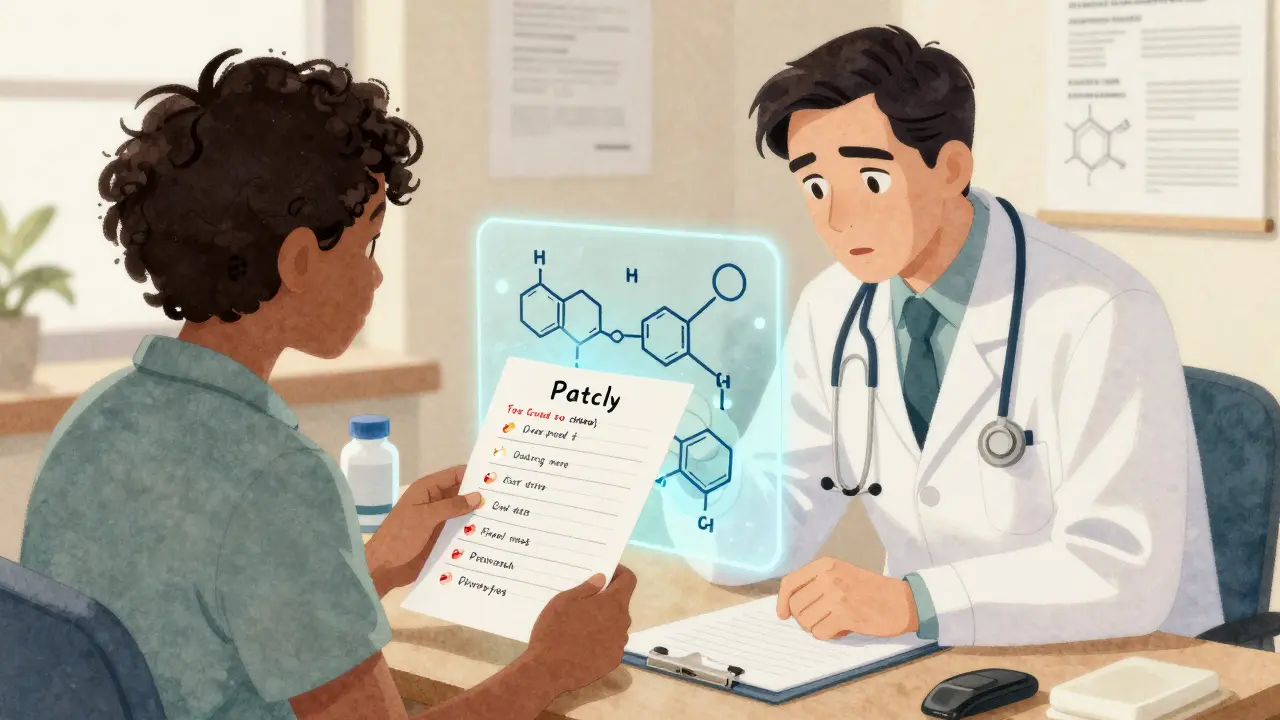
Every year, thousands of people end up in the emergency room because they didn’t tell their doctor what they were taking. Not prescription drugs. Not illegal substances. But the stuff you pick up at the grocery store or online: vitamin D, fish oil, turmeric, melatonin, or even that herbal tea you drink before bed. These aren’t harmless. And if your provider doesn’t know you’re using them, they can’t keep you safe.
The truth is, OTC medications and supplements aren’t just background noise in your health story-they’re active players. The FDA logged over 1,000 adverse events linked to supplements in 2022 alone, including 52 deaths. Many of those cases involved hidden interactions. A man on blood thinners took fish oil daily, never mentioned it, and ended up in the hospital with internal bleeding. A woman on antidepressants used St. John’s Wort to feel better, not realizing it cut her medication’s effectiveness by half. These aren’t rare accidents. They’re predictable outcomes of poor communication.
Why Your Provider Needs to Know
Supplements don’t go through the same testing as prescription drugs. Under the Dietary Supplement Health and Education Act of 1994, manufacturers don’t need FDA approval before selling their products. That means there’s no guarantee what’s on the label is actually in the bottle. A 2022 Government Accountability Office report found that 23% of supplement labels had inaccurate ingredient lists. One product labeled as “pure green tea extract” turned out to contain a banned stimulant. Another “natural sleep aid” had unlisted sedatives that caused confusion and falls in older adults.
And it’s not just about contamination. Supplements interact with medications in ways doctors can’t always predict. The NIH Office of Dietary Supplements reports that 37.9% of U.S. adults use supplements. Yet only 36% tell their providers. Why? Because most providers don’t ask. A 2022 study in the Journal of Medical Ethics found that 52.7% of patients who didn’t disclose supplement use said their provider never brought it up. Patients assume it’s not important. Providers assume it’s not relevant. Both are wrong.
What Exactly Should You Tell Them?
Don’t say “I take vitamins.” That’s useless. Say: “I take 1,000 mg of vitamin D daily, 500 mg of magnesium at night, and a turmeric capsule with black pepper every morning for joint pain.” Include:
- Exact product name (not just “vitamin C” - say “Nature Made Vitamin C 500mg Tablets”)
- Dose (milligrams, IU, grams - not “a pill” or “a scoop”)
- Frequency (once a day? twice a week? after meals?)
- Why you take it (for sleep? for energy? because your friend recommended it?)
Also include OTC medicines. That’s aspirin, ibuprofen, antacids, cold pills, and sleep aids. People forget these are drugs too. Taking 800 mg of ibuprofen daily for back pain while on blood pressure medication can raise your risk of kidney damage. Cold medicine with pseudoephedrine can spike your heart rate if you have an arrhythmia. These aren’t “just a little something.” They’re active ingredients with measurable effects.
The Best Way to Communicate: Use a Written List
Verbal reporting fails. Memory slips. Details get lost. A 2020 study across 12 primary care clinics found that using a written list reduced documentation errors by 64% compared to just talking. The NIH ODS offers a free tool called My Dietary Supplement and Medicine Record. Download it. Fill it out. Bring it to every appointment.
Here’s how to use it:
- Write down every prescription, OTC medicine, and supplement you take - even if you haven’t used it in a week.
- Include the brand name, dose, how often, and why.
- Check the label. If it says “Supplement Facts,” it goes on the list. If it says “Drug Facts,” it goes on the list too.
- Update it every time you start, stop, or change a product.
- Bring it to every visit - even if it’s just for a flu shot.
Some clinics now integrate this into their electronic health records. Epic Systems, the largest EHR vendor, added dedicated supplement fields in 2020 after finding that 42% of medication errors involved undocumented supplement use. If your provider doesn’t have a place to record this, hand them your list. Ask them to write it down. Make it part of your record.
Who’s Most at Risk?
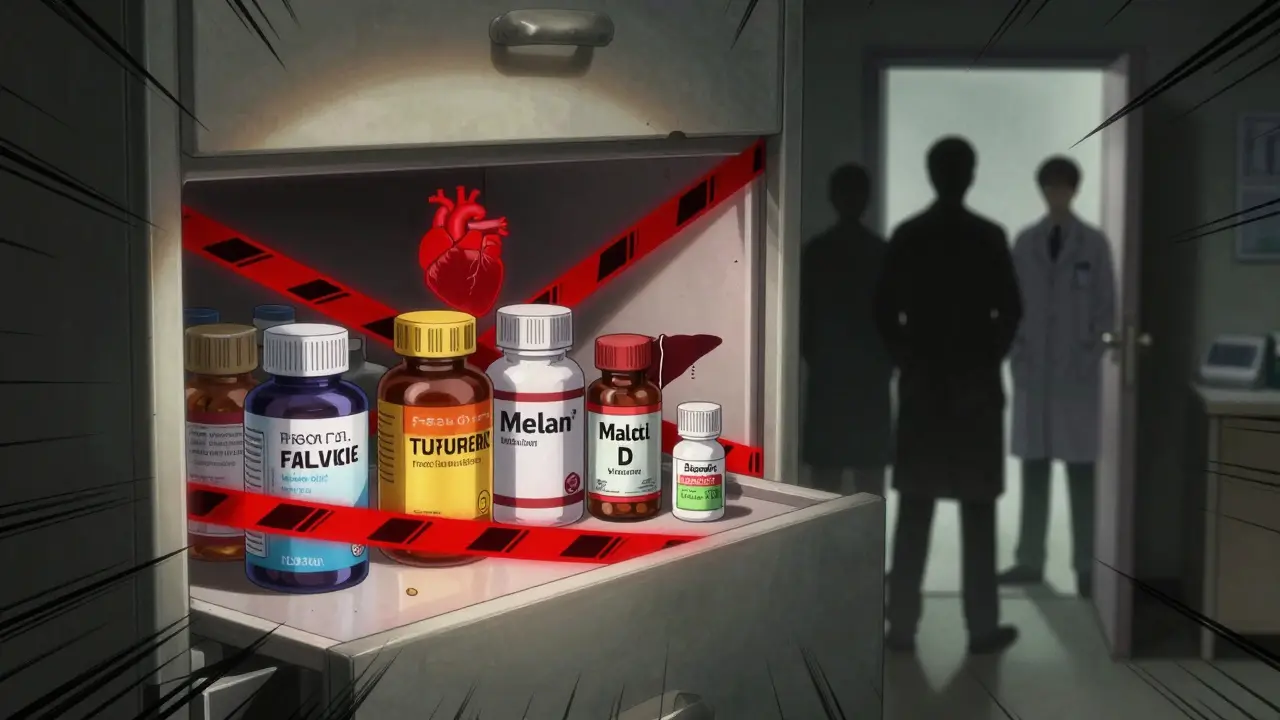
It’s not just older adults. It’s anyone taking multiple medications. But certain groups face higher risks:
- People on blood thinners - Fish oil, garlic, ginkgo, and vitamin E can increase bleeding risk.
- People with liver disease - Kava, comfrey, green tea extract, and high-dose niacin can cause liver damage.
- People on antidepressants or antipsychotics - St. John’s Wort, 5-HTP, and SAM-e can cause serotonin syndrome - a dangerous overactivation of brain chemicals.
- People with high blood pressure or heart conditions - Ephedra, yohimbe, and caffeine-heavy energy supplements can trigger arrhythmias or spikes in blood pressure.
Pharmacists are often better at catching these than doctors. A 2021 study found pharmacists identified 3.2 times more potential interactions during medication reviews. If you have a pharmacist you trust, ask them to review your list. Many offer free consultations.
What If Your Provider Dismisses It?
You might hear: “Oh, that’s just a supplement. It’s fine.” Or worse: “Why are you taking that? It’s a waste of money.” That’s not professional. It’s dangerous.
The American Medical Association’s 2022 ethics guidance says clinicians must ask about supplements at every visit - not wait for patients to bring it up. If your provider brushes it off, say: “I’ve read that 23% of hospital patients have interactions with supplements they didn’t tell their doctor about. I want to make sure I’m safe.”
Some providers are still catching up. But the data is clear: clinics that screen for supplements - like Mayo Clinic, which made it mandatory in 2020 - saw a 37% drop in supplement-related adverse events. That’s not luck. That’s protocol.

What About Labels?
Don’t trust the label alone. The FDA requires “Supplement Facts” panels to list ingredients by weight, but there’s no standard for serving size. One brand’s “1000 mg” of vitamin C might be two capsules. Another’s might be one. And there’s no limit on how much can be in a single serving. The FDA says outright: “There are no laws limiting the amount of a dietary ingredient in a supplement.”
Also, don’t confuse “Drug Facts” with “Supplement Facts.” OTC painkillers like Advil or Tylenol have Drug Facts labels - they’re regulated like drugs. Supplements have Supplement Facts - they’re not. But patients think they’re the same. A 2023 American Liver Foundation survey found 68% of people believe the labels mean the same thing. They don’t. And that confusion kills.
Real Consequences - Real Stories
In 2019, a 45-year-old woman died from acute liver failure after taking kava supplements while on antipsychotic medication. Her doctors never knew she was using it. She thought it was “just natural.”
In 2021, a 68-year-old woman on warfarin avoided a life-threatening bleed because her pharmacist asked about supplements. She’d been taking 1,000 mg of fish oil daily for “heart health.” The dose was too high. Her warfarin was adjusted. She’s still alive today.
These aren’t outliers. They’re patterns. And they’re preventable.
What You Can Do Today
Don’t wait for your next appointment. Start now:
- Open your medicine cabinet. Pull out every bottle - pills, powders, liquids, gummies.
- Write down every one: brand, dose, frequency, reason.
- Download the NIH ODS form. Fill it out. Print it.
- Bring it to your next visit. Ask: “Could this interact with anything I’m taking?”
- If you’re on blood thinners, liver-affecting meds, or heart drugs - get your list reviewed by a pharmacist.
It’s not about being perfect. It’s about being honest. Your provider can’t help you if they don’t know what you’re doing. And no one else will ask. You’re the only one who knows what’s in your body. Speak up.
There’s no shame in taking supplements. But there’s real danger in silence.
Do I need to tell my doctor about vitamins and minerals?
Yes. Vitamins and minerals are supplements, not food. Even common ones like vitamin D, calcium, or iron can interact with medications. For example, calcium can reduce the absorption of thyroid medication, and iron can interfere with antibiotics like tetracycline. Always list them by name and dose.
What if I only take supplements occasionally?
Even occasional use matters. Some interactions happen after just one dose. For instance, St. John’s Wort can reduce the effectiveness of birth control pills within days. Or green tea extract combined with acetaminophen can cause liver damage after a single high dose. If you took it in the last month, tell your provider.
Can’t my pharmacist just know what I’m taking?
Pharmacists see your prescription list, but they don’t automatically know about supplements unless you tell them. Many pharmacies don’t track supplements in their systems. Even if they do, they rely on what you say. Don’t assume they know. Always share your full list - including supplements - when filling prescriptions.
Why don’t doctors ask about supplements?
Many don’t know how to ask, or they think supplements are harmless. But research shows 52.7% of patients don’t disclose supplement use because their provider never asked. The American Medical Association now recommends clinicians ask specifically at every visit. If your doctor doesn’t, ask them: “Do you check for supplement interactions?”
Is it safe to stop a supplement before surgery?
Some supplements increase bleeding risk or affect anesthesia. Fish oil, garlic, ginkgo, and high-dose vitamin E should be stopped at least a week before surgery. But don’t stop on your own. Talk to your provider or surgeon first. They may advise when to stop and when to restart.
Start today. Write it down. Bring it in. Your life might depend on it.
Craig Staszak
February 12, 2026 AT 15:59I used to think supplements were just fancy vitamins until my buddy ended up in the ER after mixing fish oil with his blood thinner. He didn't tell his doc because he thought it was 'natural' so it couldn't hurt. Turns out natural doesn't mean safe. Now I carry a list in my wallet. Seriously. It's saved me twice.
alex clo
February 14, 2026 AT 00:36While I appreciate the intent of this article, it's important to note that the FDA's regulatory framework for dietary supplements is intentionally permissive under the DSHEA of 1994 precisely to preserve consumer access. The burden of responsibility should not fall entirely on patients, but also on providers to initiate conversations about supplement use during routine visits. Education and systemic integration are key.
Alyssa Williams
February 15, 2026 AT 07:15OMG YES. I took turmeric for my knees and didn't tell my doc because I thought 'it's just a spice'... until I started bruising like crazy. Turned out it was interacting with my blood pressure med. I now have a sticky note on my fridge with my supplement list. Bring it to every appt. No shame. Your life > your pride.
Ernie Simsek
February 17, 2026 AT 05:43Bro. I work in pharma. I've seen 3 people almost die from 'natural sleep aids' that had benzos in them. One label said 'valerian root' - turned out to be 5mg of clonazepam. No joke. Your 'herbal tea' could be a controlled substance. And yeah, I'm using 🤯 here because that's literally what my face looked like when I saw the lab report. STOP TRUSTING LABELS.
Joanne Tan
February 18, 2026 AT 07:18I started using the NIH form after my mom had a bad reaction to green tea extract with her chemo. Now I update it every time I buy something new. Even if it's just a new gummy. I print it. I bring it. I hand it to the nurse before the doc even walks in. They're always shocked. Then they say 'why doesn't everyone do this?'
Rachidi Toupé GAGNON
February 19, 2026 AT 00:01My grandma used to say 'if it's from the earth, it's good.' She died from liver failure after taking kava with her antipsychotic. No one asked. No one knew. Now I carry a laminated card in my wallet with my list. It's not weird. It's smart. And if your doc rolls their eyes? Walk out. You deserve better.
Jason Pascoe
February 19, 2026 AT 01:35I used to think the same. Then I got prescribed metformin and started taking magnesium for cramps. My blood sugar crashed. My doc said 'you didn't mention the magnesium.' I said 'it's just a supplement.' He looked at me like I'd just admitted to drinking bleach. Now I have a spreadsheet. With colors. And footnotes.
Sonja Stoces
February 20, 2026 AT 22:48Wow. So now we're treating supplements like they're nuclear waste? I take vitamin D because I live in Seattle. I take melatonin because I work nights. You think my doctor cares? Nah. And frankly, I don't need to justify my life choices to someone who thinks 'natural' means 'unregulated.' This is fearmongering dressed as advice. 🙄
Rob Turner
February 21, 2026 AT 18:25It's funny how we treat food as sacred but supplements as suspicious. We'll eat kale smoothies and call it wellness, but if I take a B12 pill? Suddenly I'm a liability. The real issue isn't the supplements - it's the system that lets manufacturers sell untested products and doctors ignore them. We're all just trying to survive. Maybe we need better labels. Better questions. Not more guilt.
Luke Trouten
February 23, 2026 AT 02:55I’ve been a patient for 17 years. I’ve seen doctors forget my prescriptions. I’ve seen nurses miss my allergies. But not once has anyone asked about my supplements - until I started handing them the list. Now I do it without asking. It’s not about being paranoid. It’s about being responsible. And honestly? It’s the only way I know I’m not being treated like a number.