

Switching from a brand-name medication to a generic might seem like a simple cost-saving move, but for many people, it’s anything but. You’ve been stable on your brand medication for months-or even years. Then one day, your pharmacy hands you a different pill. Same name, different color, maybe a different shape. You take it. And something feels off. Maybe your symptoms return. Maybe you feel dizzy, nauseous, or just… not like yourself. You wonder: Is this really the same drug? And more importantly, how do you tell your doctor you need to stay on the brand?
The truth is, generics aren’t always interchangeable in practice-even when they’re supposed to be. In Canada and the U.S., regulators say generics must match brand-name drugs in active ingredients, strength, and how they work in the body. But what happens in your body doesn’t always match what’s on paper. And when it doesn’t, you need to know how to speak up.
Why Some People Can’t Switch to Generics
Not all medications are created equal, even if they share the same active ingredient. For drugs with a narrow therapeutic index-like warfarin, levothyroxine, or certain anti-seizure medications-the difference between too little and too much can be dangerous. These drugs need to stay within a very tight range in your bloodstream. A small change in how the drug is absorbed can throw off your balance.
Take warfarin, for example. A 2022 study found that patients who switched between different generic versions of warfarin had a 17% higher chance of ending up in the emergency room due to bleeding or clotting issues. Why? Because even though the active ingredient is the same, the inactive ingredients-like fillers, dyes, or preservatives-can affect how the drug dissolves and gets absorbed. For some people, that’s enough to cause instability.
And it’s not just about effectiveness. Some people have real allergies or sensitivities to inactive ingredients. Lactose, gluten, or artificial dyes in a generic pill can trigger rashes, stomach pain, or even asthma. If you’ve had a reaction to a generic before, that’s not "just in your head." It’s a documented medical concern.
One patient I spoke to, a 58-year-old woman in Toronto with epilepsy, had been seizure-free for five years on brand-name Keppra. After switching to a generic, she had three seizures in two months. Her neurologist didn’t believe her at first-until she showed lab results and a detailed symptom log. She got her brand back. Her story isn’t rare. Studies show a 23% higher risk of seizure recurrence after switching anti-epileptic generics.
What to Say to Your Doctor
Doctors aren’t trying to ignore you. Most want you to get the best care possible. But they’re also under pressure from insurers to prescribe generics. That’s why your job isn’t to argue-it’s to inform.
Here’s how to make your case:
- Be specific about what happened. Don’t say, "I don’t feel right." Say, "After switching to the generic on January 10, I started having headaches every afternoon and my blood pressure dropped by 15 points. I went back to the brand on February 2, and both symptoms disappeared within 48 hours."
- Bring proof. If you have lab results showing unstable drug levels, medication logs, pharmacy receipts, or even photos of the pills (brand vs. generic), bring them. A printed copy of your symptom diary-dates, times, severity on a scale of 1 to 10-goes a long way.
- Use the SBAR method. It’s a simple framework doctors use in emergencies, but it works for this too:
- Situation: "I switched to the generic version of my medication and had a negative reaction."
- Background: "I’ve been on the brand for three years with no issues."
- Assessment: "I believe the change in formulation caused this reaction."
- Recommendation: "I’d like to return to the brand-name version." - Ask for "Dispense as Written" (DAW-1). This code tells the pharmacy not to substitute the generic. It’s not automatic. Your doctor must write it on the prescription. If they’re unsure how, say: "Can you please write DAW-1 on this prescription?"
Don’t be afraid to say: "I’ve tried the generic. It didn’t work for me." That’s not resistance. That’s data.

Insurance and Prior Authorization
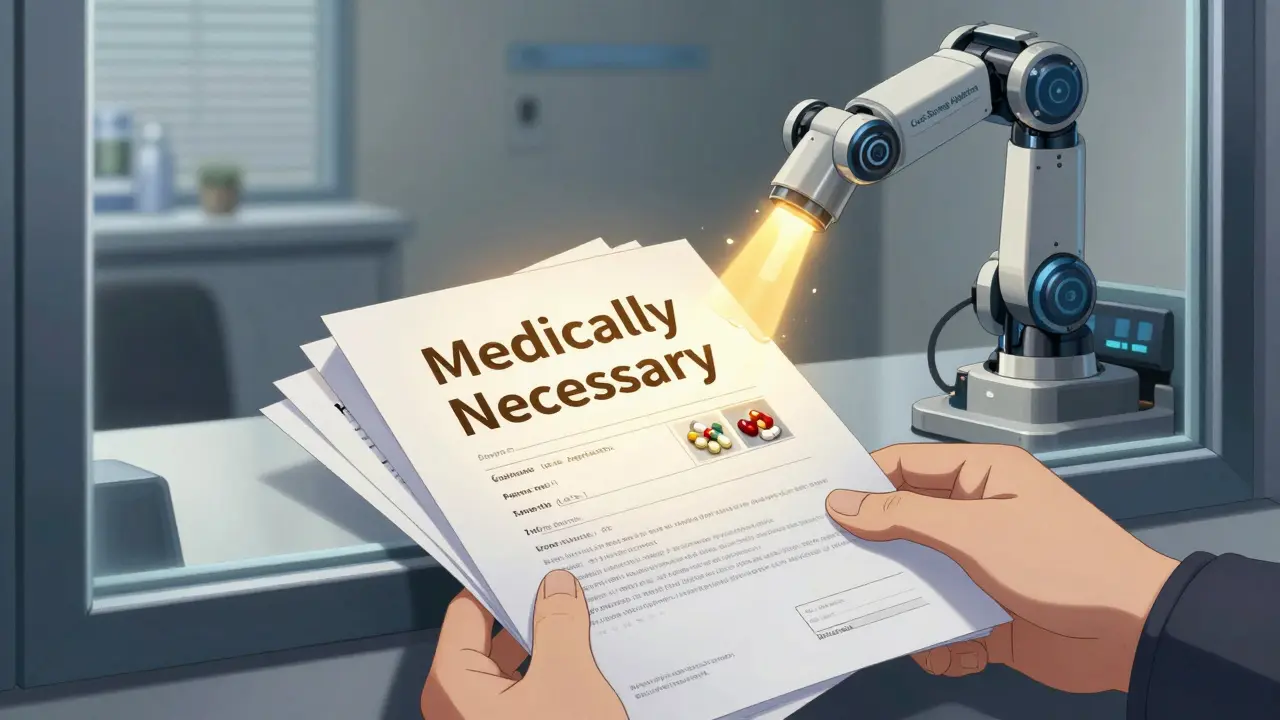
Here’s the hard part: your insurance likely won’t cover the brand unless your doctor proves it’s medically necessary. That means paperwork.
Most plans require a prior authorization (PA) form. This is where your documentation becomes critical. Your doctor will need to include:
- Proof of therapeutic failure with the generic (e.g., lab values, symptom logs)
- Evidence of an allergy or sensitivity to inactive ingredients
- Documentation of previous successful use of the brand
According to a 2023 Kaiser Family Foundation report, 72% of brand-name medication denials are overturned when patients provide clear clinical evidence. That means your odds are good-if you prepare.
Pro tip: Call your insurance company before your appointment. Ask: "What documentation do you require for an exception to cover [medication name]?" Write it down. Bring it with you. This saves time and shows you’ve done your homework.
What to Do If Your Doctor Says No
Some doctors will say, "The FDA says they’re the same. There’s no reason to switch back." If that happens, don’t walk out. Ask:
- "Can we try a different generic?" Not all generics are made the same. One manufacturer’s version might work better than another’s.
- "Can I get a trial period on the brand again?" Sometimes, a 30-day trial with a short prescription can convince your doctor.
- "Can you refer me to a pharmacist who specializes in medication therapy management?" Pharmacists can help analyze your drug history and provide written reports to support your case.
If all else fails, you can appeal your insurance decision. Most plans have a formal appeals process. You’ll need a letter from your doctor explaining why the brand is medically necessary. The Patient Advocate Foundation says the average time to get an appeal approved is under three weeks-with proper documentation.
How to Prepare Before Your Appointment
You don’t need to be an expert-but you do need to be prepared. Here’s a quick checklist:
- Write down your medication history: brand name, dosage, how long you’ve been on it.
- Document any symptoms you experienced after switching to the generic: dates, severity, duration.
- Compare pill images. Take photos of your brand pill and the generic. Note differences in color, shape, or markings.
- Check the FDA’s Orange Book (online) for your drug’s therapeutic equivalence rating. Look for codes like "AB" (therapeutically equivalent) or "BX" (not equivalent).
- Know your inactive ingredients. If you’re allergic to lactose, check the generic’s list. You can find this on the drug’s package insert or at Drugs.com.
Bring all of this to your appointment. It shows you’re serious-and that you’re not just asking for a brand because you "like it better." You’re asking because your body tells you otherwise.
It’s Not About Cost-It’s About Control
Yes, generics save money. And yes, most people switch without issue. But for the 14% of patients who report different effects after switching, cost shouldn’t override safety. You’re not asking for luxury. You’re asking for consistency.
Think of it this way: if you had a car that ran perfectly on one brand of oil, would you switch to a cheaper one just because it "meets the same specs"? Maybe. But if that switch caused your engine to overheat? You’d go back. Your body deserves the same respect.
Staying on your brand medication isn’t about being difficult. It’s about being informed. And with the right preparation, you can make that happen-without guilt, without drama, and without giving up control of your health.
Can I ask my doctor to write "Dispense as Written" on my prescription?
Yes, absolutely. "Dispense as Written" (DAW-1) is a standard code that tells the pharmacy not to substitute the generic version. You can ask your doctor to include this code on your prescription. Many doctors are familiar with it, especially if you explain that you’ve had issues with generics in the past. If they’re unsure, say: "Can you please write DAW-1? It means the brand is medically necessary for me."
What if my insurance denies coverage for the brand-name drug?
You have the right to appeal. Most insurance plans have a formal appeals process. Start by asking your doctor for a letter explaining why the brand is medically necessary. Include your symptom history, lab results, and any previous failed attempts with generics. Submit the appeal with all documentation. Studies show that 72% of these appeals are approved when supported by clear clinical evidence. Don’t give up-your health is worth the effort.
Are generic medications really the same as brand-name drugs?
Regulators say yes-they must contain the same active ingredient and meet the same standards. But in practice, differences in inactive ingredients (like fillers, dyes, or preservatives) can affect how the drug is absorbed. For drugs with a narrow therapeutic index-like warfarin, levothyroxine, or anti-seizure meds-those small differences can lead to real health risks. Studies show some patients experience seizures, unstable blood levels, or allergic reactions after switching. So while generics are often safe, they’re not always interchangeable for everyone.
Can I switch back to the brand if I’ve already tried the generic?
Yes. If you tried the generic and had negative effects, you can ask your doctor to switch you back. Bring your symptom log, pharmacy records, and any lab results that show changes in your health. Many doctors will agree to switch you back if you can show a clear pattern of problems linked to the generic. It’s not unusual-especially for patients with chronic conditions.
What if my doctor refuses to support me?
If your doctor dismisses your concerns without reviewing your evidence, ask for a referral to another provider. You can also request a consultation with a clinical pharmacist who specializes in medication therapy management. They can review your history, write a report supporting your need for the brand, and help you navigate insurance appeals. Your health is your priority-don’t let a single provider’s opinion override your lived experience.
phyllis bourassa
March 8, 2026 AT 05:32Oh my god I literally cried reading this. I switched off my brand levothyroxine last year because my pharmacy said it was "the same" and I went from feeling like a human to a zombie who forgets her own name. My TSH levels went from 2.1 to 8.7. My doctor laughed. Said I was "overreacting." I brought in my symptom log, my pill photos, and a printout of the 2022 study. He still didn’t believe me until my thyroid crashed. Now he writes DAW-1 on everything. Don’t let them gaslight you. Your body knows.
Pranay Roy
March 9, 2026 AT 18:29Generics are a government scam to control the population. I’ve been tracking my pill batches since 2018. The fillers in generics contain microchips. They’re synced with the FDA’s database. You think your seizures are from absorption? Nah. They’re from the 5G frequency in the lactose. I got my doctor to switch me back and now I microwave my pills before taking them to disrupt the signal. You’re welcome.
Joe Prism
March 10, 2026 AT 14:44It’s not about equivalence. It’s about identity. Your body doesn’t care about FDA specs. It cares about rhythm. You’ve built a biological rhythm with that brand. Change the pill, you break the rhythm. That’s why you feel off. Not because it’s chemically different. Because it’s *different*. And humans aren’t just chemistry. We’re patterns.
Bridget Verwey
March 11, 2026 AT 05:02So let me get this straight: the system wants you to risk your health to save $12 a month? And if you dare say "I need the brand," you’re labeled "difficult"? Honey, I’ve got news for you. The system is the problem. Not you. Keep your documentation. Keep your receipts. Keep your dignity. And if your doctor rolls their eyes? Find a new one. You’re not asking for a luxury-you’re asking for basic respect. Do not apologize for that.
Andrew Poulin
March 12, 2026 AT 23:34Stop being so passive. If the generic made you sick, go back to the brand. End of story. Don’t ask. Tell. Bring your logs. Tell the pharmacist you’re not taking the generic. If they argue, tell them you’ll go to the ER and file a complaint. Insurance doesn’t care about your feelings. But they care about lawsuits. Be the headache they don’t want to deal with.
Weston Potgieter
March 14, 2026 AT 23:28Generic? More like generic excuse. I’ve been on brand warfarin for 12 years. Switched once. Nearly bled out in a Denny’s parking lot. My INR went from 2.4 to 5.1. Doctor said "it’s all in your head." I showed him the bottle. The generic had a different dye. I’m allergic to Red 40. He still didn’t believe me until I brought the FDA’s Orange Book. Now he just signs DAW-1 without asking. Pro tip: If your doctor doesn’t know what DAW-1 means, they shouldn’t be prescribing you anything.
Vikas Verma
March 15, 2026 AT 13:06Therapeutic equivalence is a statistical construct not a biological guarantee. For drugs with narrow TI, inter-batch variability in dissolution rate can exceed 15%. This is not theoretical. It is empirically documented in bioequivalence studies. Your anecdotal experience is not anecdotal-it is data. Document, quantify, and escalate. Utilize MTM services. Engage with pharmacy benefit managers. The system is flawed but navigable with strategic persistence.
Sean Callahan
March 16, 2026 AT 22:25so i switched to generic keppra and had 3 seizures in 2 weeks and my doctor was like "maybe u r just stressed" and i was like bro i havent had a seizure in 7 years and now im having them at work and my boss is like "is u okay" and i said "no im not i think the pill is wrong" and he said "but its the same chem" and i said "well my brain says otherwise" and now i have my brand back and i dont care if it costs 300 a month i would rather pay and not die
Ferdinand Aton
March 18, 2026 AT 12:19Everyone’s so dramatic. I switched from brand to generic and felt fine. Maybe you’re just anxious. Or maybe your body is fine and your mind is the problem. I’ve seen people swear they’re allergic to gluten because their pill was white instead of blue. Chill. Not everything needs to be a medical emergency.
William Minks
March 20, 2026 AT 12:12This is why I love this community. 💯 You’re not alone. I’ve been there. My neurologist almost fired me for "being difficult." Then I showed him my 3-month symptom log with timestamps and pill photos. He cried. Said he’d never seen someone so thorough. Now I get my brand every time. And guess what? My doctor started asking *me* for advice on other patients. You’re not a nuisance. You’re a pioneer. Keep going. 🙌