
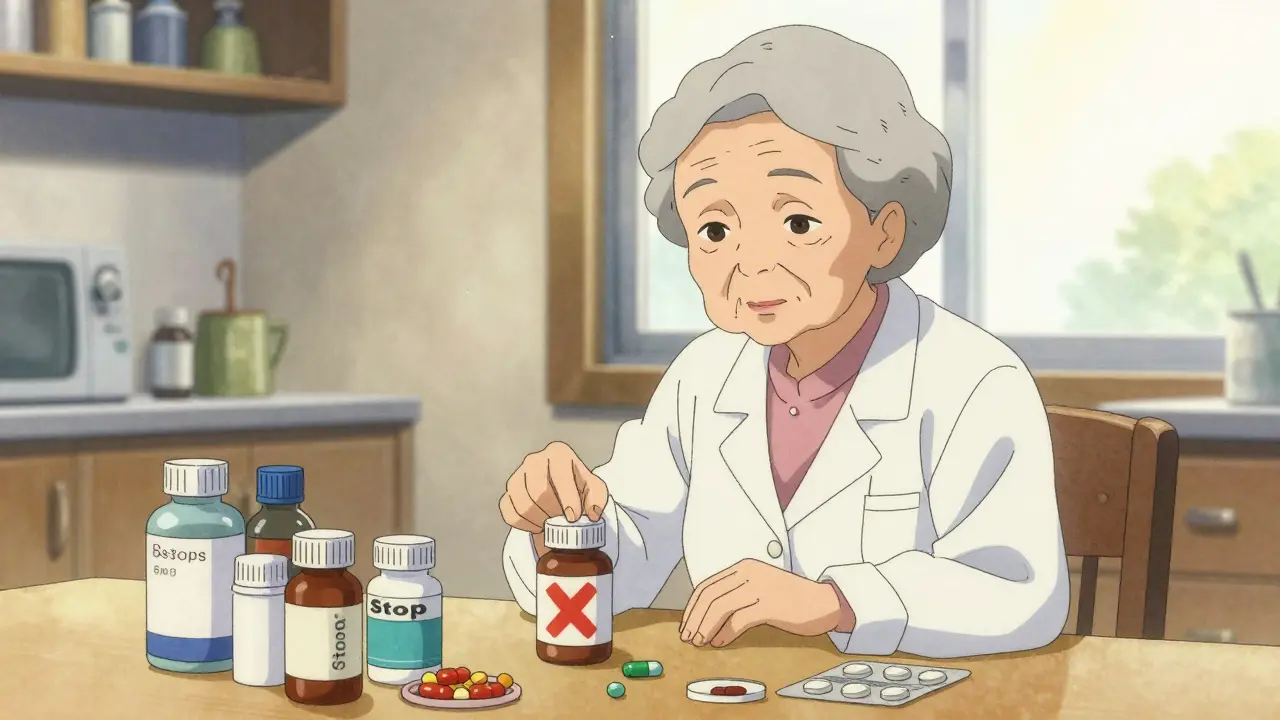
Every year, millions of older adults take medications that no longer help them - and may even be hurting them. It’s not because doctors are careless. It’s because prescribing often happens in isolation, one pill at a time, without ever stepping back to ask: Is this still necessary?
Why Deprescribing Matters More Than Ever
By age 65, the average person takes about four prescription drugs. By 80, that number often jumps to seven or more. Some of these meds were started for conditions that have since changed - or disappeared. Others were meant to prevent future problems, but the person’s life expectancy or health goals have shifted. Still others interact dangerously with new drugs or worsening health.
This isn’t just about taking too many pills. It’s about risk. A 2022 study found that seniors on five or more medications are nearly twice as likely to be hospitalized for a drug reaction. In the U.S. alone, over $30 billion is spent each year treating side effects from medications that older adults shouldn’t even be taking. These aren’t rare cases. They’re predictable.
Deprescribing - the careful, planned reduction or stopping of medications that are no longer beneficial - isn’t about cutting corners. It’s about precision. Think of it like cleaning out your medicine cabinet: you don’t toss everything. You keep what still works, remove what’s expired, and ditch what’s dangerous.
When to Consider Stopping a Medication
Not every pill needs to be stopped. But there are clear situations where stopping makes sense:
- New symptoms appear - If a senior suddenly develops dizziness, confusion, falls, or stomach bleeding, one of their meds might be the cause. Many doctors don’t connect the dots. A review can find the culprit.
- Life expectancy has changed - If someone has advanced dementia, heart failure, or cancer with limited prognosis, drugs meant to prevent future heart attacks or strokes (like statins or blood thinners) often do more harm than good. They take years to work. The person may not have years left.
- High-risk drugs are in use - Benzodiazepines (like Valium or Xanax), antipsychotics, and long-term proton pump inhibitors (PPIs) for heartburn are especially dangerous for seniors. These can cause falls, memory loss, kidney damage, and even increase dementia risk.
- Preventive meds offer no short-term benefit - A 90-year-old with no history of heart disease taking a daily aspirin to prevent a first heart attack? The risk of bleeding likely outweighs any benefit. Same with cholesterol-lowering drugs if the person isn’t aiming for longevity.
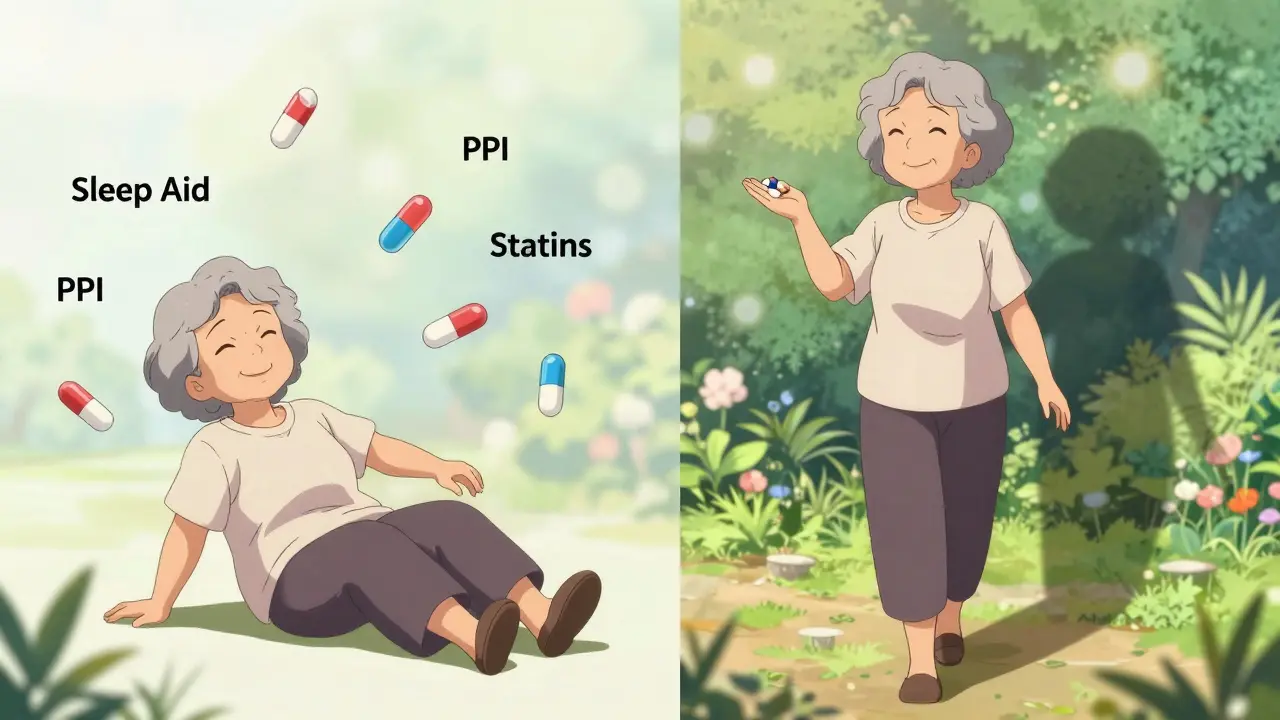
One real example: A 78-year-old woman started taking a sleep aid after her husband passed away. Two years later, she was falling three times a month. Her doctor didn’t realize the sleep aid was the problem - until a pharmacist reviewed her list. Stopping it reduced her falls to zero within weeks.
How Deprescribing Actually Works
It’s not a one-time decision. It’s a process:
- Review the full list - Every pill, patch, and supplement. Even over-the-counter drugs like antacids or sleep aids count.
- Identify candidates - Use tools like the Beers Criteria or STOPP guidelines. These are lists of drugs that are risky for seniors. Not all are bad - but they need extra scrutiny.
- Match to goals - What matters most now? Comfort? Mobility? Independence? If a drug doesn’t help those goals, it’s a candidate for removal.
- Stop one at a time - Never remove multiple drugs at once. You need to see what changes. If a symptom returns, you’ll know which drug caused it.
- Monitor closely - Watch for rebound symptoms or new issues. Some drugs cause withdrawal effects (like anxiety or high blood pressure) if stopped too fast.
- Involve the patient - If the person doesn’t want to stop, don’t force it. Their values matter. Maybe they like taking a pill because it makes them feel in control.
Many clinics now use clinical pharmacists to lead these reviews. They spend 45 minutes with a patient, comparing the list against their health goals. Studies show this cuts unnecessary meds by 30% or more.
What Happens When You Stop?
Some people worry: “If I stop my meds, will I get worse?”
Here’s what the evidence says:
- Heart disease drugs - Stopping statins in very frail seniors doesn’t increase heart attacks. Their risk of death from bleeding or side effects is higher.
- Diabetes meds - Tight blood sugar control in older adults with limited life expectancy increases hypoglycemia risk. Loosening targets improves safety.
- Antidepressants - Many seniors take them for years without review. Stopping can improve alertness and reduce falls - if depression isn’t active.
- Painkillers - Long-term opioids or NSAIDs often cause confusion and stomach ulcers. Alternatives like physical therapy or heat packs work better for chronic pain.
A 2023 study of over 5,000 seniors found that those who underwent structured deprescribing had 25% fewer hospital visits and 17% fewer emergency room trips. Their quality of life scores went up - not down.
Barriers to Stopping - And How to Overcome Them
Why don’t more doctors do this?
- “It’s easier to keep prescribing” - Doctors are trained to start meds, not stop them. Guidelines rarely explain how to discontinue.
- Patient resistance - “My doctor told me to take this forever.” Many seniors don’t question their prescriptions.
- Fragmented care - One doctor prescribes a new drug. Another forgets to review the old ones. No one has the full picture.
Solutions exist:
- Ask your pharmacist to do a full med review during a refill.
- Bring a list of all meds (including supplements) to every appointment - even if it’s just a yearly checkup.
- Ask: “Is this still helping me? What happens if I stop it?”
- Use free tools like deprescribing.org to get patient-friendly guides on common drugs like PPIs, sleep aids, and blood pressure pills.
It’s Not About Quantity - It’s About Fit
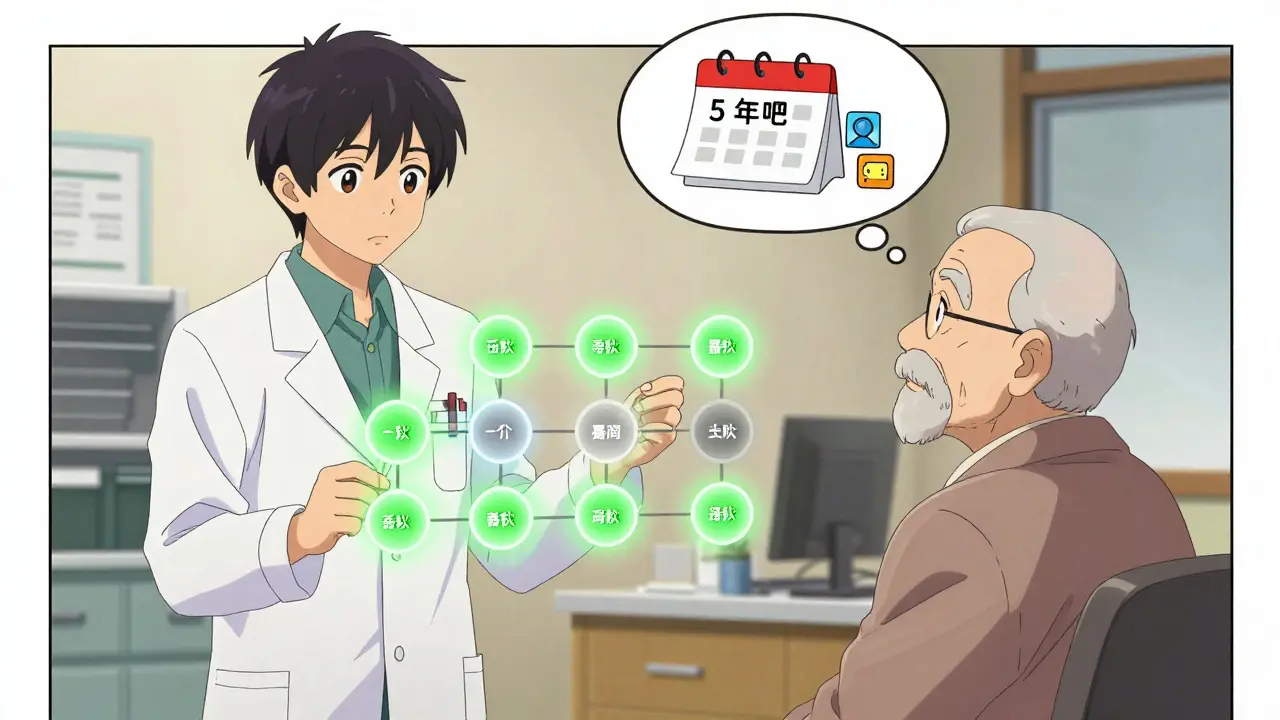
The goal isn’t to take fewer pills. It’s to take the right ones.
A 75-year-old with arthritis and mild memory loss might need pain relief, a blood pressure med, and a vitamin D supplement. That’s three. Perfect.
Another 75-year-old might be on 11 drugs: statin, aspirin, beta-blocker, diuretic, PPI, sleep aid, antidepressant, calcium, vitamin B12, thyroid med, and a muscle relaxant. That’s not health - it’s chaos.
One of those drugs might be causing her confusion. One might be making her dizzy. One might be useless now that her cancer is in remission.
Deprescribing isn’t about removing meds because they’re old. It’s about removing them because they’re no longer right for who you are now.
What You Can Do Today
- Make a list of every medication - including vitamins, herbs, and OTC drugs.
- Bring it to your next doctor or pharmacist visit.
- Ask: “Which of these are still helping me? Which might be doing more harm than good?”
- Don’t stop anything on your own - but do start the conversation.
Medications save lives. But they can also shorten them - if they’re not matched to your current health, goals, and risks. The best care isn’t always more drugs. Sometimes, it’s fewer - and better chosen.
Is deprescribing safe?
Yes, when done properly. Studies show that stopping unnecessary medications under medical supervision reduces hospitalizations, falls, and side effects. The key is doing it slowly, one drug at a time, and watching for changes. Never stop a medication without talking to your doctor first.
Can stopping meds cause withdrawal symptoms?
Some medications can, especially if stopped suddenly. These include antidepressants, blood pressure drugs, steroids, and sleep aids. That’s why deprescribing plans include gradual dose reductions and close monitoring. Your doctor will guide you on how to taper safely.
What if my doctor says I need this med forever?
Ask why. Is it based on your current health, or just because it was started years ago? Request a review using tools like the Beers Criteria. If your doctor resists, ask to speak with a clinical pharmacist or geriatric specialist. Many hospitals and clinics now offer free medication reviews.
Do I need to stop all my meds?
No. Deprescribing targets drugs that are no longer helpful or are risky. Many essential meds - like insulin for diabetes, blood pressure drugs for uncontrolled hypertension, or antibiotics for active infections - should continue. The goal is to remove the ones that don’t fit your current life.
How often should seniors have a medication review?
At least once a year - and every time there’s a major change in health, hospitalization, or new symptoms. Seniors on five or more medications should consider a review every six months. Don’t wait for a crisis to ask.
jerome Reverdy
March 19, 2026 AT 18:22Man, I’ve seen this play out in my own family. Grandpa was on like 12 meds-statins, aspirin, sleep aids, muscle relaxers, you name it. Then he started falling every other week. No one connected the dots until his pharmacist did a full review. Turned out two of those pills were making him dizzy as hell. Cut ‘em, and suddenly he’s walking the dog again. It’s wild how we treat meds like they’re permanent fixtures, not tools that need recalibration.
Deprescribing isn’t about going cold turkey. It’s about auditing your body like you would your budget. If a line item’s not delivering ROI, axe it. Simple.
And honestly? Doctors aren’t trained to stop things. They’re trained to add. We need pharmacists in the driver’s seat for this stuff.
Andrew Mamone
March 20, 2026 AT 20:52This is so needed. 🙌
My mom’s on 8 meds. One was for acid reflux she hasn’t had in 3 years. Another? A beta-blocker she doesn’t even need anymore after her heart issue resolved. Yet no one ever asked if they were still relevant.
Deprescribing isn’t ‘giving up’-it’s precision medicine. We need to stop treating seniors like they’re just a checklist of conditions and start treating them like whole people with goals.
Also-PPIs are a trap. 😬
MALYN RICABLANCA
March 21, 2026 AT 10:55OH MY GOD. YES. I’ve been screaming this from the rooftops since my aunt was put on five new meds after a minor fall-five!-and then she became a zombie who couldn’t remember her own birthday. The doctor said, ‘Well, it’s just precautionary.’ PRECAUTIONARY?!
She was on benzodiazepines, statins, a diuretic, an antidepressant, and a PPI. All of them were either useless or actively harming her. We stopped three. Within weeks, she was laughing again. Talking. Cooking. The rest? Still on because ‘it’s always been there.’
THIS IS A SYSTEMIC CRISIS. WE’RE DRUGGING OUR GRANDPARENTS INTO COMAS AND CALLING IT ‘CARE.’
Also-why is no one talking about how pharmacies profit from continuous prescriptions? 🤔
gemeika hernandez
March 23, 2026 AT 05:58My grandma took 11 pills. Then she started forgetting to eat. Turns out one of them was making her dizzy. Cut it. She ate again. That’s it.
Nicole Blain
March 24, 2026 AT 13:06My uncle had a similar story. He was on a sleep aid for 4 years after his wife passed. No one thought to ask if he still needed it. Then he started falling. Pharmacist said, ‘Let’s try stopping it.’ He hasn’t taken it in 8 months. Sleeps better than ever. No meds. Just routine. 🌿
It’s wild how simple solutions get buried under medical noise.
Kathy Underhill
March 26, 2026 AT 05:25The goal is alignment. Not reduction. A pill is not a virtue. Nor is its absence. What matters is whether it serves the person now-not who they were, or who they might become.
Srividhya Srinivasan
March 27, 2026 AT 07:40Of course they don’t want you to stop your meds. Big Pharma owns the doctors. They own the guidelines. They own the studies. You think this is about health? No. It’s about profit. Every time someone stops a statin, a billion-dollar corporation loses a customer.
And don’t get me started on PPIs-those are designed to be lifelong. That’s why they’re so aggressively marketed. Your stomach acid isn’t ‘too high’-it’s a natural defense. They’re poisoning you to sell you more pills.
Google ‘PPI withdrawal syndrome.’ Then ask why your doctor never warned you.
Wake up. This isn’t medicine. It’s a racket.
Prathamesh Ghodke
March 28, 2026 AT 01:26Hey, I’m a pharmacist in Mumbai, and this hits home. We see this all the time-older patients on 10+ meds, no one reviewing. Even here, in a country with limited healthcare access, we still overprescribe.
One elderly man was on 3 blood pressure meds, a diuretic, and a PPI. His BP was fine. His kidneys? Not so much. We tapered one med, then another. Now he’s on one pill. No dizziness. No falls.
It’s not about cutting corners. It’s about listening. And honestly? The system’s broken. But we can still fix it one patient at a time.
Also-yes, pharmacists should lead these reviews. We’re the ones who know what’s in the bottle. 😊
Stephen Habegger
March 28, 2026 AT 20:29This is the kind of post that makes you feel like maybe there’s still some sense in healthcare.
My dad’s 82. He’s on 5 meds. We asked the doc: ‘Which ones are still doing work?’
Turns out two were leftovers from a 2010 heart scare. He’s been stable since. We stopped them. No issues. He says he feels ‘lighter.’
Don’t be afraid to ask. And if your doctor brushes you off? Find someone who won’t.
Sanjana Rajan
March 30, 2026 AT 01:32Ugh. I hate how people treat seniors like they’re just a pile of broken parts. ‘Oh, he’s 80, he needs 7 pills.’ No. He’s a person. Maybe he wants to enjoy his coffee without feeling like a zombie.
And why is no one talking about how insurance companies incentivize doctors to keep prescribing? It’s not about health. It’s about billing codes.
My neighbor’s mom was on 12 meds. We got her down to 4. She started gardening again. That’s not ‘deprescribing.’ That’s restoring dignity.
Also-stop calling it ‘de-prescribing.’ It’s just ‘prescribing better.’
Kendrick Heyward
March 31, 2026 AT 04:33I’ve been saying this for years. Why do we treat elderly people like they’re medical experiments? ‘Let’s throw every possible drug at them and see what sticks.’
My uncle was on 9 meds. One was for a cholesterol level that hadn’t changed in 15 years. Another was for ‘preventing’ a stroke he’ll never have because he’s got dementia and a 3-year life expectancy.
They stopped 4. He’s alert again. Eats. Talks. Smiles.
And the doctor? Said, ‘I didn’t realize you were thinking about stopping.’
Because you never asked. You just kept adding.
That’s not care. That’s negligence dressed in a white coat. 😒
lawanna major
March 31, 2026 AT 23:03There’s a quiet dignity in reducing clutter-whether it’s in your home or your medicine cabinet.
Medications aren’t badges of honor. They’re tools. And like any tool, they lose their purpose when used beyond their context.
For many seniors, the goal isn’t longevity-it’s presence. To feel the sun. To taste food. To hold a grandchild’s hand without dizziness.
Removing unnecessary drugs doesn’t mean giving up. It means choosing what matters.
And yes-this takes courage. From patients. From families. From doctors who dare to unlearn what they were taught.
Ryan Voeltner
March 31, 2026 AT 23:31The imperative of deprescribing is not merely clinical but ethical. It demands a paradigm shift from accumulation to alignment. To prescribe is an act of intervention. To deprescribe is an act of reverence.
jerome Reverdy
April 2, 2026 AT 08:39Wait-so you’re telling me the doc who prescribed that sleep aid to my aunt never checked if she was still using it?
That’s not negligence. That’s malpractice by inertia.
And now I’m wondering how many of my own meds are just… ghosts on the list.