
Opioid Rotation Calculator
This calculator helps you understand how to safely switch opioids using standard equianalgesic dosing. Always follow your healthcare provider's exact instructions.
Opioid Conversion Calculator
Calculate safe dose conversions between common opioids for rotation planning
Conversion Results
Important Safety Note: Always reduce the new opioid's starting dose by 25-50% as a safety margin. Never switch opioids without medical supervision. Incorrect doses can lead to overdose.
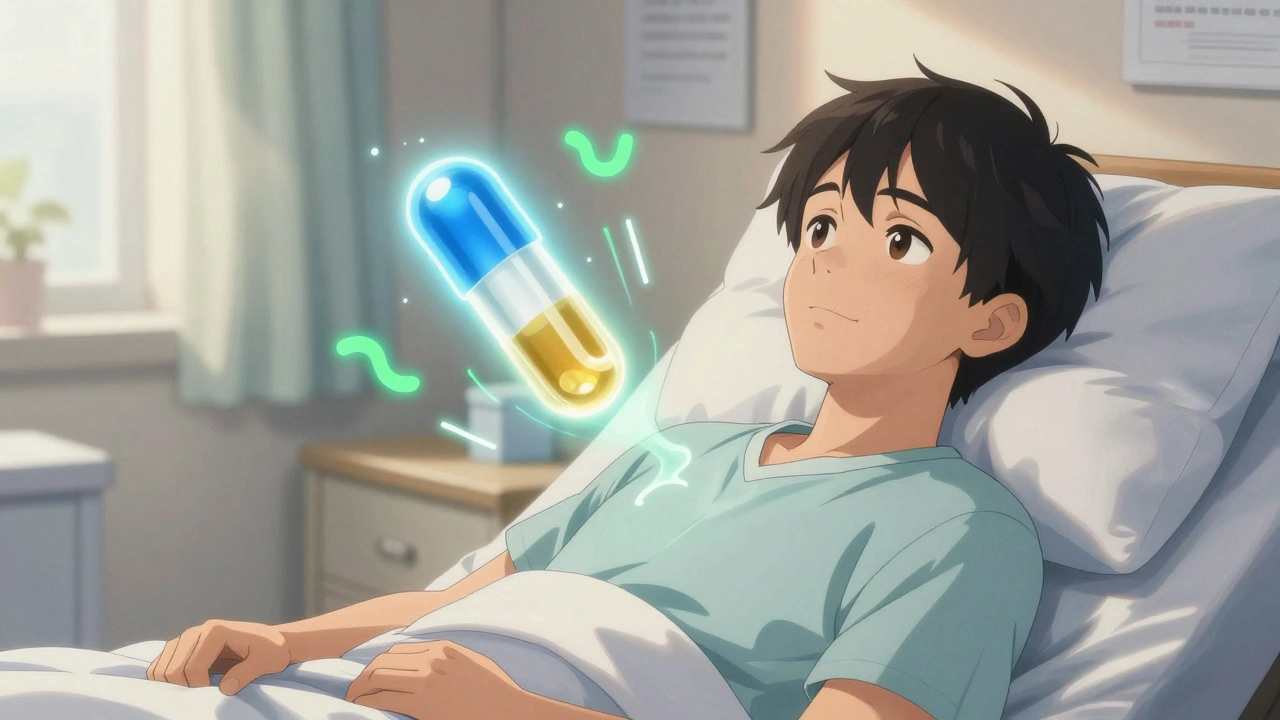
When opioid pain medications stop working well-or start causing unbearable side effects-many patients feel stuck. You’re taking the right dose, but nausea won’t go away. Or you’re so drowsy you can’t get out of bed. Or your pain is still burning through the medication like it’s not even there. That’s when opioid rotation becomes a real option: switching from one opioid to another to find relief without the same toll on your body.
Why Opioid Rotation Works When Dose Increases Don’t
It’s common to think that if a painkiller isn’t working, you just need more. But increasing the dose of the same opioid often makes side effects worse without helping the pain. That’s because your body builds tolerance-not just to the pain relief, but to the nausea, dizziness, constipation, and mental fog that come with it. Opioid rotation works differently. It’s not about pushing the dose higher. It’s about changing the drug itself. Research shows that 50% to 90% of patients who switch opioids see improvements in either pain control or side effects. Why? Because not all opioids affect your brain and gut the same way. One might trigger severe nausea, while another doesn’t. One might cause muscle twitching; another doesn’t. Your body reacts uniquely to each one. This isn’t guesswork. It’s a clinical strategy backed by expert guidelines from 2009, still used today because no better system has replaced it. The goal isn’t to replace every opioid with another-it’s to find the right match for your body.When Doctors Recommend Opioid Rotation
Not everyone who takes opioids needs to switch. Rotation is considered when specific problems arise:- You’re getting serious side effects-like constant vomiting, extreme drowsiness, confusion, or muscle spasms-that don’t improve even after adjusting the dose.
- Your pain isn’t getting better, even after doubling or tripling your current opioid dose.
- You’ve developed new health issues, like kidney or liver problems, that make your current opioid harder for your body to process.
- You need a different way to take the medication-say, from pills to a patch or injection-because swallowing is no longer possible.
- You’re taking other drugs that interact badly with your current opioid.
- You’re experiencing opioid-induced hyperalgesia: your pain actually gets worse the more you take, because your nervous system becomes overly sensitive.
Common Opioid Swaps and What They Fix
Not all opioid switches are equal. Some pair better with certain side effects:- Morphine to oxycodone: Often reduces nausea and constipation. Oxycodone is easier on the gut for many people.
- Morphine to fentanyl: Works well if you need a patch instead of pills, or if nausea and blurred vision are problems. Fentanyl is also used in patches, which can offer steadier pain control.
- Morphine to methadone: This one’s special. Methadone often lets doctors lower the total daily dose-even if pain stays the same. That’s because methadone works differently in the body. It lasts longer and has a different effect on pain pathways. Recent studies suggest the old conversion ratios (like 10:1 morphine to methadone) may be too high. The real ratio for side effect reduction is closer to 9:1, and it varies by dose.
- Hydrocodone to hydromorphone: Sometimes helps when constipation or dizziness is the main issue. Hydromorphone is stronger per milligram and can be more predictable.
The Safety Rules: Don’t Skip the Conversion
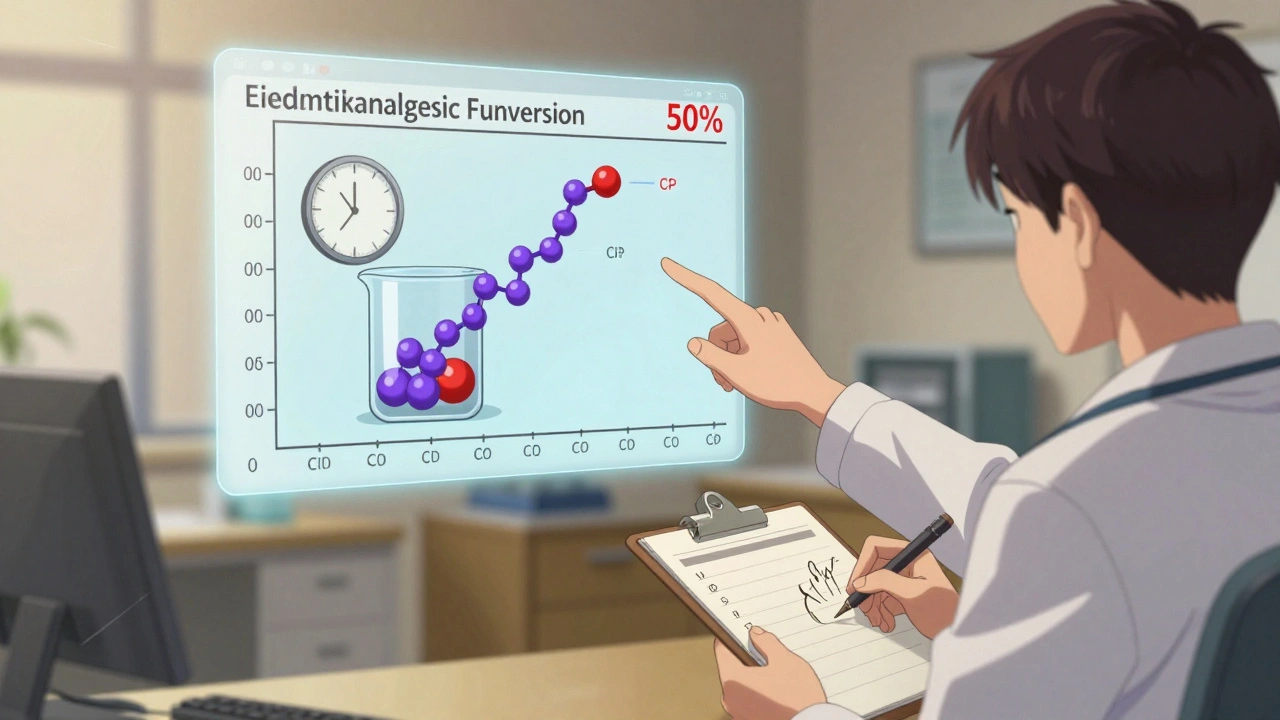
Switching opioids isn’t like switching brands of ibuprofen. You can’t just swap one pill for another at the same dose. Your body doesn’t fully cross-tolerate right away. That means if you take the same dose of a new opioid, you could overdose. Doctors use equianalgesic dosing-a calculation based on how strong each opioid is compared to morphine. But these ratios aren’t exact. They’re starting points. And they change depending on your dose, your age, your kidney function, and whether you’re switching for pain or side effects. Here’s the rule: Always reduce the new opioid’s starting dose by 25% to 50%. This is called a “conversion safety margin.” It’s not optional. Even experienced clinicians do this. Why? Because your body’s tolerance to the old drug doesn’t fully transfer to the new one. Skipping this step has led to fatal overdoses. For methadone, the margin is even bigger. Some experts recommend cutting the calculated dose by up to 60%, especially if you’re on a high dose of another opioid. Methadone builds up slowly in your system and can cause delayed respiratory depression days after the switch.What You Should Track After the Switch
Opioid rotation isn’t a one-time fix. It’s a process. You need to monitor how you feel over the next few days and weeks:- Keep a pain diary: Rate your pain on a scale of 1 to 10, three times a day.
- Track side effects: Note nausea, dizziness, sleepiness, constipation, or confusion.
- Watch for new symptoms: Could the new drug be causing something unexpected?
- Check your energy: Are you able to do things you couldn’t before?
Methadone: The Exception That Changes Everything
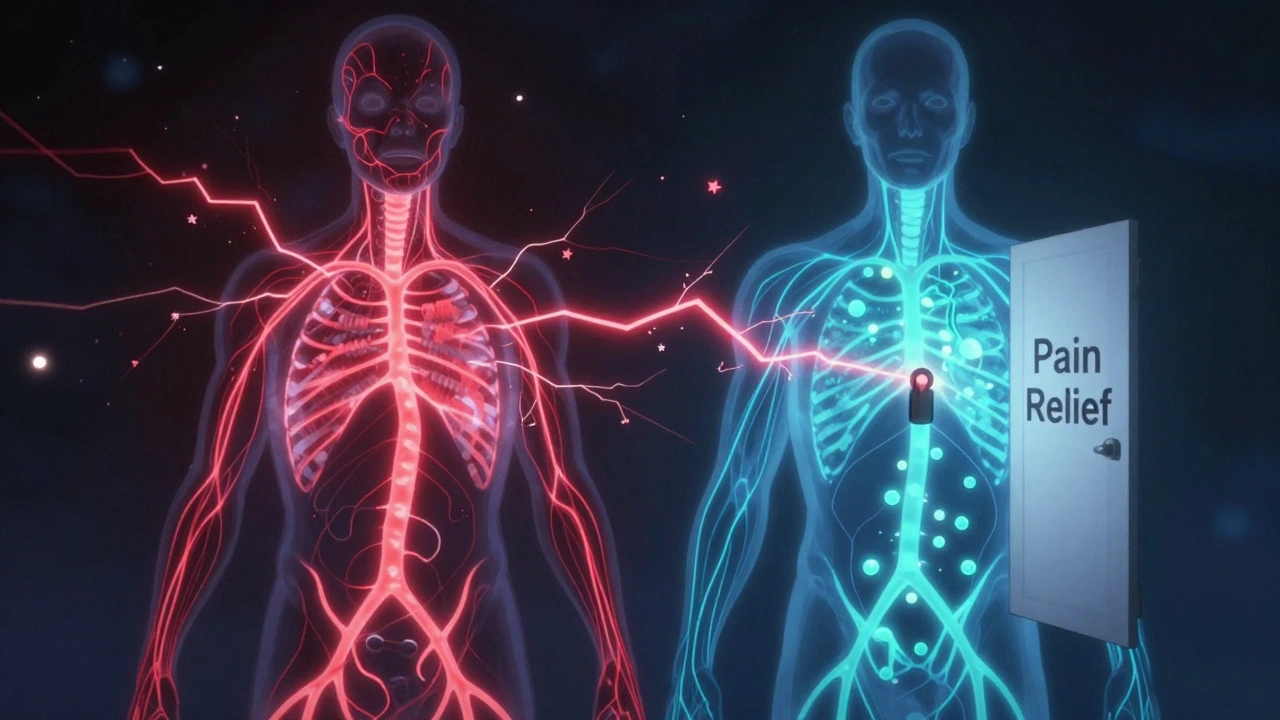
Methadone stands apart. Unlike other opioids, it often lowers your total daily opioid dose while keeping pain under control. That’s huge. High opioid doses are linked to more side effects, more risk, and more hospital visits. Recent data shows that in outpatient palliative care, patients who switched to methadone saw a drop in their Morphine Equivalent Daily Dose (MEDD). Others didn’t. That’s because methadone blocks pain receptors differently and lasts longer. It also has a unique effect on NMDA receptors, which helps with nerve pain. But methadone is tricky. Its long half-life means it sticks around. One dose can build up over days. That’s why it’s never started at full equianalgesic dose. And why you need a doctor who knows how to use it safely.What’s Next? Personalized Opioid Switching
Right now, opioid rotation is still based on general guidelines and trial and error. But the future is changing. Researchers are looking at genetic testing to predict how you’ll respond to certain opioids. Some people have gene variants that make them process codeine poorly-or fentanyl too quickly. That could one day tell your doctor, “Try oxycodone first, avoid morphine.” Electronic health records are also starting to include built-in rotation calculators that factor in your kidney function, age, and current dose. These tools help reduce errors. Until then, the best approach is simple: if your current opioid is causing more harm than help, talk to your doctor about switching. Don’t wait until you’re too sick to speak. Don’t assume you’re stuck. Opioid rotation isn’t failure-it’s strategy.Common Questions About Opioid Rotation
Is opioid rotation safe?
Yes, when done correctly. The biggest risk is overdose during the switch, which is why doctors always reduce the new opioid’s starting dose by 25% to 50%. This safety margin prevents accidental overdose while your body adjusts. Always follow your provider’s exact instructions.
Can I switch opioids on my own?
Never. Opioid rotation requires precise calculations based on your current dose, health status, and the specific drugs involved. Even small errors can lead to life-threatening side effects. Always work with a doctor experienced in pain management.
How long does it take to know if the new opioid is working?
You should notice changes in pain and side effects within 2 to 5 days. For methadone, it may take up to a week because it builds up slowly. If you still have severe side effects or uncontrolled pain after 7 days, contact your doctor. Another adjustment may be needed.
Will I need to keep rotating opioids forever?
Not necessarily. Many people find one opioid that works well for them and stay on it. Rotation is a tool to get to that point-not a lifelong requirement. Once you find a good match, the goal is stability, not constant change.
What if the new opioid doesn’t help?
If the new opioid doesn’t improve pain or side effects, your doctor may try another rotation, adjust the dose, or consider non-opioid options like nerve blocks, physical therapy, or medications like gabapentin or duloxetine. Rotation is one tool, not the only solution.
Jade Hovet
December 13, 2025 AT 05:06OMG YES THIS!! I switched from morphine to oxycodone last year and my nausea just VANISHED 🙌 I was crying in the bathroom every morning before, now I can actually eat breakfast without feeling like I’m gonna die. Thank you for writing this!!
nithin Kuntumadugu
December 13, 2025 AT 05:15lol so basically the pharma companies dont want you to know this bc if everyone rotated meds theyd lose money on the big brand opioids... also methadone is just a gateway to the deep state control program lmao
Ronan Lansbury
December 15, 2025 AT 00:36The entire premise of opioid rotation is a statistically dubious construct masquerading as clinical wisdom. The 50-90% improvement figure is pulled from cherry-picked palliative care cohorts with negligible controls. The notion that differential receptor binding profiles across opioids yield meaningful clinical variance ignores pharmacokinetic convergence in chronic dosing. This is placebo medicine dressed in academic jargon.
John Fred
December 16, 2025 AT 05:05Just wanted to say this is one of the clearest explainers I’ve read on this topic. Seriously, if you’re on opioids and stuck - talk to your pain doc about rotation. It’s not weakness, it’s smart management. I switched from hydromorphone to fentanyl patch and my brain fog lifted like a foghorn. 🙏
Harriet Wollaston
December 16, 2025 AT 14:24I’ve been through 3 rotations and each time it felt like finding a new pair of shoes that actually fit. The first one was brutal - like switching from high heels to flip flops while walking on gravel. But now? I’m walking. Not running. But walking. And that’s everything.
sharon soila
December 18, 2025 AT 06:11We must remember that pain is not a failure of will. It is not a moral issue. It is a biological reality. Opioid rotation is not a last resort. It is a compassionate recalibration of care. Every human deserves to live without being crushed by their own body. This is not medicine. This is dignity.
nina nakamura
December 20, 2025 AT 00:42You people are naive. The only reason rotation works is because doctors underdose the new opioid to avoid liability. The real problem is that opioids are terrible long term solutions. You’re just swapping one problem for another. Stop celebrating band aids as cures.
Hamza Laassili
December 20, 2025 AT 08:44I don't care what your fancy studies say. If you're American and you're on opioids, you're probably addicted. And if you're not, you're just lazy. We don't need to rotate drugs-we need to rotate people back to work. This whole thing is a welfare scam dressed up as science.