

Medication Side Effect Checker
Understanding Side Effects
Every medication can have side effects. This tool helps you determine if a side effect is normal or requires medical attention. Remember: not all side effects are created equal.
Select a side effect and answer the questions to get personalized guidance.
Every time you start a new medication, there’s a quiet question in the back of your mind: Is this side effect normal-or dangerous? You might feel drowsy after taking your antidepressant. Your stomach might churn after your diabetes pill. Or maybe you notice a rash that wasn’t there yesterday. The problem isn’t just the symptom-it’s the uncertainty. Do you push through? Call your doctor? Stop the pill? Too many people guess wrong. And the consequences can be serious.
Not All Side Effects Are Created Equal
The FDA defines side effects as unintended responses to medications at normal doses. But not all unintended responses are the same. Some are annoying. Others are dangerous. The difference isn’t always obvious, but it’s critical.Take dry mouth. It’s common with antipsychotics-up to 60% of people on these drugs get it. It’s uncomfortable, sure. But it’s rarely harmful. Drinking more water, chewing sugar-free gum, or using a saliva substitute can help. You don’t need to stop the medication. This is an acceptable side effect.
Now compare that to black stools or vomiting blood. That’s not dry mouth. That’s gastrointestinal bleeding. It happens in about 0.5-1% of people taking NSAIDs like ibuprofen every day. It’s a red flag. It means something’s wrong inside your digestive tract. You don’t wait. You call your doctor now.
The same goes for swelling in your face, trouble breathing, or a sudden rash. These aren’t side effects-they’re signs of a severe allergic reaction. The FDA says these occur in 1-2% of new medication starts. They require emergency care. No waiting. No hoping it goes away.
When to Tolerate: The 7-Day Rule
Many side effects aren’t permanent. They’re your body adjusting. This is especially true with mental health meds. If you start an SSRI for depression, about 35-40% of people feel drowsy at first. About half get mild nausea. These aren’t signs the drug isn’t working-they’re signs your brain is rewiring.Experts like Dr. Sarah Johnson from the Journal of Clinical Psychopharmacology say: if a side effect is mild and starts within the first few days, give it 7-10 days. Most of these fade on their own. Drowsiness? Take the pill at night. Nausea? Eat a small snack with your dose. Dry mouth? Sip water all day.
But here’s the catch: you need to be honest with yourself. Is the drowsiness making you miss work? Is the nausea keeping you from eating? If the side effect is interfering with your daily life-even if it’s "mild"-it’s worth talking about. You shouldn’t have to suffer just because it’s "common."
When to Act: The Red Flags
Some side effects aren’t up for debate. If you experience any of these, contact your provider immediately-or go to urgent care:- Swelling of the face, lips, or throat
- Difficulty breathing or wheezing
- Black, tarry stools or vomiting blood
- Sudden confusion, memory loss, or trouble walking
- Unexplained bruising or bleeding
- A rash that spreads quickly or blisters
These aren’t "side effects" in the usual sense. They’re warning signs of something serious. For example, allopurinol (used for gout) carries a black box warning from the FDA: if you get a rash, stop it immediately. That rash could turn into a life-threatening skin reaction.
Seniors are especially at risk. The National Institute on Aging says 5-7% of older adults on multiple medications develop confusion or coordination issues. That’s not aging. That’s drug interaction. A simple change in dosage or switching one pill can prevent a fall-or worse.

What You Can Do Right Now
You don’t have to wait for your next appointment to take control. Here’s what works:- Time it right. The FDA says 30-40% of people with sleep-related side effects fix the problem just by switching from morning to nighttime dosing.
- Eat with your meds. Metformin, antibiotics, and NSAIDs often cause stomach upset. Taking them with food cuts that risk by 60-70%.
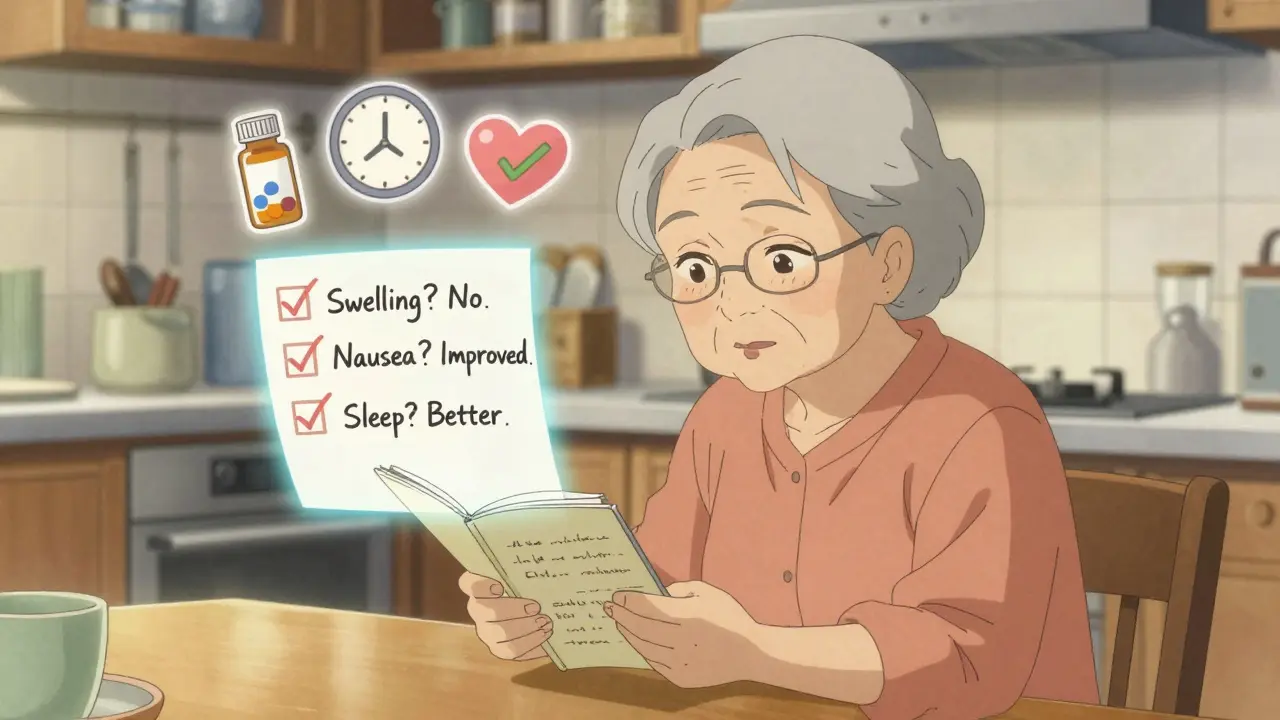
- Track it. Write down: when the side effect started, how bad it is (1-10 scale), what you were doing when it happened, and if anything made it better or worse.
Dr. Michael Chen at Johns Hopkins found that patients who tracked side effects with details were 4.2 times more likely to get the right fix from their doctor. Vague complaints like "I feel weird" lead to guesswork. Specific notes like "Nausea started 2 hours after my 8 a.m. pill, got worse after coffee, eased after eating toast" lead to real solutions.
What Most People Get Wrong
An analysis of 782 Reddit threads from the r/medication community showed a troubling pattern: 65% of people tried to handle side effects on their own first. And 42% ended up suffering longer than they needed to.The biggest mistake? Stopping the medication without talking to a provider. The CDC says 28% of people quit their meds because of side effects. Of those, 73% later saw their original condition get worse. That’s not bravery-it’s a trap.
Another myth: "If it’s not life-threatening, it’s not worth mentioning." That’s false. Mild side effects that last more than two weeks? That’s a sign your body isn’t tolerating the drug. It’s not just discomfort-it’s a signal the treatment might not be right for you.
Shared Decision-Making Is Your Best Tool
Your doctor isn’t here to just hand you a prescription. They’re here to help you choose. The CDC’s 2024 safety framework says the best outcomes happen when you and your provider make decisions together.Before your next visit, prepare three questions:
- Is this side effect expected with this medication?
- How long should I wait before calling if it doesn’t improve?
- What should I do if it gets worse?
Studies in JAMA Internal Medicine show patients who asked these questions resolved side effects 32% faster. Why? Because they gave their doctor the right information to act.
Options aren’t just "keep taking it" or "stop it." There’s a middle path:
- Adjust the dose (works for 45-50% of mild cases)
- Change the time of day (effective in 30-35% of cases)
- Switch to a similar drug with fewer side effects (needed in 15-20% of cases)
For example, someone on metformin with constant stomach upset might switch to extended-release metformin. Someone with dry mouth from an antidepressant might try a different class of drug. It’s not failure-it’s fine-tuning.
Cost Can Be a Hidden Side Effect
Here’s something rarely talked about: money. A 2023 Kaiser Family Foundation study found 37% of people stick with side effects they hate because they can’t afford to switch meds. That’s not just about price-it’s about quality of life. If you’re too tired to work, too nauseous to eat, or too dizzy to walk the dog, that’s a cost too.If cost is holding you back, say so. Pharmacists can often suggest generic alternatives. Some drugmakers have patient assistance programs. Your doctor might be able to prescribe a lower-cost option that still works. Don’t let price force you into silent suffering.
It’s Not About Endurance. It’s About Control.
Medications are powerful. They can save your life. But they’re not magic. They come with trade-offs. The goal isn’t to tolerate every side effect. It’s to know which ones you can manage, which ones need attention, and how to speak up when something’s off.You’re not being difficult. You’re being smart. You’re not overreacting. You’re paying attention. And that’s the most important part of any treatment plan.
How do I know if a side effect is serious enough to call my doctor?
Call your doctor if the side effect is new, worsening, or affecting your daily life-like sleep, eating, walking, or thinking. Also call if it lasts more than two weeks. For symptoms like trouble breathing, swelling, black stools, confusion, or a spreading rash, go to urgent care or emergency services right away. Don’t wait.
Should I stop taking my medication if I have side effects?
Never stop a prescribed medication without talking to your doctor first. Stopping suddenly can make your original condition worse-or cause withdrawal symptoms. For example, quitting an antidepressant too fast can trigger anxiety, dizziness, or flu-like symptoms. Always ask your provider for a safe plan before stopping.
Can I manage side effects on my own without calling my doctor?
You can try simple fixes for mild side effects: drink more water for dry mouth, take meds with food for stomach upset, or switch to nighttime dosing for drowsiness. But if it doesn’t improve in 7-10 days-or if you’re unsure-call your doctor. Many people think they’re being independent by handling it alone, but that often leads to longer discomfort. Your doctor wants to help you feel better.
Why do some side effects go away after a few days?
Your body needs time to adjust to new chemicals. Medications like antidepressants, blood pressure drugs, and even some antibiotics cause temporary changes in how your brain or digestive system works. After 7-10 days, your body often adapts. That’s why doctors tell you to wait before deciding a drug isn’t right for you.
What if my side effects are embarrassing, like weight gain or sexual dysfunction?
These are common, but they’re still important. Weight gain from mood stabilizers or sexual side effects from SSRIs affect quality of life just as much as nausea or dizziness. Many people don’t bring them up because they feel awkward. But your doctor has heard it before. These are valid reasons to adjust your treatment. Don’t let embarrassment cost you your well-being.
How can I tell if my side effect is from the medication or my condition?
Track your symptoms with dates and timing. If the symptom started right after you began the medication, it’s likely related. If it was already happening before, it may be your condition. For example, fatigue from depression vs. fatigue from a new blood pressure pill. Writing it down helps your doctor sort it out.
Are there side effects I should expect with mental health meds?
Yes. Common ones include drowsiness (35-40% of SSRI users), dry mouth (60% of antipsychotic users), weight changes (25-30% of mood stabilizer users), and nausea (50% of antidepressant starters). Most are temporary. But if they last longer than two weeks or interfere with daily life, talk to your provider. There are often alternatives.
Can side effects get worse over time?
Yes. Sometimes, side effects start mild but grow worse as your body changes or if you start another medication. For example, a drug that caused mild dizziness at first might cause falls after you add a sleep aid. Always tell your doctor about every new medication or supplement you take-even over-the-counter ones.
What’s the best way to talk to my doctor about side effects?
Be specific. Don’t say "I feel bad." Say: "I’ve had nausea every morning for 10 days after taking my pill at 8 a.m. It goes away by noon. I’ve tried eating toast with it, but it hasn’t helped." Bring a written list. Mention how it’s affecting your work, sleep, or relationships. The more detail you give, the faster you’ll get help.
What if my doctor says the side effect is normal and I should just live with it?
You have the right to ask for alternatives. If a side effect impacts your quality of life-even if it’s "normal"-it’s worth exploring other options. Ask: "Are there other medications in the same class that don’t cause this?" or "Can we try a lower dose?" If your doctor dismisses your concerns, consider a second opinion. Your comfort and safety matter.
Ann Romine
December 31, 2025 AT 21:29Had a weird rash after starting my new blood pressure med. Thought it was just dry skin. Turned out to be a reaction. Took me 3 weeks to finally call my doctor because I didn’t want to seem like a hypochondriac. Don’t make my mistake. Write it down, track it, and speak up-even if it feels silly.
Also, the part about cost being a hidden side effect? Real. I stayed on a med that made me exhausted because I couldn’t afford the alternative. Lost two jobs over it. Your health isn’t a luxury. Say the word "cost" out loud. It’s okay.
Thanks for writing this. Needed to hear it.
Todd Nickel
January 1, 2026 AT 14:53It’s fascinating how the medical establishment has conditioned patients to equate discomfort with compliance. We’re told to "just wait it out" as if our bodies are broken machines that need to be calibrated through suffering. But the body isn’t a machine-it’s a dynamic system constantly signaling its state. The 7-day rule works for transient adjustments, yes, but when we normalize prolonged discomfort under the banner of "it’s common," we’re not being patient-we’re being passive.
The real issue isn’t whether side effects are tolerable-it’s whether the healthcare system incentivizes providers to listen. Most doctors have 8-minute appointments. How are they supposed to parse your 10/10 nausea, your sleep paralysis, your sexual dysfunction, and your existential dread about the pill you’re supposed to take for life? The system is broken. The advice in this post is good, but it’s a Band-Aid on a hemorrhage.
And yes, tracking symptoms matters. But if your doctor doesn’t take your log seriously, it’s not your fault. It’s theirs. And you deserve better.
Austin Mac-Anabraba
January 2, 2026 AT 18:06Let’s be real. This whole "7-day rule" is corporate medicine’s way of offloading responsibility onto the patient. You think the pharmaceutical companies want you to stop taking their drug because you got a rash? Of course not. They want you to keep swallowing it until you’re too tired to care. And don’t get me started on the "just switch to nighttime dosing" advice-like drowsiness is just a scheduling problem. What if you work nights? What if you’re a single parent? What if your body doesn’t adapt?
This isn’t about being "smart." It’s about surviving a system designed to profit from your compliance, not your health. The FDA doesn’t care if you’re dizzy. They care if you die. And that’s the bar. Pathetic.
Also, the part about Reddit threads? That’s not data. That’s anecdata. You can’t prove anything with 782 Reddit posts. But hey, it sounds good in a blog post.
Phoebe McKenzie
January 3, 2026 AT 13:16STOP TELLING PEOPLE TO "JUST WAIT."
I had a friend who took Paxil for two months because she was told "dizziness is normal." She fell down the stairs, broke her pelvis, and ended up in the ER. That’s not normal. That’s negligence. You don’t wait when your body is screaming. You call your doctor. You demand answers. You don’t let some algorithmic "7-day rule" decide if you live or die.
And don’t even get me started on the cost issue. People are dying because they can’t afford to switch meds. That’s not a side effect-that’s a crime. The pharmaceutical industry is a cartel that treats human beings like data points. If you’re tolerating side effects because you’re afraid of the bill, you’re being exploited. And I’m not sorry for being angry about it.
Stop normalizing suffering. It’s not bravery. It’s brainwashing.
gerard najera
January 3, 2026 AT 18:36Track it. Speak up. Don’t stop cold.
That’s it.
Stephen Gikuma
January 4, 2026 AT 18:09Who wrote this? Big Pharma’s PR team? "Just track your symptoms" like that’s gonna stop the FDA from greenlighting dangerous drugs. You think your little journal is gonna make them change their mind? Nah. They’ve got lobbyists in D.C. and doctors on payroll. Your nausea? Your fatigue? Your sexual dysfunction? They don’t care. They just want you to keep buying.
And don’t even mention the "patient assistance programs." Those are scams. You need a lawyer to apply, and they deny you anyway.
Real talk: if you’re on more than three meds, you’re a walking clinical trial. The system doesn’t want you healthy. It wants you dependent. Wake up.
LIZETH DE PACHECO
January 6, 2026 AT 12:03Hey, I just wanted to say thank you for this. I’ve been too scared to tell my doctor about the weight gain from my mood stabilizer. Felt like I was being dramatic. But reading this made me realize-I’m not overreacting. I’m surviving.
I wrote down my symptoms for the first time last week. Took me 3 tries to send the message. But I did it. And guess what? My doctor didn’t judge me. We switched meds. I’ve got my energy back.
You’re not alone. And you’re not weak for speaking up. You’re brave.
Keep going. I believe in you.
Lee M
January 6, 2026 AT 16:33There’s a difference between tolerating a side effect and accepting a compromise. You’re not supposed to suffer. You’re supposed to optimize. If your doctor can’t help you do that, find one who can.
Medication isn’t a one-size-fits-all prison sentence. It’s a tool. And you’re the one holding the handle.
Use it wisely.
Kristen Russell
January 6, 2026 AT 21:28This is the kind of post I wish I’d read 5 years ago. I stopped my antidepressant because I thought the nausea meant it wasn’t working. Turned out it was just timing. I took it with food and it vanished.
But I didn’t know that. I just felt ashamed. Like I couldn’t handle it.
You’re not broken for having side effects. You’re human. And you deserve to feel better-not just survive.
Thank you for saying this out loud.