
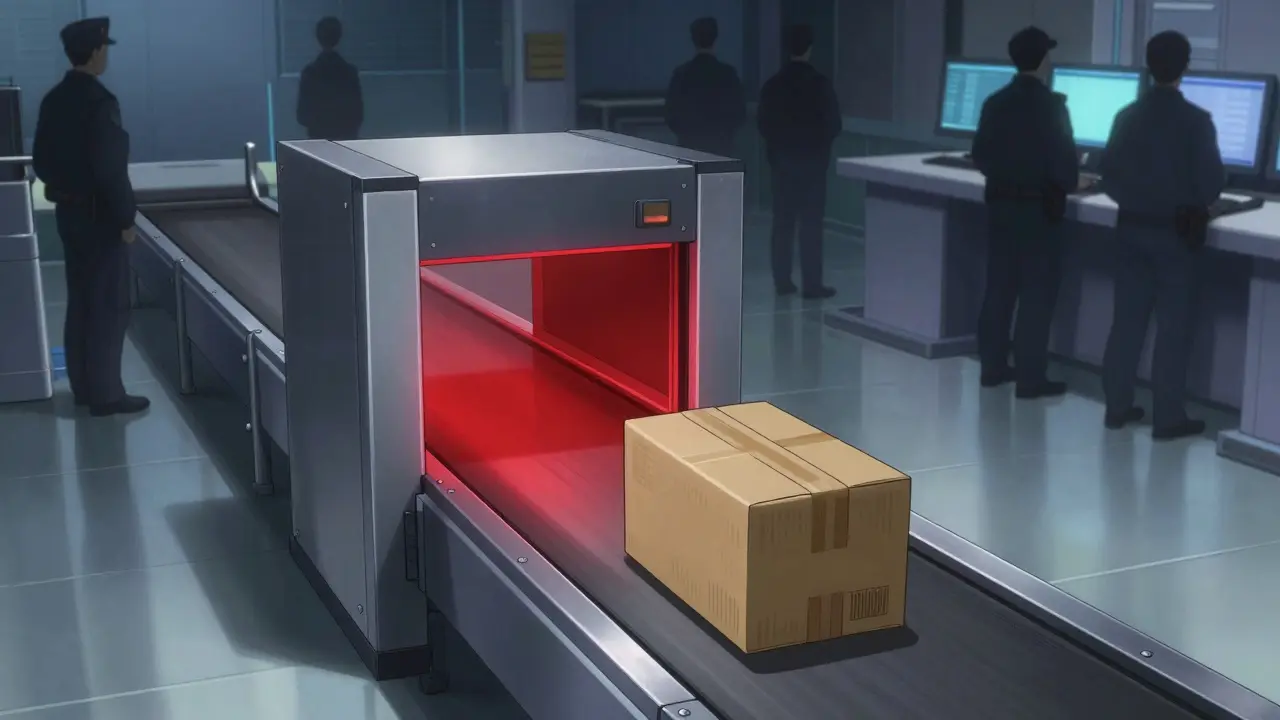
The Reality Check: It Is Different Now
If you think you can still pop a package off a foreign site and have it slip through customs without any hassle, you need to stop right there. As of early 2026, the landscape for international mail-orderthe practice of purchasing goods from foreign merchants through postal services crossing borders has shifted fundamentally. We are past the initial shockwaves of the regulatory overhaul that began last summer. The era of the massive duty-free allowance is officially over. For those looking to manage medication costs or shop globally, understanding where the line exists between legal personal purchase and prohibited commerce is critical.
This guide isn't about finding loopholes. It is about navigating the current rules effectively so you don't lose your shipment-or worse, face legal trouble. With the new permanent duty systems fully in place, every parcel entering the country triggers a valuation process. Whether you are ordering a chronic medication supply or specialized health equipment, the paperwork demands precision.
The Post-Transition Regulatory Environment
To understand what you can send and receive, you must first recognize that the temporary grace periods we saw earlier this year have expired. The regulatory shift that took root in late 2025 is now the permanent standard. Gone is the De Minimis Thresholda value limit below which imported goods can enter without paying duties. Previously, packages under $800 often slid through unnoticed. That buffer was removed by Executive Order 14324, and as of today, almost all incoming shipments are subject to duty assessment.
The U.S. Customs and Border Protection (CBP) now mandates a dual-phase calculation for duties, although the flat-rate "Method 2" option is no longer available after the February 2026 cutoff. Today, only Method 1 applies, meaning you pay an ad valorem rate based on the declared value of your item using specific tariff percentages. This means the cost of bringing something in has become more transparent but also more administrative. For example, if you order a $500 device, you aren't just worrying about shipping; you need to calculate the potential tax hit immediately upon arrival.
This change disproportionately impacts small-value orders. If you were relying on mail-order to keep costs down for everyday supplies, expect your effective price per unit to rise due to fixed processing fees that carriers now pass on for clearance. Many standard postal operators have paused their acceptance of business parcels to the US entirely because the burden of handling these micro-payments is too high. Consequently, the volume of traffic has migrated toward Express Carrierslogistics providers such as DHL, FedEx, or UPS that handle customs brokerage internally.
Importing Medications: FDA vs. Customs
When "international mail-order" intersects with health products, two distinct agencies come into play. CBP worries about duties and taxes, but the FDA (Food and Drug Administration)the federal agency responsible for protecting public health by ensuring food and drug safety determines safety and legality. Just because CBP clears a package doesn't mean the FDA approves it for entry. Most consumers confuse these two processes.
For prescription drugs, the general rule remains strictly prohibitive against importing them into the U.S. unless they meet very narrow exceptions. The FDA enforces the Personal Importation Policyan exception allowing individuals to bring limited quantities of unapproved drugs for personal use. To qualify, you must prove the medication is for personal use (typically no more than a three-month supply), there is no commercially available treatment in the U.S., and the drug would not present an unreasonable risk. Ordering generic versions of common drugs from another country rarely qualifies under these rules because the brand-name equivalent likely exists domestically.
Beyond the legalities, the technical documentation required to move medical goods has tightened. If you are legally attempting to ship a prescribed supplement or a medical device (like insulin pumps), you must attach a valid prescription to the external declaration. Without it, the package will be flagged as potentially counterfeit or unsafe biological material. Additionally, if the item contains batteries or temperature-sensitive components, the classification changes again. These specific attributes trigger additional safety reviews.
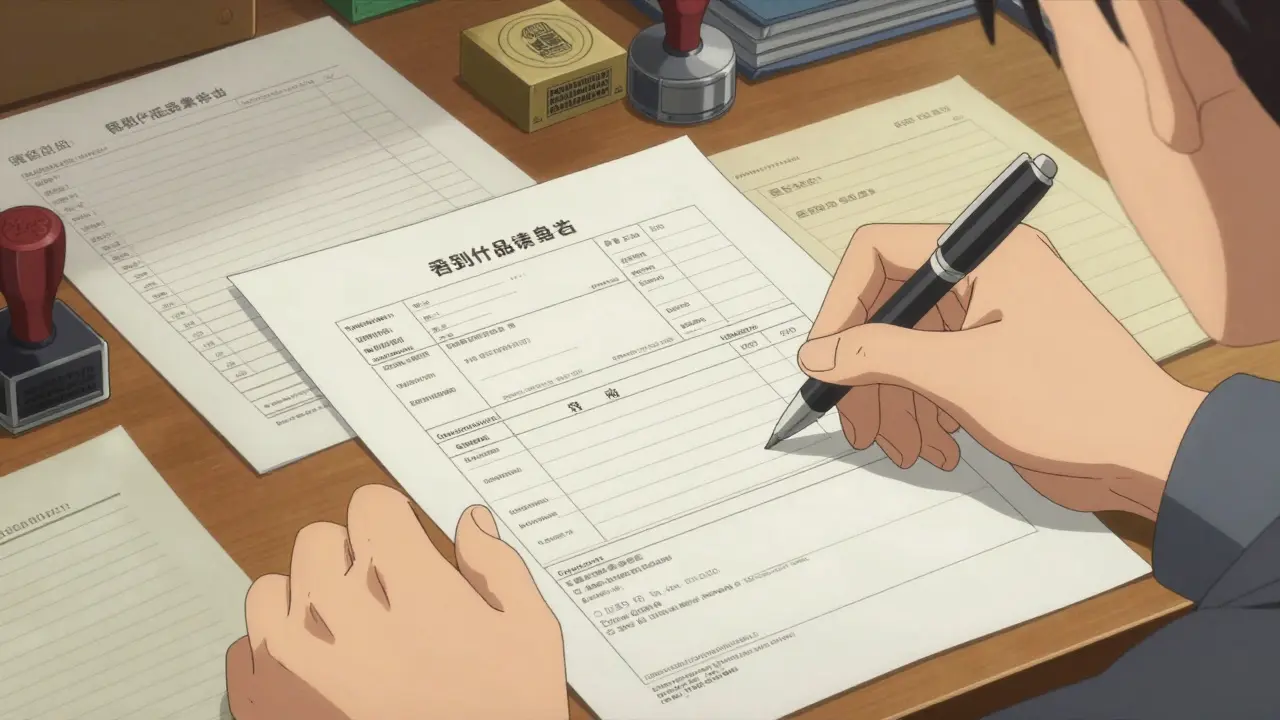
The Role of HS Codes and Documentation
You cannot describe your package vaguely anymore. The days of labeling an international box as just "Gift" or "Sample" are history. Since the implementation of stricter documentation requirements starting last year, every commercial or semi-commercial shipment requires a detailed Commercial Invoicea document detailing the transaction between buyer and seller including item description and value. This invoice must accompany the physical package.
Central to this requirement is the six-digit Harmonized System (HS) Codea standardized system of names and numbers to classify traded products used by customs authorities worldwide. Imagine this code as a digital DNA sequence for your product. If you order a blood pressure monitor, you cannot simply call it "Health Gadget." You must find the specific HS code (e.g., 9018 for surgical instruments). Mislabeling this code isn't just an annoyance; it carries financial penalties.
Carriers act as agents here. They have tools to scan your invoice and match items to the database automatically. If there is a mismatch between the description on the invoice and the actual contents, the package is held. For medical devices, the accuracy of this code dictates the duty rate. A wrong code could flag your shipment as a controlled substance rather than a device, leading to immediate seizure.
| Requirement | Why It Matters | Risk of Non-Compliance |
|---|---|---|
| Detailed Description | Allows proper HS coding and valuation. | Package hold or return to sender. |
| Prescription Copy | Proves legitimate medical necessity for drugs/devices. | FDA seizure and destruction of goods. |
| Packing List | Verifies contents against commercial invoice. | Customs examination delay and potential fines. |
| Country of Origin | Determines applicable trade agreements or duties. | Higher tariff rates applied retroactively. |
Choosing Your Shipping Lane Wisely
Not all carriers are equal in this environment. Standard postal networks struggle to handle the granular tracking and billing requirements imposed by the new regime. As noted in industry updates, major international postal operators like Deutsche Post stopped accepting many business parcels heading to the US because the cost of handling the low-dollar fees exceeded the profit margin.
This leaves Integrated Logistics Providerscompanies that offer combined services of transportation, warehousing, and customs clearance as the primary viable option for most legitimate orders. Companies like DHL, FedEx, and UPS have pre-existing customs brokerage capabilities. They act as the qualified party bonded with CBP, absorbing some of the friction. While their base shipping rates are higher, they prevent the hidden costs of lost packages or abandoned containers.
However, even they won't carry certain items. Before checking out, verify the carrier's prohibition list. Many refuse to transport controlled substances or certain pharmaceuticals via air freight due to liability concerns. If you plan to buy heavy medical equipment (like CPAP machines), verify the weight limits and hazmat classifications (batteries often count). Always declare the full accurate value. Under-declaring a package to dodge taxes is fraud; modern imaging technology at border crossings detects anomalies instantly.

Avoiding Seizure and Confiscation
The most common reason for seized international mail-order shipments involves mislabeled medical goods. Consumers often believe that buying "generic" versions of medications abroad makes them legal. Often, these are considered counterfeit or adulterated by the FDA because they lack domestic approval. Even if the medicine is chemically identical, the packaging and manufacturing oversight must align with local standards.
To protect yourself, audit your source. Reputable vendors in allowed countries will ask for your ID or proof of residency before shipping. If a site lets you buy ten units of a restricted painkiller without a question, it is a red flag. Additionally, watch out for "grey market" imports. These are genuine products diverted from other markets. While sometimes tolerated, they are not officially licensed, leaving you with no recourse if the product fails or causes harm.
Finally, maintain records. When you receive your package, take photos of the box exterior and the internal packing materials. Keep copies of receipts and any communication with the seller. If a dispute arises with customs, this evidence helps clarify whether the contents match the declaration.
Troubleshooting Common Issues
"My Package is Held for Inspection." Don't panic. Most holds are routine checks for documentation. Respond immediately to any notifications from the carrier or USPS. Delayed responses can lead to returns or disposal. Provide the requested HS codes or prescription copies digitally if possible.
"I Was Asked to Pay Duties." Accept this as normal. With the de minimis suspension, paying duties on most non-gift items is now expected behavior. Calculating the exact amount beforehand using the carrier's estimator tool prevents sticker shock.
"The Item Was Returned." If it wasn't contraband, you likely missed a documentation step. Review the rejection notice for the specific error code. Often, it is a missing signature on the invoice or an incorrect origin marking. Correct the paperwork with the vendor and reship.
walker texaxsranger
March 27, 2026 AT 20:36honestly the hs code system feels like a trap designed to catch the average citizen unaware when the data gets flagged automatically
they want everyone to self report every single transaction detail so the algorithm can flag discrepancies later without human intervention
nobody talks about how the carriers sell that metadata to third parties who then resell it back to insurance companies
the de minimis removal was just phase one of total surveillance capitalism disguised as border security
Sarah Klingenberg
March 28, 2026 AT 18:33i see where you are coming from walker but maybe we dont need to panic just yet 😐
most people are just trying to get their meds delivered safely without getting fined
the system is definitely stricter than before sure but the guidelines are actually published now which helps reduce confusion 😊
Monique Louise Hill
March 30, 2026 AT 01:58it is absolutely necessary to respect these laws because someone else suffers when you break them 🛑
ignoring the fda rules puts your own health at risk and undermines the whole system 🙅♀️
i cannot understand why anyone would risk seizure just to save money on generics 💸
being responsible means paying the duty fees and having the proper paperwork ready 💯
Monique Ball
March 30, 2026 AT 16:11You really need to sit down and understand the specific invoice requirements before you even click buy online!
📝 The commercial invoice must match the packing list exactly or the package stops right at the scanner! 🛑 Carriers like DHL have their own internal checks before they even hand it over to customs agents! 🚚 You need to print a copy of your prescription and tape it to the outside box visibly! 🩺 Without that medical documentation the FDA assumes it might be a controlled substance analog! ⚠️ Temperature sensitive items need special declaration boxes to prove thermal protection during transit! ❄️ Batteries inside devices require specific hazmat labeling that standard postal services ignore completely! 🔋 Many people forget the country of origin mark affects the tariff rate significantly! 🌎 A misidentified HS code can turn a tax bill into a criminal investigation instantly! 📉 You should calculate the ad valorem rate yourself using the CBP calculator tool beforehand! 💰 Never declare less than the actual purchase price because imagery tech detects discrepancies easily! 📸 Keep all email records from the seller in case you need proof of the original transaction date! 📧 If the item is held you must respond to the notification within seventy two hours or it returns! ⏳ It is better to pay the duty upfront through the carrier portal than fight a dispute later! ⚖️ Most legitimate vendors will provide the exact HS code upon request so just ask them for it! 🤝 This guide is accurate but remember to update your knowledge when new executive orders drop! 📢 Stay safe and keep your paperwork organized at all times! ✅
Rachael Hammond
April 1, 2026 AT 11:53thank u for the super detaled breakdown monique i was gonna try shipping stuff next week but wasnt sure about the paper work 👍
i hope the site i use gives me the hs codes directty bcos finding them is hard realy
i will make shur to tape the rx on outside like u said tho
thanks again for sharing this info it helped alot!
Eva Maes
April 1, 2026 AT 14:33the sheer bureaucratic overhead required now essentially penalizes the working class who rely on cross-border pricing differentials 💀
the regulatory framework has become an intricate web of punitive taxation that rewards corporate compliance while punishing individual necessity 📉
i find the narrative about public safety dubious when domestic prices remain exorbitantly high compared to foreign alternatives 📈
Tommy Nguyen
April 3, 2026 AT 04:24yeah things got harder but we can figure it out guys i believe in us all staying safe and following rules to avoid trouble 😊
the government is doing what they feel is best for us and we just need to adapt to the changes positively
focus on keeping good records and treating the process like part of life cost
Kameron Hacker
April 3, 2026 AT 04:26The erosion of privacy inherent in mandatory dual-phase calculation represents a profound shift in civil liberties.
We must consider the philosophical implications of mandatory self-incrimation via detailed commercial invoices.
Citizens surrender their purchasing autonomy to administrative efficiency standards without adequate debate.
This constitutes a breach of the social contract established between sovereign individuals and state agencies.
Paul Vanderheiden
April 4, 2026 AT 13:12kameron you bring up good points about privacy man i hear you loud and clear but we still gotta move forward with our orders right
its about making sure we get what we need without getting in trouble with the law
lets just focus on doing the paperwork correctly so we can keep shopping safely
together we can handle the new rules just fine
Debra Brigman
April 4, 2026 AT 18:20the metamorphosis of trade logistics into a digital panopticon suggests a broader societal drift toward hyper-surveillance of consumption habits
we navigate these waters as travelers on a sea of red tape where the currents of regulation pull us toward conformity
the act of importing becomes a ritualized performance of compliance rather than simple exchange of goods
Devon Riley
April 6, 2026 AT 18:14that is a really beautiful way to look at the situation even if it sounds scary sometimes 🌊
I appreciate you taking the time to share that perspective with us all today
Sometimes feeling overwhelmed by the rules makes us forget that we are all in this together navigating these changes
Your writing really resonates with me personally because I feel the same thing too 🥺
Thanks for bringing such thoughtful words to this discussion
kendra 0712
April 7, 2026 AT 06:45Everyone needs to be prepared for these changes!
We can totally manage this stuff together!!!
Just make sure you check the carrier website first!!
And always have your receipts ready!!
There is nothing wrong with paying a little extra for peace of mind!!!
Let us all support each other through this transition period!!!
The world keeps turning and we just keep moving!!!
Richard Kubíček
April 8, 2026 AT 08:44Indeed! I fully agree with your enthusiasm! It is vital to maintain that spirit of cooperation!
While the regulations are complex, our collective approach simplifies the burden.
We must trust in the systems we built, yet remain vigilant.
Small actions matter greatly in this new landscape! Thank you for your positivity!
Shawn Sauve
April 9, 2026 AT 22:06Good information here for anyone trying to navigate the new 2026 customs rules :shrug: