

Medicaid spends billions on prescription drugs every year, but most of that money isn’t going to brand-name pills. In 2023, generic drugs made up 84.7% of all Medicaid prescriptions, yet they accounted for just 15.9% of total drug spending. That’s the power of generics - and why states are doubling down on policies to keep them affordable. With Medicaid drug costs hitting $57.3 billion in 2023, every dollar saved on generics adds up fast. But how are states actually doing it? And are these strategies working - or creating new problems?
How the Medicaid Drug Rebate Program Works (and Why It’s Not Enough)
The federal Medicaid Drug Rebate Program (MDRP) is a system that requires drug manufacturers to pay rebates to states in exchange for having their drugs covered under Medicaid. It’s been around since 1990, and for generic drugs, the rebate is simple: manufacturers must pay either 13% of the Average Manufacturer Price (AMP), or the difference between AMP and the best price they offer to other buyers - whichever is higher. Sounds fair, right? But here’s the catch: this formula doesn’t change based on how much a drug’s price spikes. If a generic pill goes from $1 to $50 overnight, the rebate still only covers 13% of that new price. States can’t negotiate extra discounts on generics like they can with brand-name drugs. That leaves them vulnerable when manufacturers raise prices without adding any new clinical value.
Maximum Allowable Cost Lists: The Most Common Tool
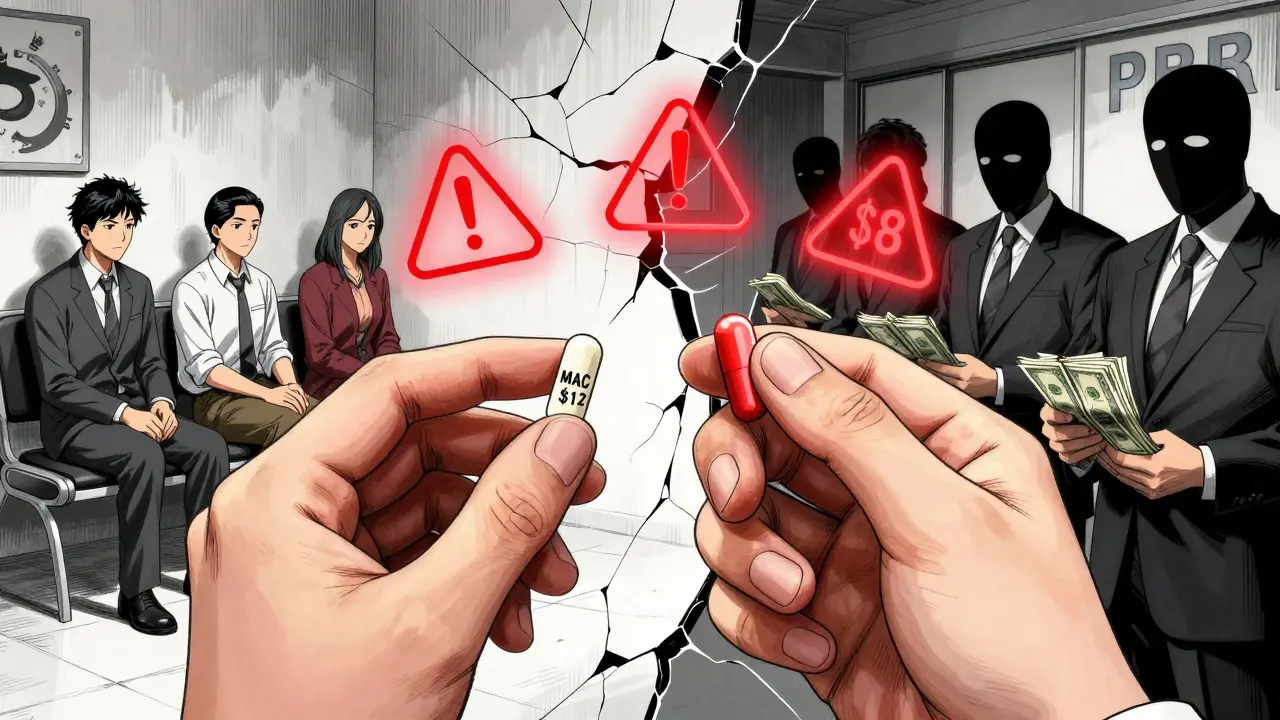
Forty-two states now use Maximum Allowable Cost (MAC) lists that set the highest amount Medicaid will pay for a generic drug. If a pharmacy charges more than the MAC, Medicaid only pays the MAC amount - and the pharmacy eats the difference. These lists are updated regularly in 31 states, sometimes monthly. But in 68% of states, updates happen quarterly or less. That’s a problem. Generic drug prices can swing wildly. A drug might drop from $12 to $8 in a week, but if the state’s MAC list hasn’t been updated, pharmacies still get paid $12. That’s a windfall for some, but it’s wasted money for Medicaid. Worse, when the MAC is set too low, pharmacies refuse to fill prescriptions because they lose money. A 2024 survey of 1,200 independent pharmacies found that 74% had seen claims rejected or payments delayed because of outdated MAC lists. The result? Patients wait longer. Pharmacists get frustrated. And Medicaid still ends up paying more overall.
Mandatory Generic Substitution and Preferred Drug Lists
Forty-nine states require pharmacists to substitute a generic version of a drug if it’s available - unless the doctor or patient says no. This isn’t just policy; it’s practice. It’s how Medicaid keeps spending low even as prescriptions rise. But substitution alone doesn’t control price. That’s where Preferred Drug Lists (PDLs) come in. Thirty states use PDLs to steer prescribers toward the cheapest, equally effective generics in each drug class. If a doctor prescribes a non-preferred drug, they might need prior authorization - or the patient pays more. Some states go further. Oregon and Texas stopped limiting access to hepatitis C drugs after prices dropped. They didn’t need restrictions anymore. That’s smart policy: adjust based on real market data, not rigid rules.
Stopping Price Gouging on Generics
Some states aren’t waiting for federal action. Maryland passed a law in 2020 that makes it illegal for manufacturers to raise prices on generic drugs without new clinical evidence. If a drug’s price jumps 50% in a year with no new benefits, the state can investigate - and fine the company. California, Colorado, and Minnesota have followed suit with similar laws. These aren’t just symbolic. In 2023, Maryland’s law led to a 22% price rollback on three widely used generic antibiotics. But these laws only work if states have the staff and legal power to enforce them. Only nine states have created Prescription Drug Affordability Boards (PDABs) to review and cap prices of high-cost drugs. Most states still lack the resources to audit every price hike.
The PBM Problem: Who’s Really Profiting?
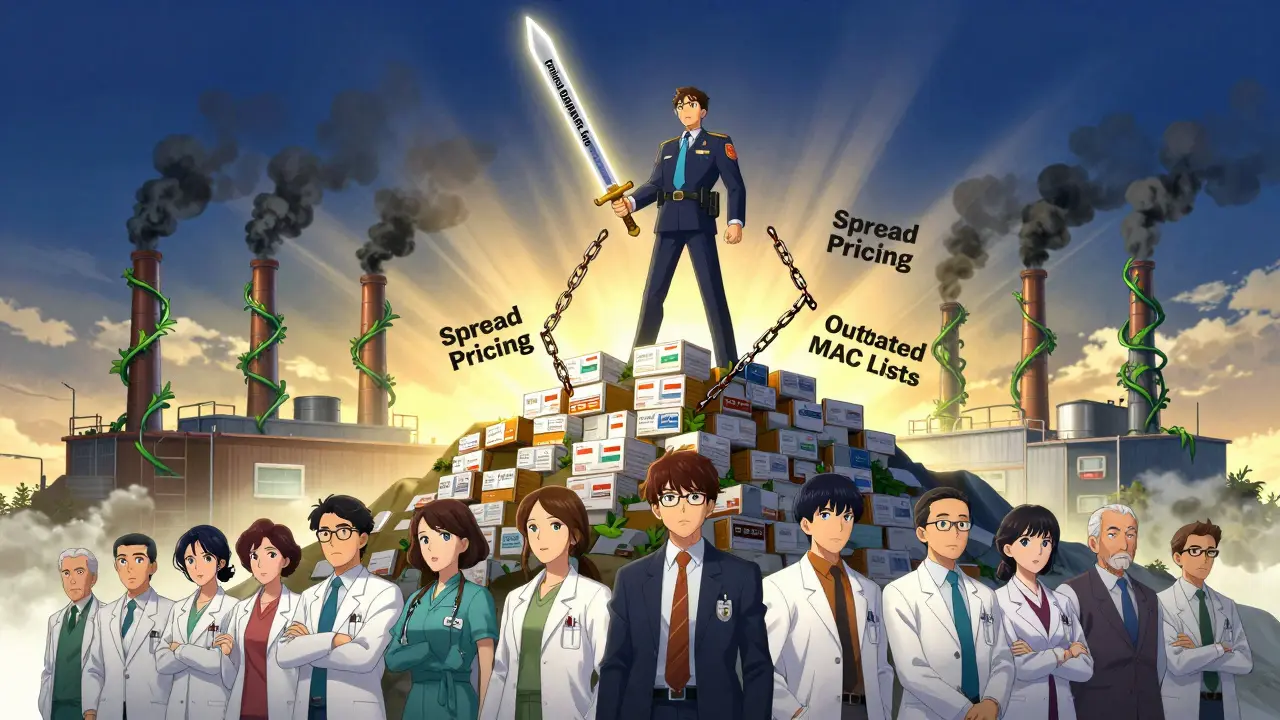
Medicaid doesn’t pay pharmacies directly in most states. Instead, it hires Pharmacy Benefit Managers (PBMs) like OptumRx, Magellan, or Conduent to handle claims and negotiate prices. PBMs claim they save money by bulk buying. But a 2024 Medicaid Rx Survey found that 27 states had no idea what PBMs were actually paying for generic drugs. That’s a black box. Some PBMs charge pharmacies a fee to process claims, then pocket the difference between what the pharmacy pays and what Medicaid reimburses. That’s called spread pricing. In 2024, 19 states passed laws requiring PBMs to disclose their true acquisition costs. Now, states can see if they’re overpaying. If a PBM is paying $1.20 for a pill and Medicaid is paying $4.00, that’s $2.80 going straight into corporate pockets - not patient care.
Supply Chain Shortages and Strategic Stockpiling
One of the biggest threats to affordable generics isn’t price - it’s scarcity. In 2023, 23 states reported shortages of critical generic drugs. Some lasted over 147 days. Why? Because the generic drug market is dominated by just three manufacturers who control 65% of injectable generics. If one factory shuts down - due to FDA violations, natural disaster, or profit decisions - entire drug classes vanish. That’s when prices spike. Twelve states introduced legislation in 2024 to build emergency stockpiles of essential generics. Oregon and Washington launched a joint purchasing pool to buy 47 high-volume generics together, cutting costs through volume. Texas and New Hampshire are creating risk pools to guarantee supply during shortages. These aren’t just backup plans - they’re becoming core strategies.
The Balancing Act: Saving Money Without Losing Access
States walk a tightrope. Too many restrictions, and pharmacies stop filling prescriptions. Too few, and Medicaid overpays. The Congressional Budget Office estimates state policies could cut generic spending by 5-8% annually. But they also warn: if prices are capped too low, manufacturers quit making drugs. That’s already happening. In 2024, 14 generic drugs disappeared from the market because the profit margin was too thin. The result? Patients get switched to more expensive alternatives - and Medicaid spends more. The goal isn’t to crush prices. It’s to keep them fair. That means updating MAC lists monthly, requiring PBM transparency, and punishing price gouging - not just hoping manufacturers behave.
What’s Next? GLP-1 Drugs and the Future of Medicaid Spending
While generics are the backbone of cost control, new drugs are the next frontier. GLP-1 medications for obesity - like Wegovy and Ozempic - cost $12,000 a year. Thirteen states now cover them under Medicaid, but only with strict prior authorization. The federal government is considering requiring all Medicaid and Medicare programs to cover these drugs for obesity. If that happens, Medicaid could see an extra $1.2 billion in annual costs. That’s why states are watching closely. Some are using their generic drug policies as a model: set price caps, require transparency, and link coverage to real-world outcomes. The same tools that keep insulin affordable could soon be used to control the next wave of expensive drugs.
Do all states have the same Medicaid generic drug policies?
No. While all states cover generic drugs, each one uses different tools. Some rely on Maximum Allowable Cost lists, others use preferred drug lists or mandatory substitution. Nine states have created Prescription Drug Affordability Boards to cap prices. Only a handful have laws against price gouging on generics. What works in Maryland doesn’t always work in Texas or Alaska.
Why don’t states just lower the Medicaid rebate for generics?
The federal Medicaid Drug Rebate Program sets a fixed formula for generic rebates - 13% of the Average Manufacturer Price. States can’t change that number. Unlike brand-name drugs, where states can negotiate supplemental rebates, generics are locked into this one-size-fits-all system. That’s why states focus on other tools like MAC lists and PBM transparency instead.
Can state policies cause generic drug shortages?
Yes, if they’re too aggressive. When states set MAC lists too low or cap prices without accounting for production costs, manufacturers may stop making the drug entirely. The Congressional Budget Office warns that overly strict price controls could reduce availability, forcing patients onto more expensive alternatives. The goal is to reduce waste - not eliminate supply.
How do PBMs affect generic drug prices in Medicaid?
PBMs act as middlemen between pharmacies and Medicaid. Some charge pharmacies more than they pay Medicaid, pocketing the difference - a practice called spread pricing. In 2024, 19 states began requiring PBMs to disclose their actual drug acquisition costs. This transparency helps states spot when they’re overpaying and push for fairer deals.
Are generic drug prices really that volatile?
Extremely. A single generic drug can drop 70% in price after a new manufacturer enters the market - or spike 400% if supply is disrupted. In 2023, the price of a common antibiotic fluctuated from $1.10 to $8.90 in under six months. That’s why monthly MAC list updates matter. Outdated lists mean Medicaid pays more than it should - or patients can’t get their meds.
What’s the biggest challenge states face with generic drug policies?
Keeping up with the market. Generic drug prices change faster than state bureaucracies can update rules. Outdated MAC lists, opaque PBM practices, and manufacturing shortages make it hard to balance cost control with access. The most successful states update policies quarterly, demand transparency, and build backup supply chains.
Bottom Line: Smart, Not Just Cheap
States aren’t trying to eliminate profit from generic drugs - they’re trying to eliminate greed. The goal is to ensure that when a life-saving pill costs 50 cents to make, it doesn’t cost $50 to buy. The tools exist: MAC lists, PBM transparency, price gouging laws, and strategic stockpiles. But they only work if they’re updated, enforced, and tied to real data. The next five years will show whether states can turn these strategies into lasting savings - or if they’ll be outmaneuvered by a system designed to profit from scarcity.