
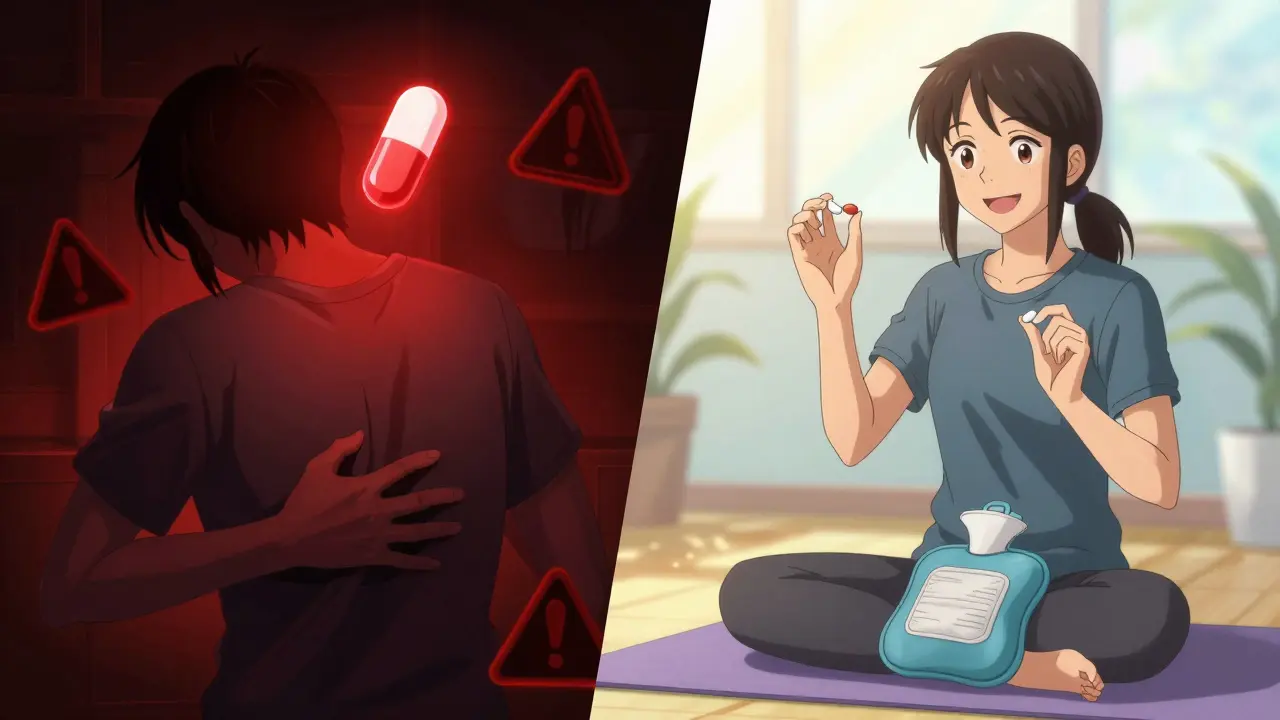
When you hurt - whether it’s a bad back, a sore knee, or pain after surgery - you want relief. Fast. But not all pain meds are created equal. And the choices you make now can have real consequences down the road. For years, doctors reached for opioids like oxycodone or hydrocodone as the go-to fix. But that’s changing. Today, the science is clear: non-opioid pain medications often work just as well - and come with far fewer risks.
What’s the real difference between opioids and non-opioids?
Opioids are drugs that bind to special receptors in your brain and spinal cord to block pain signals. They include morphine, oxycodone, codeine, and fentanyl. Some come from the poppy plant; others are made in labs to mimic its effects. They’re powerful. And they’re addictive.
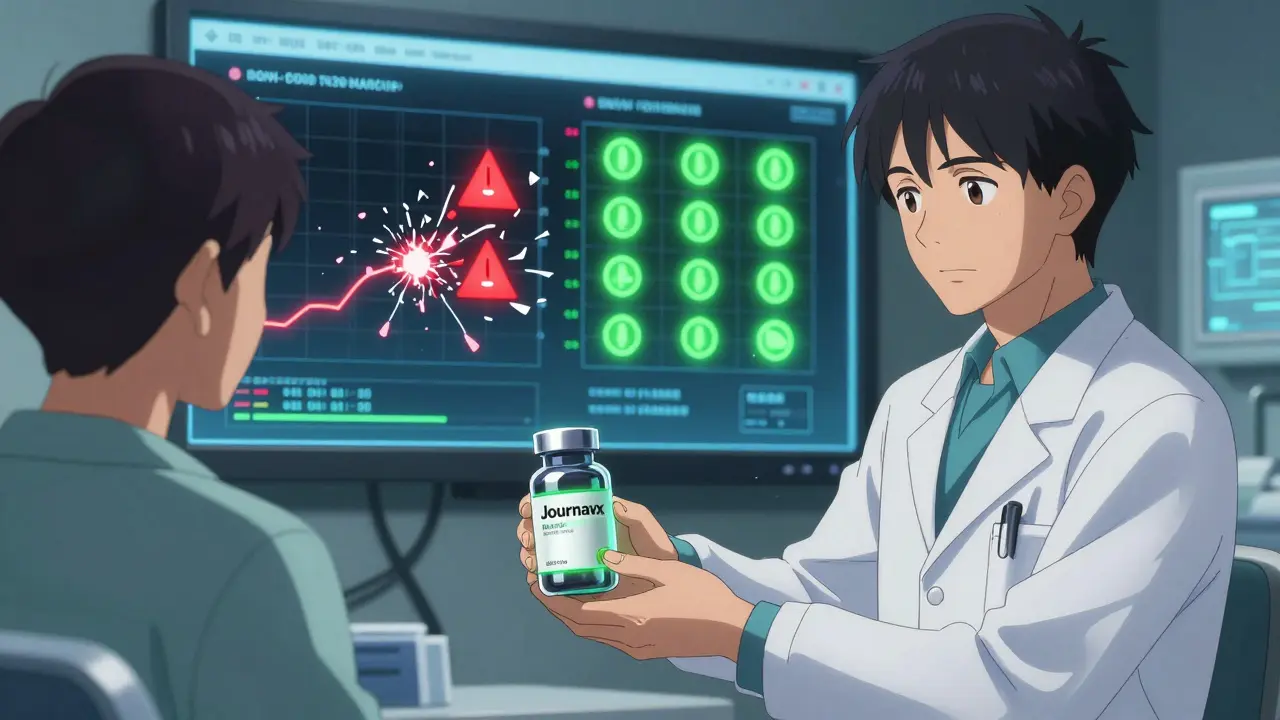
Non-opioids are everything else. That includes common over-the-counter pills like ibuprofen (Advil, Motrin), naproxen (Aleve), and acetaminophen (Tylenol). These don’t touch the same brain receptors. Instead, they reduce inflammation or interfere with pain signals at the source. In 2024, the FDA approved a brand-new non-opioid called Journavx - the first new class of non-opioid painkiller in decades. It’s designed for short-term acute pain, like after surgery.
Here’s the thing: opioids don’t actually make pain go away better than non-opioids over time. They just feel stronger at first. But that initial rush comes with a cost.
Why opioids aren’t the answer for long-term pain
In 2018, researchers ran a major study called SPACE - tracking 240 people with chronic back or joint pain for a full year. Half got opioids. Half got non-opioids like acetaminophen and NSAIDs. At the end of the year, both groups reported almost the same level of pain relief. But the non-opioid group had fewer side effects - less nausea, less dizziness, less constipation.
And here’s what no one talks about enough: long-term opioid use increases your risk of heart attack. A study of nearly 300,000 people found that those taking opioids for more than 180 days over three years had more than double the risk of heart attack compared to those who didn’t take them. Even daily doses above 120 mg of morphine equivalents raised the risk by 58%.
It’s not just your heart. Opioids slow your breathing. They make you drowsy. They mess with your hormones. And over time, your body builds tolerance. You need more to get the same effect. That’s how dependence turns into addiction.
Non-opioids work - and they’re safer
Let’s be clear: non-opioids aren’t magic. They won’t erase severe pain overnight. But for most common types of pain - arthritis, muscle strains, headaches, post-surgery discomfort - they’re just as effective as opioids, without the danger.
A 2024 review of pediatric studies looked at kids recovering from fractures or surgery. Some got morphine. Others got ibuprofen. The results? No difference in pain control. But the kids on morphine had way more vomiting, drowsiness, and even low oxygen levels. One study showed more than half of kids on codeine or tramadol had nausea or constipation. That’s not relief - that’s a side effect storm.
The VA, which treats millions of veterans, reviewed its own data and concluded: “Opioids were not superior to non-opioid approaches in terms of efficacy but were associated with significant side effects.” That’s not a minor footnote. It’s the foundation of their current prescribing policy.
And it’s not just the VA. The CDC, the American College of Physicians, and the California Medical Board all now say: start with non-opioids. Try physical therapy. Try ice, heat, or acupuncture. Try NSAIDs or acetaminophen. Save opioids for when nothing else works - and even then, use the lowest dose for the shortest time possible.
The opioid epidemic isn’t over - it’s just quieter
In 2021, more than 80,000 people in the U.S. died from opioid overdoses. That’s not a number from a textbook. That’s someone’s parent, sibling, or friend. The crisis didn’t disappear. It just shifted. Fentanyl, a synthetic opioid 50 to 100 times stronger than morphine, is now mixed into counterfeit pills sold as oxycodone or Xanax. People don’t even know they’re taking it.
Even when opioids are prescribed legally, the risk stays. A 2023 study found that sustained-release oxycodone carried a lower risk of overdose and death than sustained-release morphine. That’s not because oxycodone is safe - it’s because morphine is riskier. But both still carry risk. And both can lead to dependence.
Canada, including Toronto, has seen a steady rise in opioid-related harms since 2016. Public health officials here now push for naloxone kits in homes, pharmacies, and workplaces. They teach people how to recognize an overdose. But prevention starts before the pill is even prescribed.
What should you do if you’re on opioids?
If you’ve been on opioids for months or years, don’t stop cold turkey. Talk to your doctor. Ask: “Is this still necessary?” “Have we tried everything else?” “Can we reduce the dose slowly?”
Many people find that switching to non-opioid meds - even with physical therapy or mindfulness techniques - gives them better long-term function. One patient I know, a 58-year-old woman from Scarborough with osteoarthritis, switched from oxycodone to naproxen and daily walking. Her pain didn’t vanish. But her energy came back. She stopped feeling foggy. She started gardening again.
Don’t assume you need opioids because your pain is “bad.” Pain is personal. But the risks of opioids are not. They’re well-documented. And they’re avoidable.

What’s new in pain relief?
The approval of Journavx in March 2024 wasn’t just a new drug. It was a signal. The FDA is actively funding research into non-opioid alternatives. More are coming. Some target nerve pain. Others block inflammation differently than NSAIDs. These aren’t gimmicks. They’re science-backed options designed to replace opioids, not just supplement them.
And the tools are getting smarter. Doctors now use risk-screening tools to identify who might be more vulnerable to addiction - people with a history of depression, anxiety, or substance use. For those patients, non-opioids aren’t just preferred - they’re essential.
Bottom line: Choose safety first
You deserve pain relief. But you don’t deserve to risk your life for it. Opioids have a place - in cancer care, after major trauma, or for very short-term acute pain. But for most people with chronic or everyday pain, they’re not the answer.
Start with non-opioids. Talk to your pharmacist about what’s safe with your other meds. Ask about physical therapy. Give acetaminophen or ibuprofen a real shot before reaching for a prescription. If your doctor pushes opioids right away, ask why. Demand evidence. Ask for alternatives.
The data is in. The guidelines are clear. And the safest path isn’t the one with the strongest pill. It’s the one with the least risk.
Are non-opioid pain relievers really as effective as opioids?
Yes, for most types of chronic and acute pain. Studies like the SPACE trial show no meaningful difference in pain relief between opioids and non-opioids like ibuprofen or acetaminophen over 12 months. In fact, non-opioid groups often report fewer side effects and better overall function. For children recovering from fractures or surgery, ibuprofen works just as well as morphine - without the nausea, drowsiness, or breathing risks.
Can I get addicted to opioids even if I take them as prescribed?
Yes. Addiction isn’t about taking them illegally - it’s about how your brain changes. Even when taken exactly as directed, opioids can lead to physical dependence. Your body adapts, so you need more to feel the same effect. That’s tolerance. And when you stop, you can have withdrawal symptoms like anxiety, sweating, and muscle aches. That’s not weakness - it’s biology. About 8% to 12% of people prescribed opioids for chronic pain develop an opioid use disorder.
What are the biggest dangers of long-term opioid use?
The biggest dangers are overdose, addiction, heart problems, and hormonal disruption. Long-term use increases your risk of heart attack by more than 2.5 times. It can cause low testosterone, leading to fatigue, depression, and loss of libido. Opioids also suppress breathing - especially when mixed with alcohol or sleep aids. And the risk of accidental overdose rises with higher doses and longer duration. Even a small change in dosage can be deadly if tolerance has dropped.
Is acetaminophen safer than NSAIDs like ibuprofen?
It depends. Acetaminophen is easier on the stomach and doesn’t increase bleeding risk, which makes it better for people on blood thinners or with ulcers. But it can damage your liver if you take more than 3,000 mg per day - especially if you drink alcohol or have liver disease. NSAIDs like ibuprofen are great for inflammation-related pain, like arthritis, but can raise blood pressure and harm kidneys with long-term use. Neither is perfect. The key is using the lowest effective dose for the shortest time.
What should I do if my doctor insists on prescribing opioids?
Ask for evidence. Say: “What’s the plan if this doesn’t work?” “Have we tried non-opioid options first?” “What’s the risk of dependence?” The CDC’s 2022 guidelines say non-opioids should be the first line for chronic pain. If your doctor ignores that, consider getting a second opinion. You have the right to ask about safer alternatives - and to refuse a prescription you’re uncomfortable with.
Are there new non-opioid options I can ask my doctor about?
Yes. Journavx, approved in March 2024, is a new non-opioid for short-term acute pain like after surgery. It’s not for long-term use, but it’s an important step away from opioids. Other emerging options include topical pain patches, nerve-targeting drugs, and non-addictive anti-inflammatories in clinical trials. Ask your doctor if any of these are appropriate for your condition - and whether they’re covered by your insurance.
Next steps if you’re managing pain
- Start with OTC non-opioids: acetaminophen (up to 3,000 mg/day) or ibuprofen (up to 1,200 mg/day) for mild to moderate pain.
- Combine with non-drug methods: heat packs, gentle stretching, physical therapy, or mindfulness apps.
- If you’re on opioids, don’t quit alone. Talk to your doctor about tapering safely.
- Keep naloxone (Narcan) at home if you or someone you live with takes opioids - even if prescribed.
- Ask your pharmacist to review all your meds. Many drug interactions increase opioid risks.
Pain is real. But so are the risks. You don’t have to choose between suffering and danger. There’s a safer path - and it starts with asking the right questions.