
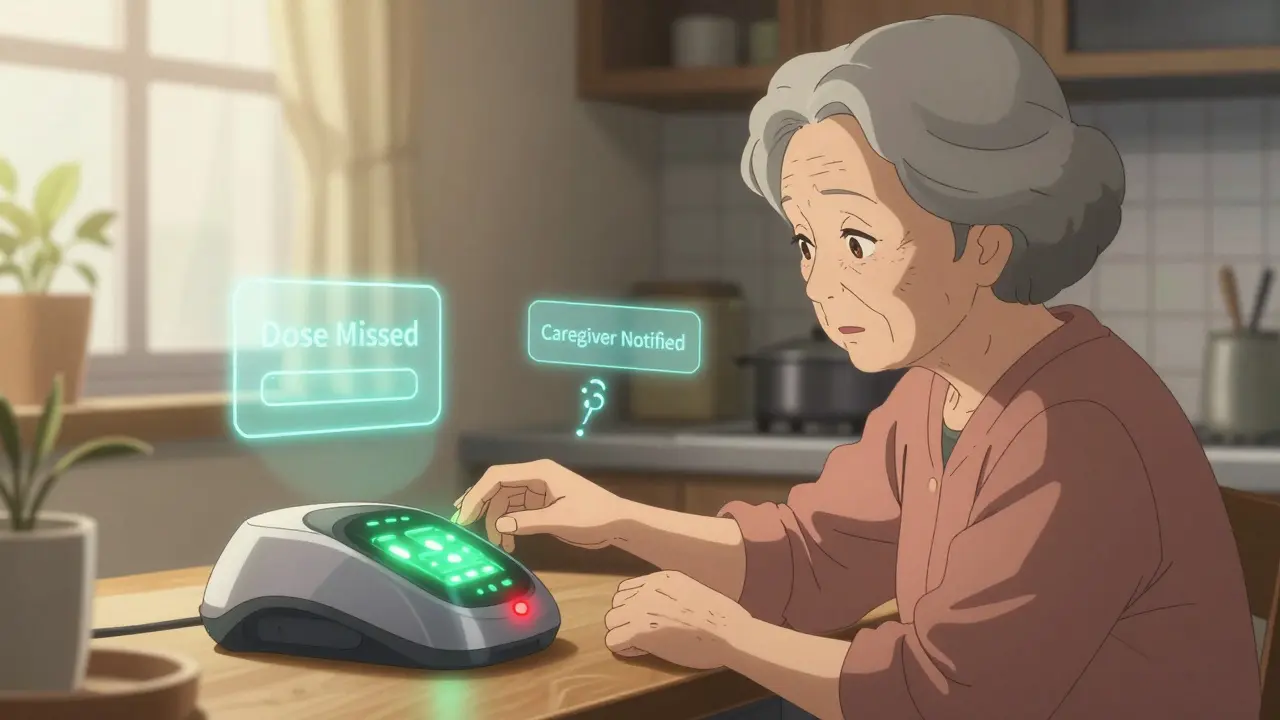
Forgetting to take your pills isn’t just an annoyance-it’s dangerous. Around 50% of people with chronic conditions don’t take their medications as prescribed. For seniors juggling five or more prescriptions, it’s not laziness or rebellion. It’s cognitive overload. Your brain is full. Your calendar is cluttered. And in the rush of morning routines, that little blue pill vanishes into the void. That’s where smart pill caps and dispensers come in-not as fancy gadgets, but as lifelines.
Why Forgetfulness Kills
Think about this: if you miss your blood pressure pill once a week, your risk of stroke goes up. Skip your insulin? Blood sugar spikes. Miss your blood thinner? Clots form. The CDC estimates medication non-adherence costs the U.S. healthcare system $100-$300 billion every year. Most of that isn’t from people refusing treatment-it’s from people simply forgetting. Seniors over 65 are the most affected. Nearly 90% take at least one prescription, and over half take four or more. That’s a lot of pills, a lot of times, a lot of chances to slip up. And when you’re tired, distracted, or dealing with early dementia, even the best reminder apps fail. You see the notification. You hear the chime. But you don’t act. That’s where technology needs to change from asking to forcing.How Smart Pill Caps Work
Smart pill caps are simple in design but powerful in function. They screw onto standard prescription bottles like a regular cap-but inside, they have sensors. These sensors track when the bottle is opened. No app needed. No buttons to press. Just open it. Take your pill. The cap records the time. Later, it syncs with a phone or cloud system to show your doctor or caregiver whether you took your dose. AdhereTech’s Aidia Smart Bottle is one of the most common. It fits over most pill bottles and uses weight sensors to detect if medication was actually removed-not just the cap opened. It sends alerts via text, call, or app if you miss a dose. And here’s the smart part: if you skip a pill, it asks why. “Side effects?” “Too many pills?” “Forgot again?” That feedback lets doctors adjust your regimen before a hospital visit. Then there’s the smart pill dispenser. These are standalone machines that hold your pills and release them at set times. Hero Health’s dispenser, for example, has eight compartments. At 8 a.m., a light flashes. A buzzer sounds. If you don’t open the drawer in 15 minutes, it calls your caregiver. If you still don’t respond, it calls again. And again. Every 30 minutes. Until you take it. That’s not a reminder-it’s a safety net.Top Systems Compared
Not all smart pill systems are made the same. Here’s how the leading ones stack up:| Device | How It Works | Cost (Device) | Monthly Fee | Best For |
|---|---|---|---|---|
| Aidia Smart Bottle | Smart cap for standard bottles. Tracks openings and weight. | $149 | $39 | Seniors who use pre-filled bottles, want minimal setup |
| Tenovi Cellular Pillbox | Compartment-based box with built-in cellular signal. Red/green lights. | $199 | $29 | Those who hate apps, need no-phone setup |
| Hero Health Dispenser | Automatic dispenser with alarms, calls, and remote monitoring. | $499 | $0 | High-risk patients, dementia, caregivers needing alerts |
| MedQ Electronic Dispenser | Repeats alarm every 30 minutes until pill taken. | $129-$249 | $0 | People who need persistent reminders, low budget |
| AARDEX Pill Connect | Clinical-grade cap with 70+ analytics. Used in trials. | $299 | $49 | Patients in research studies, complex regimens |
Notice the pattern? The cheapest options don’t have subscriptions. The most effective ones do. But here’s the catch: subscription costs are why many people quit. A 2023 CMS survey found that 63% of seniors who tried a smart device stopped using it within six months-not because it didn’t work, but because they couldn’t afford the monthly fee.
What Works Best in Real Life
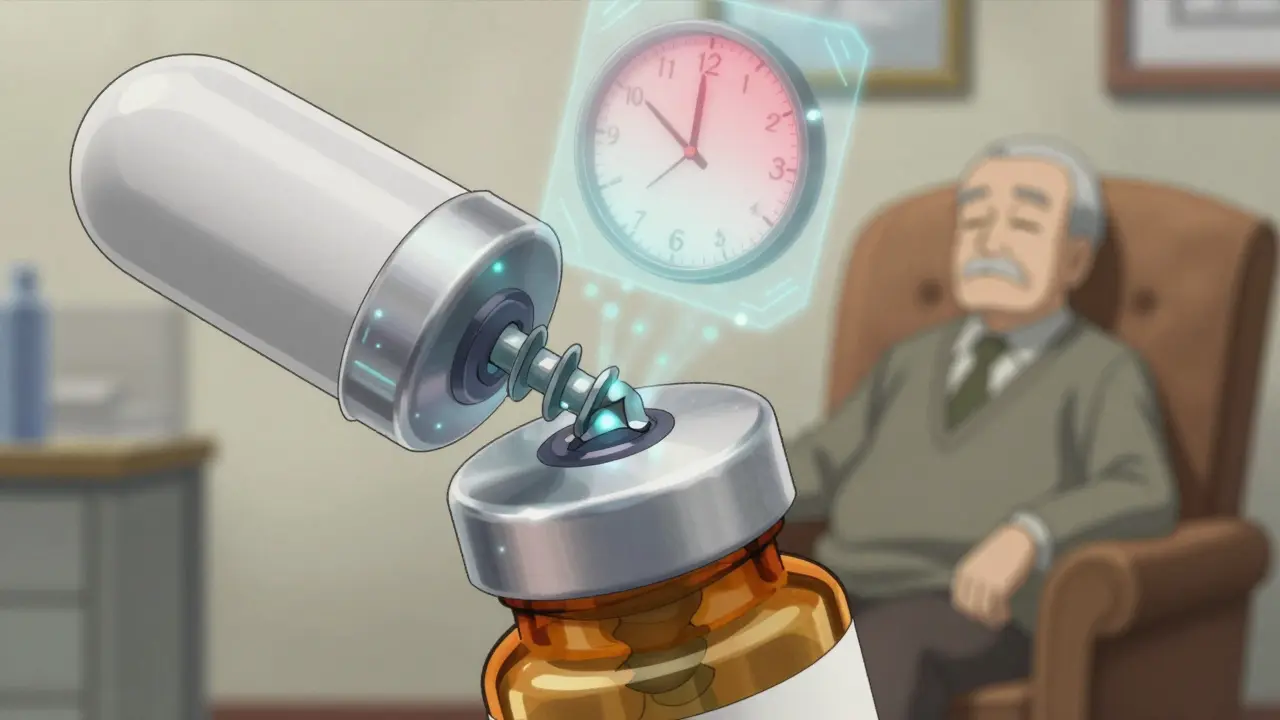
Real people don’t care about specs. They care about results. One woman in Massachusetts, 82, had been missing her heart medication for months. Her daughter tried sticky notes. Phone alarms. Voice reminders. Nothing stuck. Then they got the Hero Health dispenser. Within a week, her pill-taking rate jumped from 60% to 98%. Why? Because the alarm didn’t just ring-it called her caregiver if she didn’t respond. And when the caregiver called back, the woman answered. She didn’t want to be a burden. So she took the pill. Another user, with early-stage dementia, refused to use any app. She hated phones. But the Tenovi pillbox? Just a red light. When it turned green, she knew she was done. No buttons. No passwords. No confusion. She started taking her pills every day. Her doctor noticed the change. No more ER visits. But not all stories are good. One Reddit user admitted he opened his Pill Connect cap every day-but didn’t take the pill. The cap recorded it as taken. The system didn’t know the difference. That’s the flaw in all these devices: they track access, not ingestion. You can open the bottle and put the pill back. You can press the button without swallowing. Technology can’t force you to take it. It can only remind, nudge, and alert.Hidden Problems Nobody Talks About
There are three big issues most reviews skip:- Sound issues: Many alarms are too quiet. If you’re hard of hearing, a buzzer won’t wake you. Hero Health lets you adjust volume and tone-others don’t.
- Power outages: What happens when the power goes out? Some devices have backup batteries. Others just die. Check the specs.
- Refills: Hero Health requires weekly refills. That’s 15 minutes of work. If you’re the caregiver, that’s doable. If you’re the patient with arthritis? Forget it.
And then there’s the emotional side. Some seniors feel like the device is treating them like a child. “I’m not a toddler,” one man told his daughter. He refused to use it. The solution? Don’t call it a “medication dispenser.” Call it a “pill helper.” Make it part of the kitchen counter, not a medical device. Frame it as convenience, not control.

How to Choose the Right One
Ask yourself these five questions:- Do you take pills in bottles or blister packs? If bottles, go for a smart cap like Aidia. If blister packs, you need a dispenser.
- Can you use a phone app? If not, skip anything that requires Bluetooth or Wi-Fi. Tenovi works without a phone.
- Do you need someone else to know if you miss a dose? If yes, choose a system with remote alerts-Hero Health or Aidia.
- Can you afford a monthly fee? If not, MedQ or a basic dispenser with repeat alarms is your best bet.
- Are you at risk of overdosing? If yes, locked dispensers like Alzstore’s are safer-even if they don’t connect to anything.
Don’t overcomplicate it. The best device is the one you’ll actually use. Not the fanciest. Not the most expensive. The one that fits your life.
What’s Coming Next
The next wave of smart pill tech isn’t about better alarms. It’s about knowing if you swallowed the pill. MIT’s AgeLab is testing edible sensors that send a signal from inside your stomach. No cap. No box. Just a tiny chip in the pill that confirms ingestion. That’s not science fiction-it’s coming in 2025. Meanwhile, Medicare is starting to pay for these devices. In 2024, CMS approved coverage for any adherence system that reduces hospitalizations by 15% or more. That means more seniors will get them for free-or nearly free-through their insurance. That’s the real game-changer.Final Thought: It’s Not About the Tech
Smart pill caps and dispensers don’t fix forgetfulness. They compensate for it. They don’t cure dementia. They don’t replace family. They don’t solve the cost of medicine. But they do buy time. They prevent ER visits. They keep people out of nursing homes. They give caregivers peace of mind. If you’re helping someone who’s forgetting their pills, don’t wait for the perfect solution. Start with something simple. A pill box with alarms. A smart cap. A phone call from a neighbor once a day. The goal isn’t to automate compliance. It’s to keep someone alive.Medication adherence isn’t about discipline. It’s about design. And the right design doesn’t ask you to remember. It makes forgetting impossible.
Do smart pill dispensers really work?
Yes-when used correctly. Studies show patients using smart dispensers like Aidia or Hero Health improve adherence from 67% to over 92%. The key is matching the device to the person’s needs. A simple alarm box won’t help someone with dementia. A complex app-based system won’t work for someone who hates phones. Success comes from matching the technology to the user, not the other way around.
Are smart pill caps covered by Medicare?
As of 2024, Medicare may cover smart pill dispensers if they’re prescribed by a doctor and proven to reduce hospitalizations by 15% or more. Devices like Hero Health and Tenovi are already being included in pilot programs by Medicare Advantage plans. Coverage varies by state and insurer, so check with your plan or ask your pharmacist.
Can I use a smart pill cap with any bottle?
Most smart caps, like Aidia, fit standard prescription bottles with a 30-40mm opening. They won’t fit small travel bottles or unusual shapes. Always check the product specs before buying. If your pills come in blister packs, you’ll need a dispenser instead.
What if I miss a dose and the device doesn’t alert anyone?
Most systems send alerts after one missed dose, but some only notify after two or three. Check the alert settings. If you’re worried about being alone, choose a device with remote monitoring that calls a caregiver or family member. Hero Health and Aidia both offer this. Never rely on a device alone-always have a backup person.
How long do batteries last in smart pill devices?
Battery life varies. Tenovi lasts up to 90 days. Aidia lasts about 30 days. Hero Health uses rechargeable batteries that last 3-4 weeks. Always check the manufacturer’s specs. If you live in an area with frequent power outages, choose a device with a long battery life or a backup power option.
Can smart pill dispensers prevent overdosing?
Only if they’re locked. Devices like Alzstore’s dispenser physically lock compartments until the scheduled time, preventing early access. Most smart caps and open dispensers don’t lock-they only remind. If someone has memory issues and risks taking too much, a locked dispenser is essential.
What’s the easiest smart pill device for seniors to use?
Tenovi’s Cellular Pillbox is often rated easiest. It has no app, no Bluetooth, no Wi-Fi. Just a red light when it’s time, green when done. No buttons to press. No passwords. No setup. It works out of the box. For seniors who want zero tech hassle, it’s the top choice.
Kathy Scaman
January 29, 2026 AT 02:18My grandma used the Tenovi box and it was a game-changer. No apps, no fuss-just a light that turns green. She said it felt like having a quiet little helper on the counter. No one yelling at her. Just peace.
She still calls it her ‘magic box.’
Bryan Fracchia
January 30, 2026 AT 14:37I love how this post frames tech as a bridge, not a replacement. We’re so quick to blame people for forgetting when really, the system’s broken. Pill caps and dispensers don’t fix dementia-they fix the world’s lack of patience for it.
It’s not about compliance. It’s about dignity. The fact that Medicare’s starting to pay for this? That’s the real win. Not the gadget. The recognition that care shouldn’t cost a fortune-or require superhuman memory.
Also, ‘pill helper’ instead of ‘dispenser’? Genius. Language matters. We don’t call wheelchairs ‘mobility restraints.’ We shouldn’t call pill boxes ‘compliance monitors.’
Timothy Davis
January 30, 2026 AT 20:28Let’s be real-these devices are expensive band-aids for a broken healthcare system. The real issue is that seniors are getting 12 different prescriptions from 5 different doctors with zero coordination. No amount of smart caps fixes that.
Also, the claim that 92% adherence is achieved? That’s cherry-picked data. The 63% dropout rate due to fees? That’s the real story. You’re selling tech as a solution while ignoring the systemic neglect that created the problem in the first place.
And don’t get me started on the ‘edible sensors.’ That’s not innovation-it’s surveillance with a side of stomach acid.
fiona vaz
February 1, 2026 AT 06:31My mom used the Hero Health dispenser for six months after her stroke. She hated it at first-said it felt like being babysat. But when she missed a dose and the system called my brother in another state, he showed up at her door with soup and a hug. That’s when she realized it wasn’t about the machine. It was about being seen.
She still uses it. Not because she has to. Because she doesn’t want to worry him.
Also, the refill issue? Real. My dad has arthritis. He can’t open those weekly trays. We switched to pre-filled blister packs with a simple alarm clock. Sometimes simple works better than smart.
Sue Latham
February 1, 2026 AT 19:40Oh honey, if you’re still using a dumb pill organizer, you’re basically gambling with your life. I’ve seen three elderly neighbors end up in the ER because they thought ‘I’ll just take it later.’ Later never comes.
Hero Health? Yes. Tenovi? Even better. And don’t even get me started on those $39/month subscriptions-you’re basically paying for your own safety net. It’s cheaper than a hospital bill, trust me. I’ve done the math.
Also, if you’re using an app? You’re doing it wrong. If your phone doesn’t have a notification, you’re not taking your pills. Simple.
James Dwyer
February 3, 2026 AT 10:54My uncle used to open his Aidia cap every day and put the pill back in his pocket. The cap recorded it as taken. His doctor had no idea. That’s the flaw. Tech tracks access, not ingestion. You can’t force someone to swallow. You can only hope they care enough to.
That’s why the real solution isn’t a box. It’s a person. Someone who checks in. Someone who remembers. No gadget replaces that.
jonathan soba
February 4, 2026 AT 09:17Interesting how this ignores the cultural bias baked into these devices. They assume the user has a smartphone, a caregiver, and a home with stable electricity. What about rural seniors? Those living alone with no family? The ones who can’t afford Wi-Fi? The ones whose ‘caregiver’ is a neighbor who forgets to check in?
This isn’t innovation. It’s privilege engineering. The real problem isn’t forgetfulness-it’s isolation. And no buzzer fixes that.
matthew martin
February 4, 2026 AT 12:13Let me tell you about the time my aunt’s Tenovi box died during a power outage. She didn’t know if it was time to take her meds or not. The red light stayed red. She sat there for three hours, terrified she’d overdose or underdose. That’s not tech. That’s anxiety with a battery.
But then again, I’ve seen the same box save lives. It’s not the device. It’s the context. A smart pill dispenser in a home with a daughter who checks in every morning? Life-changing. In a home with no one? Just a noisy box that makes you feel watched.
Technology doesn’t solve loneliness. But it can expose it.
Chris Urdilas
February 5, 2026 AT 20:55So we’ve got a $499 machine that calls your caregiver if you don’t take your pill… but it doesn’t know if you swallowed it. That’s not a safety net. That’s a performance review for your health.
And the fact that people quit because of the monthly fee? That’s the punchline. We’re outsourcing our empathy to a subscription model. You pay $39 a month so your mom doesn’t die… and we all pretend that’s okay.
Meanwhile, the drug companies are charging $800 for a 30-day supply of a pill that should cost $5. But hey-at least the box will remind you to take it.
Capitalism wins again.
Phil Davis
February 7, 2026 AT 08:58My dad used to take his meds with a beer. The smart cap recorded it as taken. The doctor didn’t know. The machine didn’t care. It just saw the bottle open.
So now we’ve got a $200 device that can’t tell the difference between a pill and a placebo. That’s not innovation. That’s a confidence trick.
But here’s the real truth: if you’re worried about someone forgetting, don’t buy them a box. Sit with them. Make tea. Ask them how they’re feeling. Then hand them the pill.
That’s the only tech that never fails.