
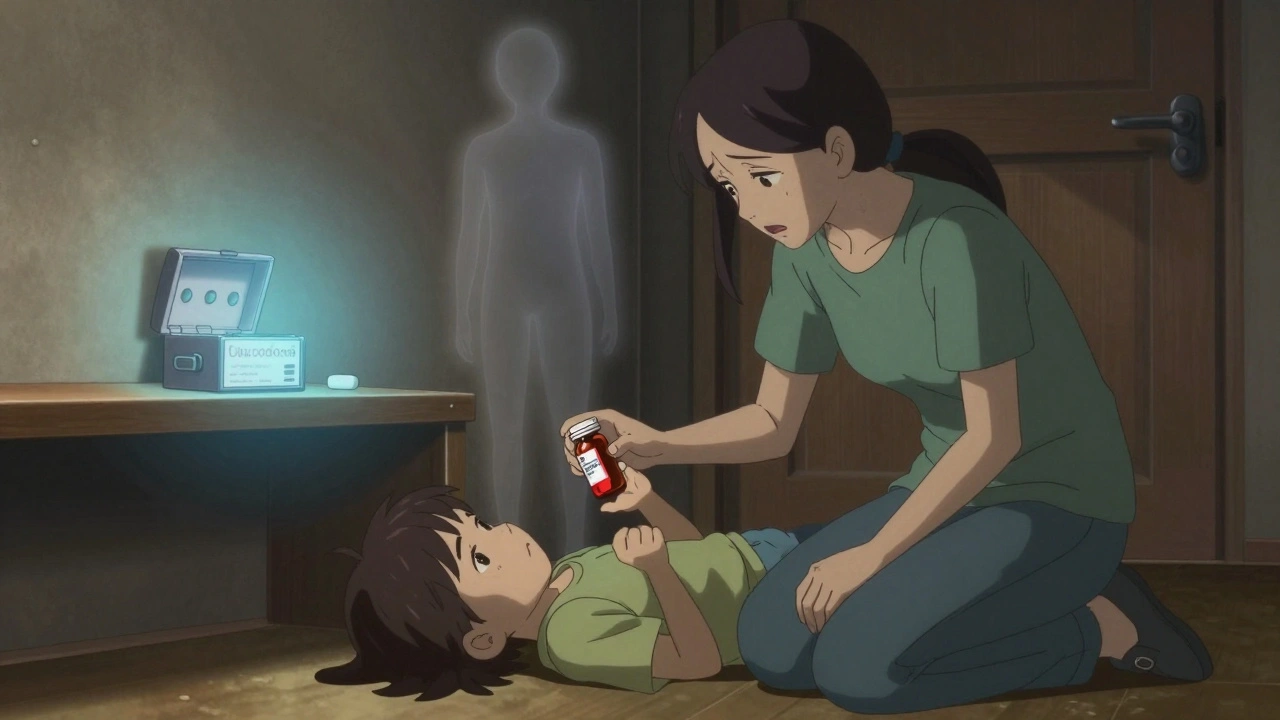
Every year, thousands of people overdose on prescription drugs-not because they took too much, but because someone else found them. A child. A teenager. A friend. A relative. The drugs weren’t stolen from a pharmacy. They were sitting in a drawer, on a nightstand, or in the kitchen cabinet-right where they were left after the prescription was filled.
Storing high-risk medications like opioids, benzodiazepines, or painkillers securely isn’t just a good idea. It’s a life-saving step. And it’s one that most people don’t take seriously-until it’s too late.
Why Storage Matters More Than You Think
Over 93,000 people died from drug overdoses in the U.S. in 2020. Of those, 16,000 were linked to prescription opioids. And here’s the hard truth: more than half of people who misuse prescription opioids get them from friends or family members-usually from unsecured medicine cabinets.
The CDC found that 60,000 children visit the emergency room every year because they accidentally swallowed pills they found at home. Most of those cases happened because the medications weren’t locked up. In one heartbreaking example, a 16-year-old found their parent’s oxycodone in a nightstand, took a few pills, and overdosed. They survived-only because Narcan was nearby.
It’s not just about keeping drugs away from kids. It’s about protecting everyone in the home. Even well-meaning adults who forget to lock things up are putting lives at risk. Dr. Scott Gottlieb, former FDA Commissioner, said it plainly: “Locking up opioids is the single most effective intervention we have to prevent diversion and accidental overdose in homes.”
What Counts as a High-Risk Medication?
Not all prescriptions need the same level of security. But if your medication is one of these, treat it like a loaded gun:
- Opioids (oxycodone, hydrocodone, fentanyl, morphine)
- Benzodiazepines (alprazolam, diazepam, clonazepam)
- Stimulants (Adderall, Ritalin)
- Barbiturates (phenobarbital)
- Any medication with a black box warning (the FDA’s strongest safety alert)
These drugs are powerful. A single pill can be deadly to someone who doesn’t have a tolerance. Even a small dose can cause respiratory failure in a child or someone who’s never taken it before.
How to Store Them Correctly
There’s a clear, science-backed way to store these medications safely. It’s not complicated-but most people skip steps because it feels like too much work. Here’s what actually works:
- Keep them in the original container. Never transfer pills to pill organizers, candy jars, or empty boxes. Labels have critical info: name, dosage, expiration date, and warnings. If a child finds a jar of white pills, they won’t know what it is. If they find a bottle labeled “Oxycodone 10mg - Take as directed,” they might still take it-but at least the risk is lower.
- Use child-resistant caps-properly. These caps aren’t foolproof, but they work if you actually snap them shut. Don’t just twist and leave them loose. A 2019 FDA study found that 68% of adults remove medications from original packaging for convenience. That’s the #1 mistake.
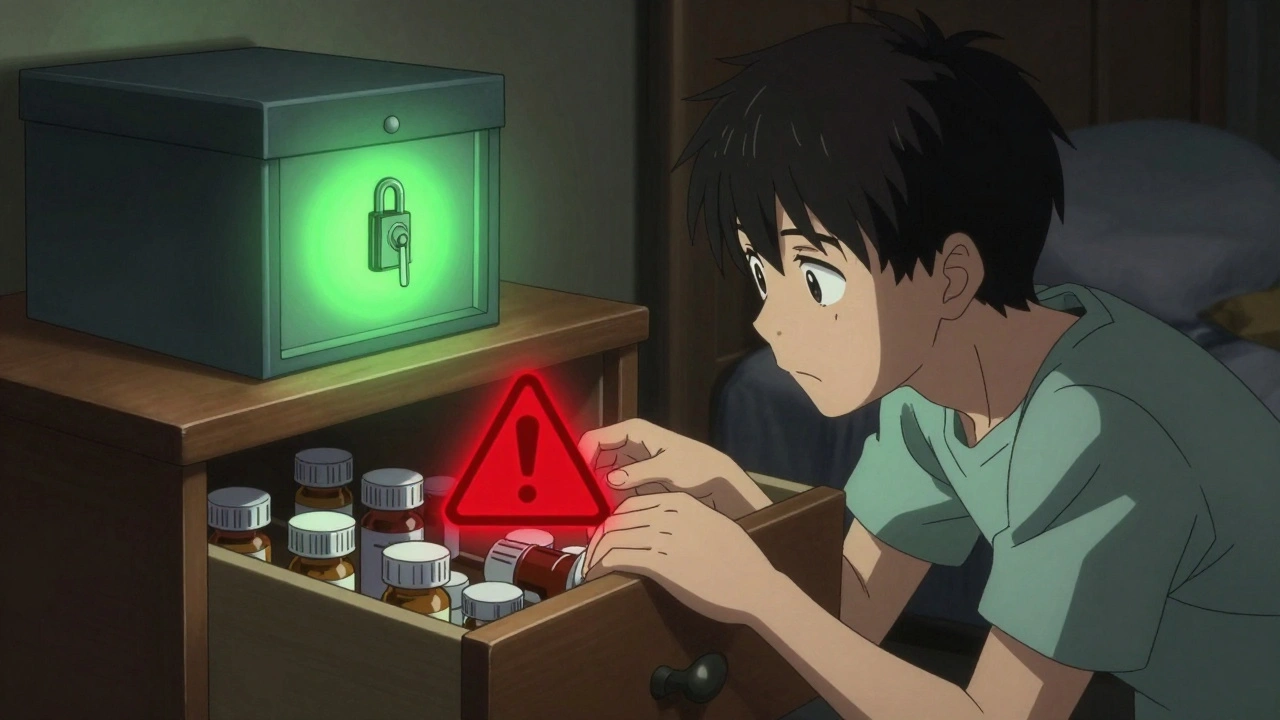
- Lock them up. A locked cabinet, lockbox, or safe is non-negotiable. The CDC says locked storage reduces accidental pediatric ingestions by 87%. A basic lockbox costs $15. A biometric one costs $150. Either one stops 92% of unauthorized access attempts.
- Store them high and out of reach. Kids can climb. They can pull down drawers. They can stand on chairs. The CDC recommends storing medications at least 4 feet off the ground. Most children under 6 can’t reach above 36 inches. That’s why nightstands, low shelves, and bathroom cabinets are dangerous.
- Don’t store them near food or drinks. If you keep your pills next to the cereal box or the juice box, a child might think they’re candy. Keep them separate-ideally in a different room.
What Not to Do
Here are the most common-and dangerous-mistakes people make:
- Leaving pills on the nightstand. This is the #1 place where overdoses start. It’s convenient for the patient, but deadly for everyone else.
- Using a pill organizer without locking it. Organizers are great for daily use-but they’re not secure. If you use one, keep the original bottle locked up, and only fill the organizer with a day’s supply.
- Assuming “I only take one a day” means it’s safe. Even one pill can kill someone who’s never taken it. And if you leave extra pills lying around, someone might take more than one.
- Not telling family members they’re there. If you have teens or visiting grandchildren, don’t assume they know not to touch your meds. Say it plainly: “These are dangerous. Don’t touch them.”
What About People Who Can’t Open Child-Resistant Caps?
Many older adults or people with arthritis struggle with child-resistant caps. That’s real. And it’s a problem. But there are solutions.
Look for lockboxes with emergency access features. The Med-ic Safe Locking Pill Organizer, for example, opens with a 4-digit code. It holds your pills securely, but you don’t need to twist a cap to get to them. Some pharmacies also offer easy-open caps upon request-just ask your pharmacist.
Another option: use a smart dispenser. Devices like Hero Health or MedMinder dispense pills on schedule, log every access, and alert caregivers if a dose is missed. But they cost $99-$149, and most people don’t use them. For most, a $20 lockbox is enough.
Tracking and Accountability
Some states, like Connecticut, require patients to keep a daily log of how many pills are left. That might sound extreme-but it works. If you notice your pills are disappearing faster than they should, you can act before something bad happens.
You don’t need to write a journal. Just keep a sticky note on the lockbox: “Feb 1: 42 pills. Feb 2: 41 pills.” If you see a gap, talk to your doctor. Maybe you’re taking more than you think. Or someone else is taking them.
What If You Don’t Need the Medication Anymore?
Don’t flush them. Don’t throw them in the trash. Don’t leave them in a drawer.
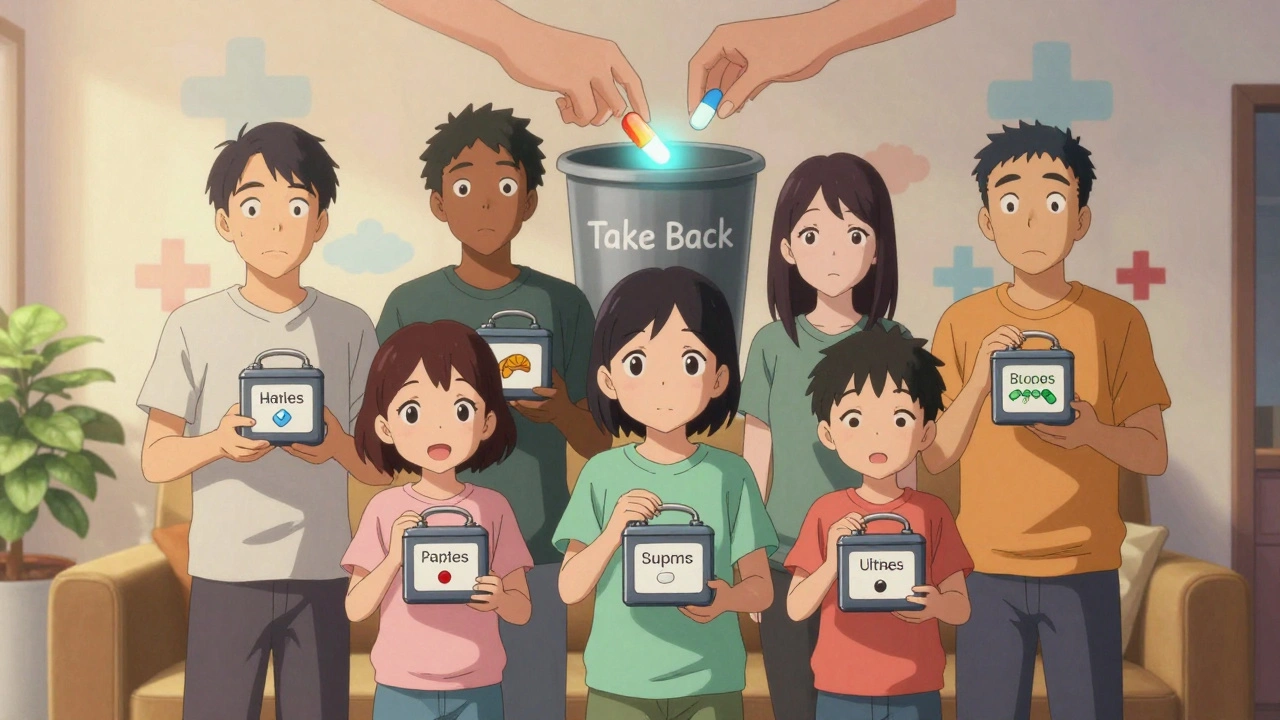
Use a drug take-back program. The DEA runs National Prescription Drug Take Back Day twice a year-in April and October. There are over 14,600 permanent drop-off locations across the U.S., including many pharmacies and police stations.
If you can’t get to a drop-off site, mix unused pills with coffee grounds or cat litter, put them in a sealed bag, and throw them in the trash. It’s not ideal-but it’s better than leaving them out.
Real Stories, Real Consequences
One Reddit user, u/PainPatient2021, wrote: “My doctor never told me to lock up my oxycodone. My 16-year-old found them in my nightstand and overdosed-thank God Narcan worked.”
Another parent, u/SecureMom on the Parenting subreddit, said: “The Walgreens lockbox ($24.99) saved my toddler from accessing grandma’s fentanyl patches-she pulled three drawers down trying to get it.”
These aren’t rare cases. The Washington Poison Center recorded 1,247 cases in 2022 where children under 6 were exposed to medications-all because they were left in accessible places.
Why Aren’t More People Doing This?
Because they don’t think it applies to them. “I’m not an addict.” “My kids wouldn’t touch that.” “It’s just one pill.”
But the data doesn’t lie. Only 23% of U.S. households with children use locked storage. Only 31% of households with controlled substances lock them up at all. And yet, the CDC says secure storage prevents 92% of unauthorized access.
Cost is a barrier for some. A lockbox isn’t cheap for low-income families. But many pharmacies and community health centers give them away for free. Ask your pharmacist. Call your local health department. You’d be surprised how many offer them.
What You Can Do Today
You don’t need to wait for a crisis to act. Here’s your 10-minute action plan:
- Go to every cabinet, drawer, and nightstand in your home.
- Find every prescription bottle-even ones you think are empty.
- Check if they’re in original containers with child-resistant caps.
- If not, transfer them now.
- Buy a lockbox (under $30 at any pharmacy or online).
- Put all high-risk meds inside. Lock it. Put it on a high shelf.
- Tell everyone in your home: “These are locked for a reason.”
That’s it. No apps. No complicated rules. Just one lockbox and one conversation.
If you’re a caregiver, doctor, or family member-you’re not just helping someone manage pain. You’re helping prevent a tragedy.
Overdose isn’t always a choice. Sometimes, it’s just a missed step. Don’t let that step be yours.
Can I just use a regular lockbox from the hardware store?
Yes-but make sure it’s sturdy. Look for one rated to ANSI Grade 2 or higher, meaning it can resist forced entry for at least 10 minutes. Basic toolboxes or jewelry boxes won’t cut it. A lockbox designed for medications is better because it’s sized right and often has tamper-evident seals.
What if I’m on a tight budget?
Many pharmacies, community health centers, and opioid education programs give out free lockboxes. Call your local health department or ask your pharmacist. Some insurance plans cover them too. Even a simple lockbox from a dollar store, if it’s sturdy and locks securely, is better than nothing.
Do I need to lock up all my medications?
No-only the high-risk ones. Antibiotics, blood pressure pills, or allergy meds don’t usually need locking. But if it’s an opioid, benzodiazepine, stimulant, or anything with a black box warning, lock it up. When in doubt, lock it.
What should I do if I think someone is stealing my meds?
Keep a daily count of your pills-even just a note on your phone. If you notice missing doses, talk to your doctor. They can help you switch to a long-acting form, reduce the quantity, or connect you with support services. Don’t ignore it. Theft often leads to overdose.
Is it safe to keep my medication in the bathroom?
No. Bathrooms are humid and hot-this can degrade the medication. Plus, they’re easy for kids to reach. Store meds in a cool, dry place like a bedroom closet or kitchen cabinet above the counter. Avoid the bathroom and the car (temperatures swing too much).
iswarya bala
December 9, 2025 AT 05:19this is so important i had no idea storing meds like this could save lives
my mom kept her pain pills in a drawer and my cousin almost died at 14
thank you for posting this
om guru
December 9, 2025 AT 16:11Secure storage of controlled substances is a non negotiable public health imperative
Richard Eite
December 10, 2025 AT 06:14America is falling apart because people dont lock shit up
its not rocket science
if your kid dies because you left oxycodone on the nightstand you deserve to lose custody
Katherine Chan
December 11, 2025 AT 04:57i just bought a lockbox today after reading this
its only $22 at walmart
and i told my teens about it
we all need to do this
its so simple and it matters
Brianna Black
December 13, 2025 AT 04:04This is not merely a matter of household safety-it is a profound ethical obligation to the vulnerable among us
One cannot overstate the gravity of neglecting secure pharmaceutical containment
The cultural normalization of casual pill storage is a silent epidemic
Stacy Tolbert
December 14, 2025 AT 07:07i used to think i was safe because i only took one a day
until my sister took two of my benzos and ended up in the hospital
now i keep mine locked in the closet
and i cry every time i open it
Noah Raines
December 16, 2025 AT 06:35bro this is the most useful thing i’ve read all year
just got a lockbox on amazon
my cat is probably safer than my meds were before lol
Lola Bchoudi
December 17, 2025 AT 12:27The implementation of tamper-evident, child-resistant, and access-logged pharmaceutical containment systems is a critical component of harm reduction infrastructure
Adopting a tiered storage protocol aligned with CDC guidelines significantly mitigates diversion risk and enhances pharmacovigilance
Darcie Streeter-Oxland
December 19, 2025 AT 04:22I find it rather tiresome that we must now treat every prescription like a weapon
Perhaps if people were less careless with their own health, we wouldn't need lockboxes
Sarah Gray
December 21, 2025 AT 00:41The fact that this even needs to be said is a testament to societal decay
You do not leave controlled substances in a drawer and expect your children to be immune to curiosity
It is not negligence-it is incompetence
Michael Robinson
December 21, 2025 AT 12:35People forget that a pill can kill
not because it’s bad
but because it’s strong
and someone else doesn’t know how to use it
Andrea Petrov
December 21, 2025 AT 22:11I bet the government put this in here so they can track who has what pills
next they’ll put chips in the lockboxes
and then they’ll control your pain meds
they already know who’s taking what
Suzanne Johnston
December 23, 2025 AT 02:58This is exactly the kind of quiet, practical kindness that changes communities
Locking up meds isn’t about suspicion
it’s about love
it’s about saying I care enough to protect you even if you don’t realize you need protecting
Haley P Law
December 24, 2025 AT 13:46i just found out my ex took my Adderall last year
he said he "needed it to study"
now i keep it in a safe
and i changed the code every week
and i cry every time i see his name in my phone
George Taylor
December 26, 2025 AT 04:15This is a performative solution to a systemic problem...
Why aren't we holding doctors accountable for over-prescribing? Why aren't we regulating pharmaceutical marketing? Why are we putting the burden on the patient to lock up poison?
And yet, here we are, praising a $20 box like it's a miracle...
It's not prevention-it's damage control...
And it's all so... sad...