

When a pharmacist fills a prescription for combination drug substitution, they’re not just swapping one pill for another. They’re navigating a legal minefield shaped by outdated rules, conflicting state laws, and complex drug science. A combination drug isn’t just two pills in one bottle-it’s two or more active ingredients fused into a single dosage form, like ATRIPLA, which packs efavirenz, emtricitabine, and tenofovir into one tablet for HIV treatment. These products were designed to simplify care, reduce pill burden, and improve adherence. But when it comes to swapping them out, the system breaks down.
Why Combination Drugs Don’t Fit Old Rules
Traditional generic substitution laws were built for single-ingredient drugs. If a doctor prescribes Lipitor (atorvastatin), a pharmacist can legally swap in a generic version-same active ingredient, same dose, same effect. That’s straightforward. But what if the prescription is for a combination drug like AMLODIPINE/ATORVASTATIN, used for high blood pressure and cholesterol? Can the pharmacist replace it with just amlodipine plus a separate generic statin? Or worse-can they swap it for a different combination, like benazepril/hydrochlorothiazide, because it’s cheaper? The answer isn’t clear. State laws vary wildly. Some allow pharmacists to substitute single drugs with similar therapeutic effects-like swapping one beta blocker for another. But when a combination product is involved, most states say: no. Why? Because substitution laws were never written to handle multi-drug formulas. The FDA defines a combination product as something that includes drugs, biologics, or devices packaged together. Even if two combination products contain the same two active ingredients, differences in release timing, excipients, or dosing ratios can make them non-interchangeable.The Legal Gray Zone: What Pharmacists Can and Can’t Do
In Alberta, Canada, pharmacists can’t substitute a single drug for a combination product unless they have extra prescribing authority. That means if a patient is prescribed lisinopril alone, the pharmacist can’t legally give them lisinopril/hydrochlorothiazide instead-even if it’s clinically better and cheaper. That’s because adding a second drug counts as starting new therapy, which requires a doctor’s order. The reverse is also true. If a doctor prescribes a combination drug like TRUVADA (emtricitabine/tenofovir), a pharmacist can’t legally split it into two separate generics unless the prescriber explicitly allows it. Courts have backed this up. In Smith v. CVS Caremark (2022), the 9th Circuit ruled that substituting a combination product with one containing extra active ingredients-without prescriber approval-is illegal. It’s not just bad practice; it’s a legal violation. Even within the same state, confusion reigns. A 2022 survey by the National Community Pharmacists Association found that 68% of independent pharmacists faced a combination drug substitution dilemma at least once a month. Nearly half refused to substitute because they weren’t sure if they were allowed to. And with 49 different state pharmacy boards in the U.S. setting their own rules, a pharmacist in Texas might have more flexibility than one in New York. For patients who travel or move, this inconsistency creates dangerous gaps in care.Therapeutic Substitution: When Cheaper Isn’t Safer
There’s a difference between generic substitution and therapeutic substitution. Generic substitution means swapping one brand for its bioequivalent generic-same drug, same dose. Therapeutic substitution means replacing one drug class with another, like switching from a statin to a PCSK9 inhibitor because it’s cheaper. With combination drugs, therapeutic substitution becomes even riskier. The European Medicines Agency warns against it, especially for drugs with a narrow therapeutic index-where tiny dose changes can cause toxicity or treatment failure. Think warfarin, digoxin, or antiretrovirals. A 2023 study from the American Heart Association found that inappropriate substitution of cardiovascular combination therapies could lead to adverse events in up to 8% of elderly patients. That’s not a small number. It’s thousands of people every year. Yet cost pressures are real. Generic drugs make up 90% of prescriptions in the U.S. but only 23% of spending. Combination products? They’re expensive. The market hit $184 billion globally in 2022, growing at 12.7% annually. Payers-Medicare, Medicaid, insurers-are pushing hard for cheaper alternatives. The Inflation Reduction Act of 2022 encourages therapeutic substitution in Medicare Part D. But pushing pharmacists to swap complex drugs without clear guidelines puts patients at risk.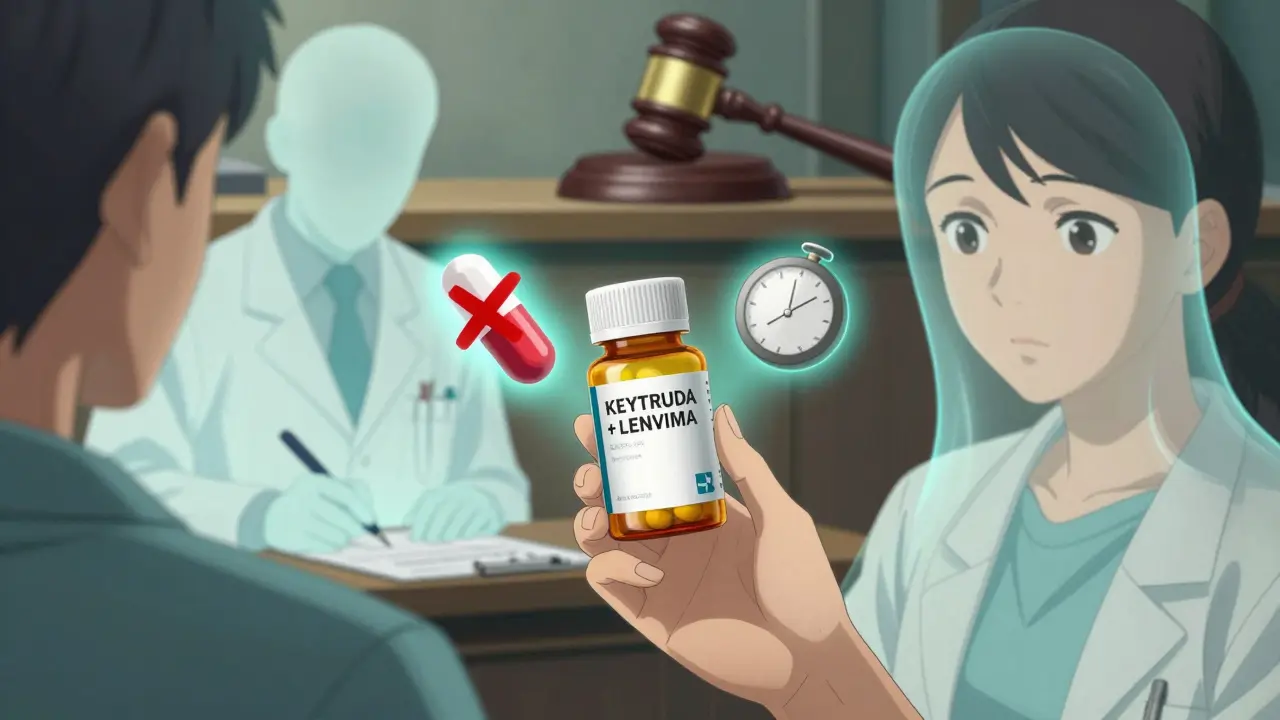
What Makes a Combination Product Hard to Substitute?
Not all combination drugs are created equal. Some are simple. Others are engineered with precision. Simple combinations might include two well-known drugs with stable pharmacokinetics-like metformin and sitagliptin for type 2 diabetes. These are easier to substitute because their behavior in the body is predictable. Complex combinations are different. Take KEYTRUDA + LENVIMA, approved in 2021 for kidney cancer. One is an immunotherapy, the other a kinase inhibitor. Their interaction is carefully calibrated in the fixed-dose combo. Swap one for a different immunotherapy? The response could change entirely. The FDA doesn’t even consider them interchangeable. They’re treated as a single new therapeutic entity. Even small differences matter. A combination pill with extended-release features can’t be replaced by two immediate-release generics. The timing of drug release affects efficacy and side effects. A patient on a once-daily combo might end up taking two pills at different times, throwing off their rhythm. That’s not just inconvenient-it can lead to missed doses, toxicity, or treatment failure.Where the System Is Changing
The cracks in the system are too big to ignore. In 2022, the FDA released draft guidance specifically for demonstrating therapeutic equivalence in fixed-dose combinations. It’s the first time they’ve tried to create a framework for this. The National Association of Boards of Pharmacy proposed model legislation in 2023 that would create a tiered system: simple combinations (two established drugs) could be substituted under clear rules, while complex combinations (novel mechanisms, narrow therapeutic index) would require prescriber approval. That’s a step forward. In Europe, the European Commission has made harmonizing substitution rules for combination medicines a top priority in its 2023 Pharmaceutical Strategy. The UK’s NHS has already seen £280 million in annual savings by implementing strict substitution protocols for cardiovascular combos. But they also have strict oversight-no substitutions without physician review. Meanwhile, in the U.S., pharmacists are stuck in the middle. They want to help patients save money. They know a cheaper combo might work. But they’re legally barred from acting unless the rules are crystal clear.
What Patients Should Know
If you’re on a combination drug, don’t assume your pharmacist can swap it. Always ask:- Is this substitution approved by my prescriber?
- Will the new version have the same dosing schedule and release profile?
- Could this change affect how the drugs work together?
What’s Next?
By 2025, experts predict that 35% of all new drug approvals will be combination products. That’s not a trend-it’s the future. Heart disease, diabetes, HIV, cancer, hypertension-they’re all being treated with multi-drug regimens. The current patchwork of laws won’t hold. States will need to update their statutes. Pharmacists will need better training. Prescribers will need to be more intentional about prescribing combinations. The goal shouldn’t be to eliminate combination drugs. It should be to make substitution safe, legal, and smart. That means aligning laws with science-not the other way around.Can a pharmacist substitute a combination drug without a doctor’s permission?
Generally, no. Most state laws prohibit pharmacists from substituting a combination drug with another combination product unless the prescriber has explicitly authorized it. Even swapping a single drug for a combination product (like replacing lisinopril with lisinopril/hydrochlorothiazide) is considered initiating new therapy and requires a new prescription. Courts have upheld this in cases like Smith v. CVS Caremark (2022).
Are all combination drugs interchangeable?
No. Only combination products with identical active ingredients, doses, and release profiles may be considered interchangeable. Many combinations include novel formulations, extended-release mechanisms, or unique ratios that make them non-substitutable. The FDA treats complex combinations like single new drugs-meaning they’re not interchangeable with other products, even if they contain the same ingredients.
Why are combination drugs more expensive than taking two separate generics?
Combination drugs often cost more because they require separate FDA approval as a new product, even if the ingredients are generic. The manufacturer must prove safety, efficacy, and bioequivalence for the combo as a whole-not just the individual parts. This adds development costs. Plus, some combos are branded, and patents can extend market exclusivity. However, in some cases, a combo can be cheaper than buying two separate pills, especially with insurance.
Can I ask my doctor to prescribe a combination drug instead of separate pills?
Yes, and you should-if it makes sense for your condition. Combination drugs reduce pill burden, improve adherence, and sometimes lower costs. Ask your doctor if a fixed-dose combination exists for your condition (like metformin/sitagliptin for diabetes or amlodipine/atorvastatin for heart disease). They may be able to switch you to a combo that simplifies your regimen.
What should I do if my pharmacy tries to substitute my combination drug?
Ask for clarification. Find out exactly what they’re trying to give you and why. Request to speak with the pharmacist in person. Check the label: does it list the same active ingredients and doses as your original prescription? If not, refuse the substitution and contact your prescriber. You have the right to receive exactly what your doctor ordered unless they’ve authorized a change.
Betty Bomber
January 25, 2026 AT 23:44Been a pharmacist for 12 years. Saw a guy get hospitalized because his combo pill got swapped for two generics. Timing was off. He missed his dose by 8 hours. Ended up in the ER with a BP spike. No one meant harm, but the system is broken.
It’s not about cost. It’s about safety.
Mohammed Rizvi
January 26, 2026 AT 04:03India’s got it half-right-we let pharmacists substitute generics but only if the prescriber’s note says ‘substitution allowed.’ No gray zones. No lawsuits. No panic.
Why can’t the US just copy that? We’re not the only ones who figured out how to balance cost and safety.
Allie Lehto
January 26, 2026 AT 08:28THIS is why capitalism is a scam. We turn life-saving medicine into a spreadsheet. A 72-year-old woman with heart failure shouldn’t have to beg her pharmacist not to swap her pills because ‘it’s cheaper.’
And yet here we are. The FDA’s ‘draft guidance’? Pfft. That’s like giving a fire extinguisher to someone who just set their house on fire.
And don’t even get me started on how insurance companies play Russian roulette with people’s lives. 💔
Henry Jenkins
January 26, 2026 AT 16:24There’s a real scientific issue here that’s being drowned out by the legal noise. Fixed-dose combinations aren’t just pills glued together-they’re pharmacokinetic ecosystems. The way one drug affects the absorption, metabolism, or excretion of the other can change the entire therapeutic profile.
Take lamivudine/tenofovir. Even if you swap it for two separate generics, the plasma concentration curves don’t match. That’s not theory-it’s measurable. The FDA’s 2022 guidance is trying to fix this with bioequivalence thresholds for combos, but it’s still too vague. We need standardized in-vivo testing protocols for multi-drug systems, not just ‘same ingredients = same effect.’
And yes, that’s expensive. But so is a 30-day readmission because someone’s viral load spiked.
TONY ADAMS
January 28, 2026 AT 07:43so like… can i just take two pills instead of one? why is this even a thing??
Karen Droege
January 29, 2026 AT 08:29I’ve been in Canadian pharmacy for 20 years. We’ve had this exact debate since 2010. The answer? You don’t substitute unless the prescriber signs off. Period.
But here’s what we did right: we trained pharmacists to be clinical decision-makers, not just pill dispensers. We gave them protocols, decision trees, and direct communication lines with prescribers.
Now? We have a 92% compliance rate on combo substitutions. Patients don’t get confused. Doctors don’t get angry. Pharmacists don’t get sued.
It’s not magic. It’s just… common sense. Why does the US still treat pharmacists like clerks?
Stop outsourcing safety to lawyers. Start empowering clinicians.
Napoleon Huere
January 31, 2026 AT 06:09Isn’t it ironic? We’ve spent centuries trying to reduce complexity in medicine-single molecules, purified compounds, isolated effects. And now we’re building drugs that are *more* complex, and then pretending we can treat them like Lego blocks.
Combination drugs aren’t just chemical cocktails-they’re engineered therapeutic experiences. You can’t substitute a symphony for two solo instruments and expect the same emotional impact.
Maybe the real problem isn’t the law. It’s that we still think medicine is a checklist, not a conversation between biology and design.
Simran Kaur
January 31, 2026 AT 19:43In India, we see this every day. Patients come in with 8 different pills. They’re overwhelmed. We push for combos. But when the combo is off-brand or the pharmacist tries to swap it? Chaos.
One woman came in crying because her HIV combo got swapped for two generics. She thought she was being ‘helped.’ Instead, she had a rash for three weeks.
It’s not about money. It’s about trust. When you’re on life-saving meds, you don’t want to wonder if your pharmacist is guessing.
shivam utkresth
February 1, 2026 AT 07:14Let’s be real-most pharmacists don’t have the time or training to evaluate pharmacokinetic interactions in combo drugs. The system demands they be clinical experts, but they’re paid like warehouse workers.
What we need is a tiered substitution model: simple combos (metformin/sitagliptin) = green light; complex combos (KEYTRUDA+LENVIMA) = red flag, require prescriber approval.
And yes, we need EHR integration that flags combos in real time. No more paper scripts with illegible handwriting.
John Wippler
February 1, 2026 AT 20:31Look, I get it. We want to save money. But saving $12 a month isn’t worth risking a stroke or a viral rebound.
I’ve seen patients switch to a cheaper combo, think they’re doing the right thing, and then stop taking their meds because the new pill looks different. Adherence tanks.
Doctors need to start prescribing with substitution in mind. If you write ‘dispense as written’ on a combo script, you’re not being cautious-you’re being responsible.
And pharmacists? You’re not a vending machine. You’re a guardian. Act like it.
Kipper Pickens
February 2, 2026 AT 04:22Fixed-dose combinations are classified as NDA products under 21 CFR 314.50, even when all components are generic. That means bioequivalence testing must be performed on the *combination*, not the individual components. Most state laws ignore this. They’re still operating under 1980s logic.
The FDA’s 2022 draft guidance attempts to close this gap with ‘therapeutic equivalence codes’ for combos, but it’s still voluntary. Until it’s codified into state law, we’re just playing Whack-a-Mole with patient safety.
Aurelie L.
February 2, 2026 AT 10:39My mom got her combo swapped. She died. Don’t make this a debate.
Joanna Domżalska
February 3, 2026 AT 09:39So let me get this straight-you’re telling me we can’t swap a pill because it’s ‘too complex’? What’s next? Can’t change the brand of toilet paper because it’s ‘engineered for optimal absorbency’?
People are just lazy. Take two pills. It’s not hard. Stop treating adults like children.
And if your doctor can’t write two prescriptions, they shouldn’t be writing prescriptions.
Josh josh
February 3, 2026 AT 15:35why cant we just make one pill that does it all? like a super pill? that would solve everything right?