
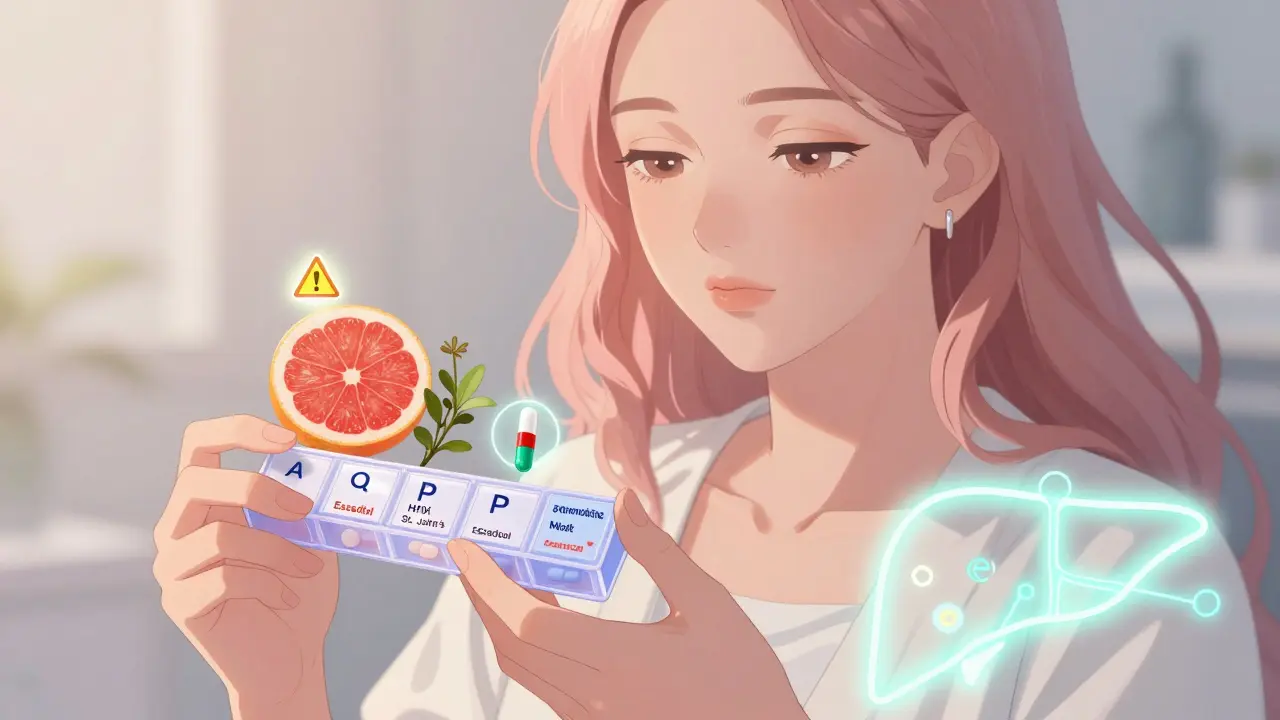
When you start gender-affirming hormone therapy (GAHT), your body begins to change in ways that align with your gender identity. For many, this is life-saving care. But it’s not just about taking estrogen or testosterone - it’s about understanding how those hormones talk to everything else in your medicine cabinet. If you’re on HIV meds, antidepressants, blood pressure pills, or even over-the-counter supplements, there’s a chance they’re talking back to your hormones - and not always in a good way.
How GAHT Works and Why Interactions Matter
Gender-affirming hormone therapy comes in two main forms: feminizing therapy for transgender women and nonbinary people assigned male at birth, and masculinizing therapy for transgender men and nonbinary people assigned female at birth. Feminizing therapy usually includes estradiol - often taken as pills, patches, or gels - along with anti-androgens like spironolactone or cyproterone acetate to block testosterone. Masculinizing therapy uses testosterone, delivered as injections, gels, or pellets.
These hormones don’t work in isolation. They’re broken down by liver enzymes - especially CYP3A4 and CYP2D6 - that also process dozens of other medications. When another drug interferes with these enzymes, it can make your hormone levels too high or too low. Too low? You might not get the physical changes you’re hoping for. Too high? You risk blood clots, liver stress, or mood swings.
According to a 2023 review of over 12,000 transgender patients, serious side effects from GAHT alone are rare - but when combined with other meds, the risk isn’t zero. That’s why knowing what’s in your regimen matters as much as knowing your dose.
Key Interactions with HIV Medications
Transgender people are 3.4 times more likely to be living with HIV than cisgender people. That means many on GAHT are also on antiretroviral therapy (ART). And here’s where things get tricky.
Some HIV drugs boost or block the liver enzymes that handle estrogen. For example:
- Cobicistat-boosted regimens (like darunavir/cobicistat) can raise estradiol levels by 40-60%. That might sound good - until you realize it could increase your risk of blood clots or high blood pressure.
- Efavirenz and other enzyme-inducing NNRTIs can drop estradiol levels by 30-50%. That might mean your breast development stalls or your mood worsens.
- Dolutegravir and other integrase inhibitors show little to no interaction - making them the safest choice for people on feminizing therapy.
For testosterone users, HIV meds rarely interfere. But if you’re on both GAHT and ART, your provider should check your hormone levels 4-6 weeks after starting or switching HIV meds. Don’t assume everything’s fine just because you feel okay.
PrEP and GAHT: No Need to Worry
Pre-exposure prophylaxis (PrEP) - the daily pill that prevents HIV - is safe to take with GAHT. A 2022 study of 172 transgender people on both tenofovir/emtricitabine (Truvada) and hormone therapy found no meaningful change in hormone levels or PrEP effectiveness. Testosterone levels stayed steady. Estradiol levels shifted by less than 5%. The drug levels in blood stayed within protective ranges.
Even the newer long-acting injectable PrEP (cabotegravir) shows no known interactions - though data is still limited. If you’re on PrEP and starting GAHT, you don’t need to stop or switch your prevention plan. Just keep your provider updated.
Psychiatric Medications: The Hidden Risk
Transgender people experience anxiety, depression, and PTSD at rates 2.5 times higher than cisgender people. That means many are on SSRIs, SNRIs, or mood stabilizers - and those can interfere with GAHT in ways few doctors expect.
- Fluoxetine (Prozac) and other SSRIs that block CYP2D6 can raise estradiol levels by slowing its breakdown. One case report showed estradiol levels doubling after starting fluoxetine - leading to breast tenderness and nausea.
- Carbamazepine and phenytoin (used for seizures or bipolar disorder) speed up CYP3A4, which can lower estrogen levels and reduce feminization effects.
- Testosterone doesn’t have clear pharmacokinetic interactions with most antidepressants - but some people report mood changes when starting testosterone. That doesn’t mean the meds are clashing - it might mean your body is adjusting to new hormone levels. Still, if your depression gets worse after starting T, your dose may need tweaking.
Here’s the hard truth: 97% of antidepressant trials never included transgender participants. So when your doctor says, “This should be fine,” they’re guessing. That’s why monitoring your mood and symptoms closely in the first 6-8 weeks is critical.
Other Common Medications to Watch For
You might not think about these, but they can make a difference:
- St. John’s Wort - a popular herbal supplement for mild depression - boosts CYP3A4 and can drop estradiol levels. Skip it.
- Grapefruit juice blocks CYP3A4 and can raise estrogen levels. One glass a day with your pills? It’s not worth the risk.
- Birth control pills - even if you’re on testosterone - can interfere with hormone balance. They’re not needed for pregnancy prevention in most cases, but if you’re using them for acne or cycle control, your provider should reassess.
- Thyroid meds - testosterone can increase thyroid-binding proteins, which may lower free thyroid hormone. If you’re on levothyroxine, your levels might need checking after starting T.
What Your Provider Should Be Doing
Not all clinics are prepared. A 2023 audit found only 41% of U.S. endocrinology clinics had a standard checklist for drug interactions in GAHT patients. That’s changing - but slowly.
Here’s what good care looks like:
- Review your full medication list - including supplements, OTC drugs, and cannabis - before starting GAHT.
- Check hormone levels at baseline, then again at 4-6 weeks after starting or changing any other medication.
- Use therapeutic drug monitoring when possible - especially if you’re on HIV meds or psychiatric drugs.
- Don’t assume “no interaction” means “no effect.” Sometimes, the body reacts even when the science doesn’t show it yet.
If your provider says, “We’ve never seen a problem,” ask: “Is that because it’s rare - or because no one’s looked?”

What’s New in 2025?
Research is catching up fast. The NIH-funded Tangerine Study, tracking 300 transgender adults on GAHT and psychiatric meds, will release its first results in mid-2025. Gilead Sciences now requires GAHT interaction testing in all new PrEP trials. And the FDA is pushing for more inclusive clinical trials - meaning future drug labels might actually say, “This may affect hormone levels in transgender patients.”
For now, the best advice is simple: keep a list. Write down every pill, patch, and supplement you take. Bring it to every appointment. Ask: “Could this affect my hormones?” Don’t wait for your provider to ask first.
Bottom Line: You’re Not Alone - But You Need to Be Informed
GAHT is safe. GAHT works. But it’s not magic. It’s medicine. And like all medicine, it plays well with some things - and poorly with others. The goal isn’t to scare you off hormones. It’s to help you get the most out of them - without surprises.
If you’re on HIV meds, antidepressants, or even just a daily vitamin - talk to your provider. Get your hormone levels checked. Adjust doses if needed. And know this: you deserve care that sees the whole picture - not just your gender, but every pill you swallow, every condition you live with, every part of your health.
Can I take birth control while on gender-affirming hormones?
Birth control pills aren’t necessary for pregnancy prevention in most transgender people on hormone therapy, since estrogen suppresses ovulation and testosterone stops menstruation. But if you’re taking them for acne, mood, or cycle control, they can interfere with hormone levels - especially estrogen. For feminizing therapy, estrogen-based birth control can raise estradiol too high, increasing clot risk. For masculinizing therapy, estrogen pills can blunt testosterone’s effects. Talk to your provider about alternatives like progestin-only pills, IUDs, or non-hormonal options.
Does testosterone make antidepressants less effective?
There’s no direct chemical interaction, but some people notice their depression worsens after starting testosterone - not because the meds aren’t working, but because their body is adjusting to new hormone levels. A 2023 review found 17 cases where antidepressant effectiveness dropped after testosterone initiation, requiring a 25-50% dose increase. If you’re on antidepressants and start T, monitor your mood closely for the first 6-8 weeks. Don’t assume it’s just “hormone adjustment.” It might need a dose change.
Is it safe to use herbal supplements like ashwagandha or turmeric with GAHT?
Ashwagandha and turmeric are generally low-risk, but they’re not proven safe with GAHT. Ashwagandha can affect cortisol and thyroid levels - which testosterone already influences. Turmeric may mildly inhibit CYP3A4, potentially raising estrogen levels. Since these aren’t regulated like prescription drugs, their potency varies. If you’re using them, tell your provider. Better yet, pause them for a few weeks after starting or changing GAHT to see if symptoms change.
Can I drink alcohol while on gender-affirming hormones?
Moderate alcohol use is generally okay, but heavy drinking increases liver stress - and both estrogen and testosterone are processed by the liver. If you’re on oral estradiol (not patches or gels), alcohol can raise liver enzyme levels and increase clot risk. For testosterone users, alcohol can lower SHBG, which may temporarily raise free testosterone - but it also worsens mood swings and sleep issues. Limit to 1-2 drinks per week, especially if you’re on liver-sensitive meds like spironolactone.
What should I do if I miss a dose of my hormone or another med?
Missing one dose of testosterone or estrogen won’t undo your progress, but it can cause mood swings, fatigue, or spotting. If you miss a hormone dose, take it as soon as you remember - unless it’s almost time for the next one. Don’t double up. For HIV meds or psychiatric drugs, missing doses can lead to resistance or relapse. If you’re on both, set phone reminders. Keep backup supplies. If you miss more than two doses in a week, contact your provider - they may want to check your hormone or drug levels.
Next Steps: What to Do Today
- Write down every medication, supplement, and herb you take - even the ones you forgot about.
- Call your pharmacy and ask if they’ve flagged any interactions between your hormones and other meds.
- If you’re on HIV meds or antidepressants, schedule a hormone level check in the next 6 weeks.
- Ask your provider: “Do you screen for GAHT-drug interactions? Can you show me your checklist?”
- If they say no - find a provider who does. Your health isn’t a guess.
Jake Nunez
January 10, 2026 AT 08:07I’ve been on T for three years and never thought about how my blood pressure med might be messing with my hormone levels. My endo never mentioned it. I’m going to pull up my script list tonight and start calling around. This post saved me from a potential disaster.
Michael Marchio
January 11, 2026 AT 17:07Let’s be real-this whole conversation is built on a foundation of pharmaceutical corporations and overworked clinicians who don’t have time to keep up with the 47 different ways hormones interact with every pill you’ve ever taken. The fact that we’re even having to dig through peer-reviewed studies just to figure out if grapefruit juice will ruin your estrogen regimen is a systemic failure. It’s not that people don’t care-it’s that the system was never designed to care about trans bodies as anything more than an afterthought in drug trials. And now we’re expected to be our own pharmacists? That’s not empowerment. That’s negligence dressed up as education.
lisa Bajram
January 12, 2026 AT 18:11OH MY GOSH, YES-this is the kind of info that should be handed out at every hormone clinic like a pamphlet with a sticker on it! 🙌 I was on fluoxetine for years and had no idea it was making my estradiol levels spike-my boobs were so tender I couldn’t wear a bra, and I thought it was ‘just part of the process.’ Turns out? It was a drug interaction. My endo didn’t even know. Now I’m on sertraline, my levels are stable, and I’m not crying over spilled coffee like a hormonal gremlin. Please, if you’re on SSRIs + GAHT, get tested. Your mental health and your body deserve better than guesswork.
Ted Conerly
January 14, 2026 AT 08:32Big thank you for laying this out so clearly. I’m a nurse who works in primary care, and I’ve seen way too many trans patients get dismissed because ‘it’s just hormones.’ This post? It’s the kind of thing I’m printing out and taping to my desk. If you’re on PrEP, HIV meds, or even just fish oil-speak up. Your provider might not know. But you? You’ve got the power to ask the right questions. Keep advocating. You’re not being difficult-you’re being smart.
Faith Edwards
January 16, 2026 AT 02:57It is, regrettably, an indictment of modern medical practice that the onus of pharmacological literacy has been placed upon marginalized populations rather than upon the institutions entrusted with their care. The fact that a patient must independently cross-reference CYP450 enzyme interactions with their endocrinologist’s checklist-when such data ought to be embedded within EHRs and prescribing protocols-is not merely inconvenient; it is ethically indefensible. One cannot, in good conscience, advocate for bodily autonomy while simultaneously denying patients the tools to exercise it safely.
Jay Amparo
January 16, 2026 AT 11:11As someone from India where trans healthcare is still a luxury, I’m so grateful for posts like this. Here, most docs don’t even know what GAHT stands for. I had to teach my own doctor about testosterone and liver enzymes. I printed this out and gave it to my clinic. They didn’t say thank you-but they did start asking about my meds. Small wins. Keep sharing this. People are listening.
Lisa Cozad
January 17, 2026 AT 05:23I missed my hormone dose last week because my mail-order pharmacy lost it. I didn’t think it mattered-until I got hit with a wave of fatigue and irritability. I thought I was just stressed. Turns out, my estradiol had dropped 30%. I’m now on auto-refill and have backup patches in my glovebox. This post? It’s the reason I’m not in the ER right now.
Saumya Roy Chaudhuri
January 17, 2026 AT 14:11Of course, the article mentions St. John’s Wort and grapefruit juice-but it completely omits the fact that CBD oil is a potent CYP3A4 inhibitor and can cause estrogen toxicity in as little as five days. I’ve seen three patients in my clinic with elevated liver enzymes from CBD + estradiol. If you’re using ‘hemp oil’ for ‘anxiety,’ stop. Immediately. And get a blood test. This isn’t wellness-it’s biochemistry.
anthony martinez
January 18, 2026 AT 13:23So let me get this straight-we need a PhD in pharmacology to take a pill that makes my body look like me? And the system expects us to just ‘trust our doctors’? Brilliant. Just brilliant.