
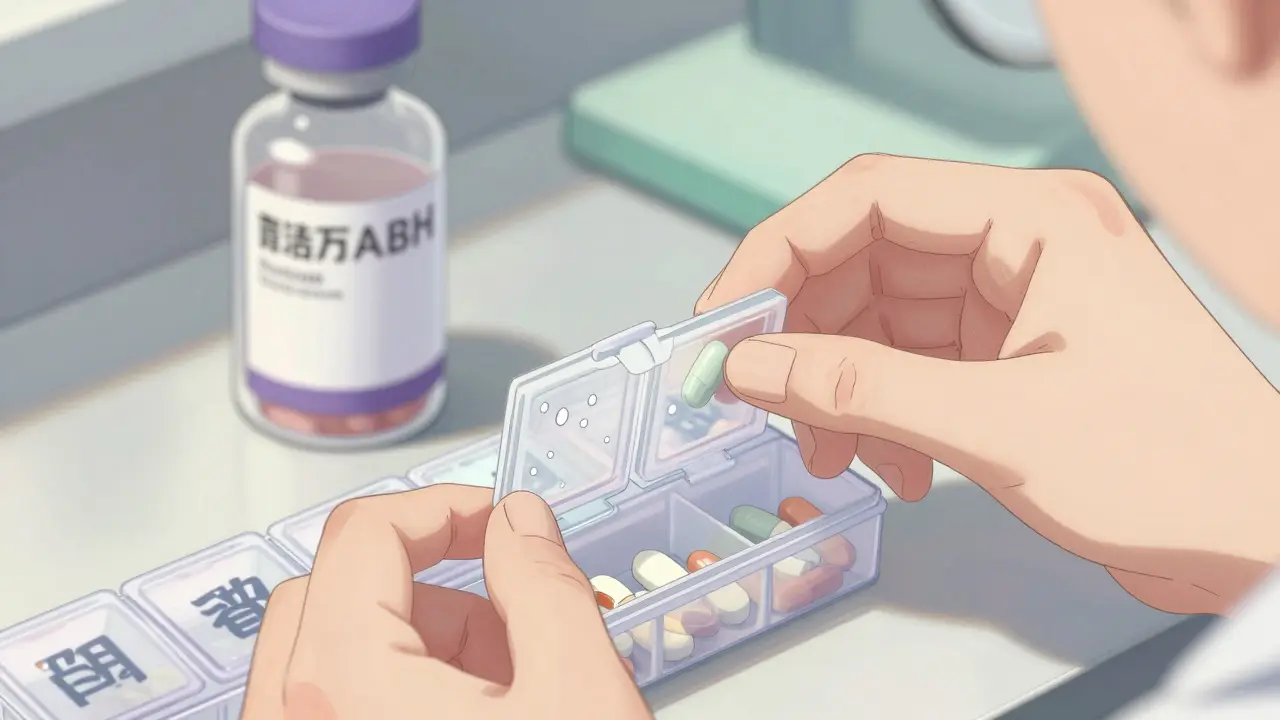
When you open a pillbox filled with daily medications, you trust it's safe. But repackaged medications stability depends on factors like packaging and storage conditions. Many assume the manufacturer's expiration date applies to repackaged drugs, but that's not true. The U.S. Pharmacopeia Chapter USP <1178> defines repackaging as the transfer of a drug product from its original container into a different container for subsequent dispensing or administration. This process changes how the drug is protected from environmental factors. The FDA's Q1A(R2) guidance focuses on original packaging, but repackaged drugs often use containers with higher moisture vapor transmission rates. For example, a 2019 study in the Journal of Pharmaceutical Sciences found albuterol sulfate tablets in standard pharmacy vials degraded 15.7% after 90 days at 25°C/60% RH, compared to 3.2% in the original HDPE bottle with desiccant. This shows how container choice directly affects drug safety.
Why Repackaged Medications Need Special Evaluation
Repackaging moves drugs from manufacturer-designed containers to pharmacy vials or pill organizers. This breaks the original barrier system. The Institute for Safe Medication Practices (ISMP) reported in 2020 that 32% of community pharmacies lack formal stability protocols for repackaged medications. The FDA's 2023 warning letter WL: 320-23-21 cited a pharmacy chain for "failure to establish and follow written procedures for determining expiration dates for repackaged drug products," leading to a 45-day shutdown. This isn't just paperwork-it's patient safety. When medications degrade, they can become less effective or even harmful. A 2023 FDA laboratory analysis showed 22% of repackaged medications tested beyond 90 days exhibited degradation exceeding pharmacopeial limits, compared to only 3% of manufacturer-original products.
Key Factors Affecting Stability
Three environmental factors dominate repackaged medication stability: moisture, light, and oxygen. Moisture is the biggest threat. container-closure systems protect drugs from environmental factors like moisture and oxygen in original packaging. But pharmacy vials typically have moisture vapor transmission rates (MVTR) of 0.35-0.50 g/m²/day, while manufacturer bottles range from 0.10-0.25 g/m²/day. This difference matters for hygroscopic drugs like amoxicillin. The Parenteral Drug Association's Technical Report No. 73 (2022) recommends 30-day expiration for amoxicillin in repackaged form. Light exposure also causes degradation. Nifedipine, a blood pressure medication, degrades rapidly in clear containers. Amber vials reduce this risk, but even then, 60-day expiration is the maximum safe limit. Oxygen exposure leads to oxidation in drugs like epinephrine. A 2021 Journal of Chromatography B study showed HPLC-UV testing could detect oxidation at 0.05% levels in repackaged antihypertensive medications.
Testing Methods for Stability
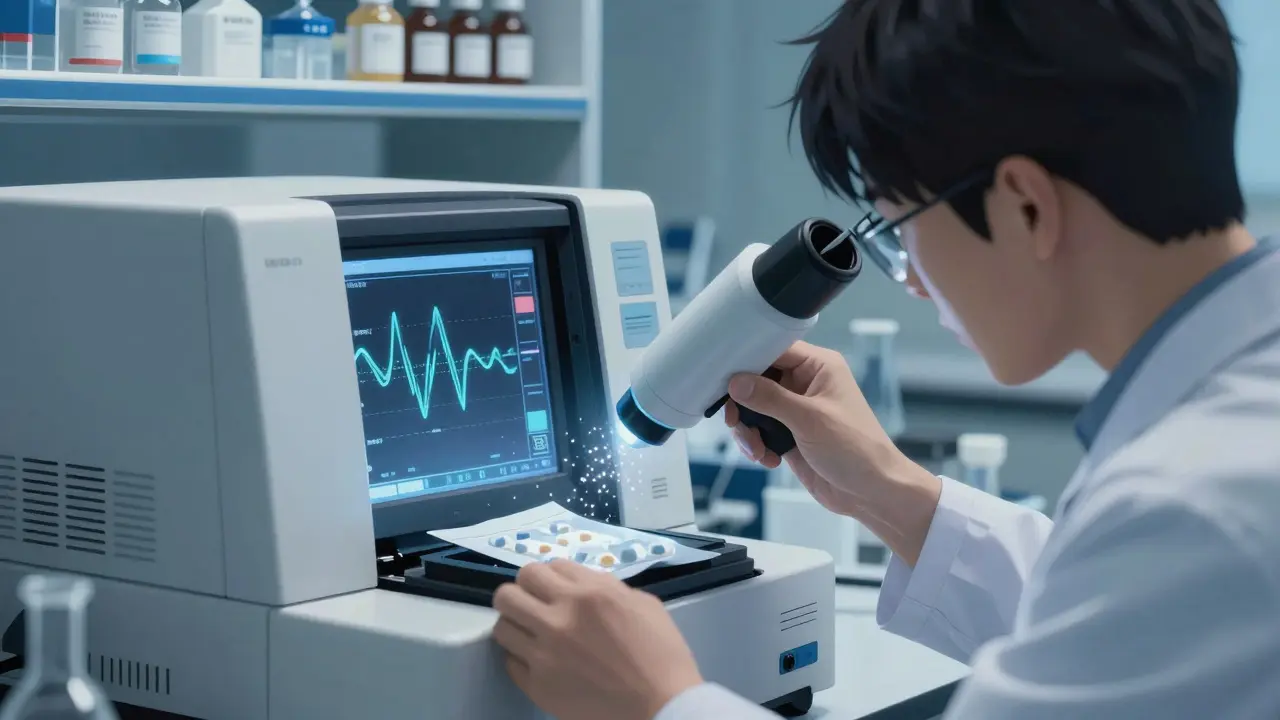
Stability testing for repackaged drugs requires specific methods. HPLC testing high-performance liquid chromatography used to detect degradation products is the gold standard. For solid oral drugs, reversed-phase HPLC with UV detection at 254 nm identifies degradation products as low as 0.05%. For protein-based medications, size-exclusion chromatography (SEC-HPLC) is critical to spot aggregates. Container closure integrity testing is equally important. The FDA's 2022 draft guidance specifies "probabilistic methods with minimum sample sizes of 30 units per batch" for integrity testing. Helium leak detection (sensitivity 1x10⁻⁷ atm·cm³/s) or dye ingress tests verify container seals. USP Chapter <1151> requires container-closure systems to "protect the drug product from environmental factors," but repackaged drugs often fail this standard. A multicenter trial with 8,432 repackaged units showed desiccant packs extended stability by 47% for moisture-sensitive drugs.
Setting Safe Expiration Dates
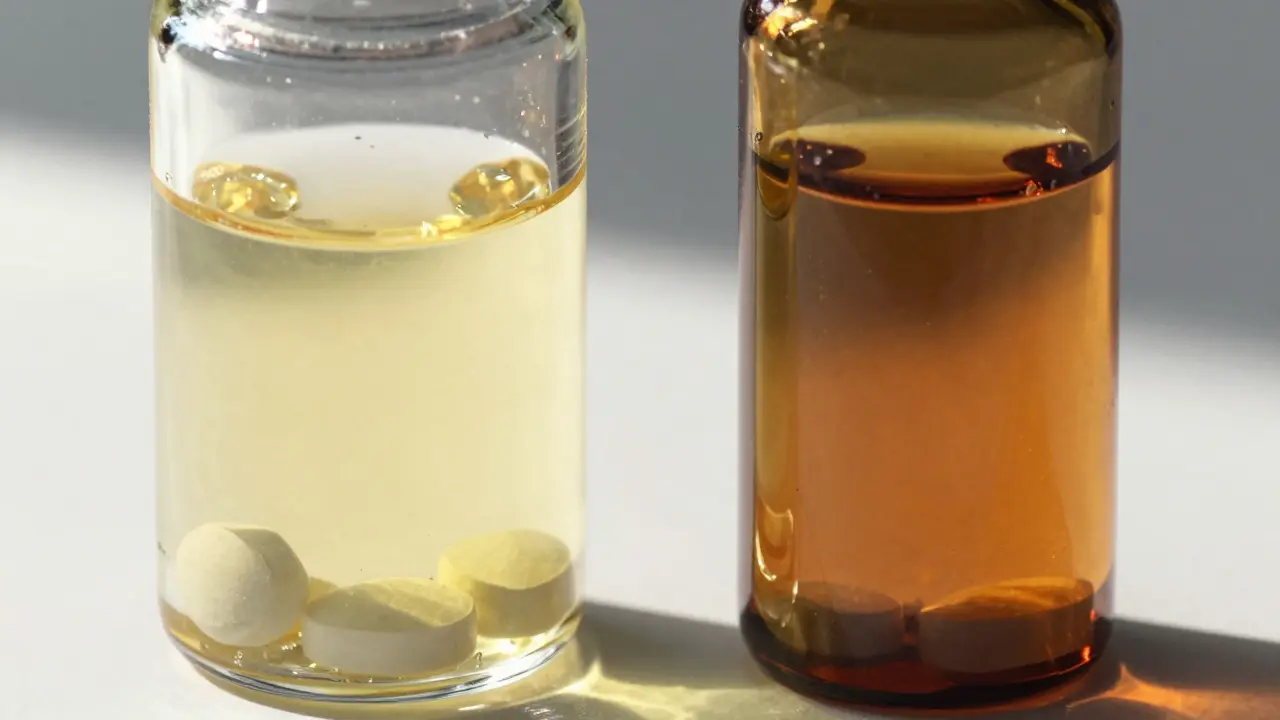
Expiration dates for repackaged medications can't copy manufacturer labels. The FDA's Compliance Policy Guide 7132c.10 states pharmacies may "only use the manufacturer's expiration date if the drug remains in the original container with original desiccant and closure system." For repackaged drugs, expiration dates must come from stability testing. The National Association of Boards of Pharmacy (NABP) found 41 out of 50 states (82%) limit repackaged expiration to no more than 6 months. Some states like Florida and New York impose stricter limits: 30 days for hygroscopic drugs like amoxicillin, 60 days for light-sensitive drugs like nifedipine, and 90 days for stable drugs like atenolol. The University of Florida's Web-based Stability Database (launched January 2023) now provides evidence-based expiration dating for 1,842 repackaged medication scenarios. For pillbox medications-where multiple drugs are combined-the American Pharmacists Association found 18.7% exhibit physical interactions (caking, color changes) within 14 days. Each drug in a pillbox needs individual stability assessment.
Practical Steps for Pharmacies
Pharmacies need actionable protocols. The ASHP's 2023 Practice Advancement Initiative recommends a tiered approach: "High-risk medications (narrow therapeutic index drugs, biologics, chemotherapy agents) require formal stability testing with HPLC analysis before assigning expiration dates, while lower-risk medications may use bracketing approaches based on similar drug properties." The University of Michigan College of Pharmacy's 2022 stability protocol template, adopted by 127 hospital pharmacies, requires "initial stress testing at 40°C/75% RH for 14 days to identify susceptible products before full stability assessment." For community pharmacies without HPLC access, the ISMP's 2023 Safe Practice Guidelines suggest using desiccant packs in all repackaged containers for moisture-sensitive drugs. This simple step cuts moisture-related degradation by nearly half. Always document storage conditions: temperature, humidity, and light exposure. The FDA's 2023 draft guidance on Container Closure Systems for Repackaged Human Drug Products proposes specific requirements for "container closure integrity testing using vacuum decay methods with detection limits of 5 microns or better" for sterile products. This will become standard by 2025.
Current Challenges and Regulatory Updates
Despite progress, gaps remain. A 2023 National Community Pharmacists Association survey found 63% of independent pharmacies lack resources for formal stability testing. The Congressional Budget Office estimated comprehensive stability testing would cost the pharmacy industry $287 million annually but prevent $1.2 billion in medication waste and adverse drug events. The USP is finalizing General Chapter <1790> Repackaged Drug Product Stability by December 2024, which will standardize testing protocols including "minimum sample sizes of 12 units per timepoint, with at least 3 timepoints for products under 90 days." The Pharmaceutical Compounding Accreditation Board (PCAB) introduced mandatory stability training for accredited pharmacies effective January 1, 2024, requiring "8 hours of stability assessment training annually for pharmacists overseeing repackaging operations." The European Medicines Agency's 2023 reflection paper recommends "harmonized expiration dating based on drug properties rather than arbitrary time limits," with draft guidelines expected in Q2 2024. For now, pharmacists must balance scientific rigor with practical constraints while prioritizing patient safety.
Can I use the manufacturer's expiration date for repackaged medications?
No. The FDA's Compliance Policy Guide 7132c.10 explicitly states pharmacies may only use the manufacturer's expiration date if the drug remains in the original container with its original desiccant and closure system. Repackaged medications must have their own expiration dates based on stability testing. Assuming the original expiration date applies to repackaged drugs is a common violation that risks patient safety.
How long can repackaged medications be stored safely?
It depends on the drug and storage conditions. For moisture-sensitive drugs like amoxicillin, 30 days is the maximum safe limit. Light-sensitive drugs like nifedipine should not exceed 60 days. Stable drugs like atenolol may last up to 90 days in amber vials. The USP is finalizing standardized protocols by December 2024, but current state regulations typically cap repackaged expiration at 6 months. Always check specific drug properties and local pharmacy board rules.
What are common signs of degraded repackaged medications?
Look for physical changes like discoloration, caking, or crumbling. Moisture-sensitive drugs may become sticky or clump together. Oxidized drugs might turn yellow or brown. For example, epinephrine solutions turn pink or brown when oxidized. Always test suspicious medications with HPLC before use. The ISMP reports that 18.7% of pillbox medications show physical interactions within 14 days when multiple drugs are combined.
Do all pharmacies follow stability protocols for repackaged medications?
No. The ISMP's 2020 survey found 32% of community pharmacies lack formal stability protocols. Large chains often have better systems, but independent pharmacies face resource challenges. A 2023 survey by the National Community Pharmacists Association revealed 63% of independent pharmacies lack resources for formal stability testing. This gap between regulatory expectations and practical implementation continues to pose patient safety risks.
Why is container closure integrity important for repackaged medications?
Container closure integrity ensures the package protects the drug from environmental factors like moisture, oxygen, and contaminants. The FDA's 2022 draft guidance specifies "container closure integrity testing should be performed using probabilistic methods with minimum sample sizes of 30 units per batch" to ensure statistical validity. Without proper integrity testing, repackaged drugs degrade faster. For example, a standard pharmacy vial has a moisture vapor transmission rate 2-3 times higher than original manufacturer bottles, leading to faster moisture absorption in sensitive drugs.
Kieran Griffiths
February 5, 2026 AT 19:25Container choice directly affects drug stability. A 2019 study found albuterol sulfate tablets in pharmacy vials degraded 15.7% after 90 days vs 3.2% in original HDPE bottles. Always verify container integrity and use desiccants for moisture-sensitive drugs.
Lisa Scott
February 6, 2026 AT 00:38Let me tell you something.
The FDA's guidelines are a joke.
They claim to protect patients but they're just covering up the real issues.
22% of repackaged medications tested beyond 90 days exhibited degradation exceeding pharmacopeial limits.
That's a massive problem.
They're not even testing properly.
Container closure integrity is often ignored.
Pharmacies use vials with high moisture vapor transmission rates.
This is dangerous.
It's all about profits.
Big pharma doesn't care about patients.
They just want to save money.
The system is broken.
We need real transparency.
This is unacceptable.
People are getting sick because of this negligence.
Tehya Wilson
February 6, 2026 AT 11:39Container closure integrity is essential
Failure to test leads to unsafe products
Must address immediately
jan civil
February 7, 2026 AT 05:50HPLC testing detects degradation at 0.05%
Container integrity testing is non-negotiable
Always verify
Kate Gile
February 7, 2026 AT 14:26Great insights! Pharmacies should adopt tiered protocols like ASHP recommends.
Small changes make a big difference in patient safety.
Let's push for better practices!
Gregory Rodriguez
February 8, 2026 AT 18:20Oh sure, just slap some desiccants in there and call it a day.
Because clearly, the FDA's guidelines are easy to follow.
sarcasm
Meanwhile, pharmacies are cutting corners left and right.
What a joke.
Johanna Pan
February 10, 2026 AT 13:05I've seen this in my country.
Repackaged meds can be risky.
Always check storage conditions.
Even small humidity changes matter.
The USP chapter is key.
Jenna Elliott
February 10, 2026 AT 13:30US pharmacies need to step up.
Other countries have better standards.
This is a national disgrace.
We need stricter enforcement.
No more excuses.
Elliot Alejo
February 11, 2026 AT 14:29The data here is solid.
Pharmacies should implement container closure testing.
It's not optional-it's necessary for safety.
Let's work together on this.
lance black
February 13, 2026 AT 13:31Always test repackaged meds for stability.
Bella Cullen
February 13, 2026 AT 13:37This is fine but why do we need all this testing?
It's a lot of work for pharmacies.
Maybe the rules are too strict.
Nancy Maneely
February 13, 2026 AT 15:55This is a crisis!
63% of pharmacies can't test properly.
People are dying because of this.
The government needs to act NOW.
No more delays!
Jennifer Aronson
February 15, 2026 AT 07:42Stability data here is thorough.
Container closure integrity testing is critical and often overlooked.
Standardizing protocols would improve safety.
USP is finalizing General Chapter by December 2024.
Minimum sample sizes of 12 units per timepoint.
Crucial for accurate results.
Pharmacies need to adopt standards immediately.
Without testing, repackaged drugs degrade.
Patients' lives are at risk.
Must prioritize safety over cost-cutting.
Data speaks for itself.
Time for action.
This issue can't wait.
Every pharmacy should have clear stability protocol.
We need to push for better enforcement.
Joyce cuypers
February 16, 2026 AT 08:40Great post!
I've seen this in my pharmacy too.
Always use desiccants for moisture-sensative drugs.
Its a small step but makes a big difference.
Thanks for sharing!