

Why Timing Matters More Than You Think When Flying
Skipping a pill by an hour might seem harmless-until you’re 30,000 feet in the air with a medication that can’t afford even a small delay. Time-sensitive medications aren’t like your daily multivitamin. These are drugs where the difference between a safe dose and a dangerous one is razor-thin. Take warfarin: miss a dose or take it at the wrong time, and your blood can either clot dangerously or bleed uncontrollably. Insulin? A missed injection or a delayed meal during a flight can send your blood sugar crashing. Anti-seizure meds? One late dose can trigger a seizure within hours. The CDC reports that 62% of travelers crossing five or more time zones struggle with these kinds of medications. You’re not alone. But you also can’t wing it.
Know Your Medication’s Rules
Not all meds are created equal when it comes to time zones. The key is understanding your drug’s half-life and therapeutic window. Medications with a half-life under 8 hours-like many antibiotics, blood thinners, or insulin-need strict timing. If you’re on a twice-daily schedule, even a 2-hour shift can throw off your levels. Drugs with narrow therapeutic indices, such as immunosuppressants after a transplant or certain anti-epileptics, are even less forgiving. A 2024 study in the Journal of Travel Medicine found that 22% of time-sensitive medications require exact timing, no exceptions. That means if you’re on tacrolimus or phenytoin, you can’t just guess. You need a plan.
On the flip side, some meds with longer half-lives-like certain antidepressants or blood pressure pills-can handle a 1-2 hour shift without issue. But you shouldn’t assume. Always check with your pharmacist or doctor before you go. Don’t rely on generic advice like “take it when you wake up.” Your specific drug, your body, and your route all matter.
Stick to Home Time for the First 2-3 Days
Here’s what experts at Johns Hopkins and the CDC agree on: when you’re flying across three or more time zones, keep your medication schedule on home time for the first 48 to 72 hours. Why? Your body hasn’t adjusted yet. Your liver, kidneys, and metabolism are still operating on your home clock. Taking insulin at 8 a.m. local time when your body expects it at 6 a.m. home time can cause a spike or crash. Same with warfarin-your INR levels can swing wildly if you shift too soon.
Use your phone’s alarm, set to your home time zone, to remind you. Even if it’s 11 p.m. where you are, if your dose is due at 9 p.m. home time, take it then. You’ll be tired, maybe jet-lagged, but your meds won’t care about your sleep schedule. After 72 hours, slowly shift your doses by 1-hour increments each day until you’re synced with local time. This method reduces timing errors by over 75%, according to the University of Michigan Health System’s validated protocol.
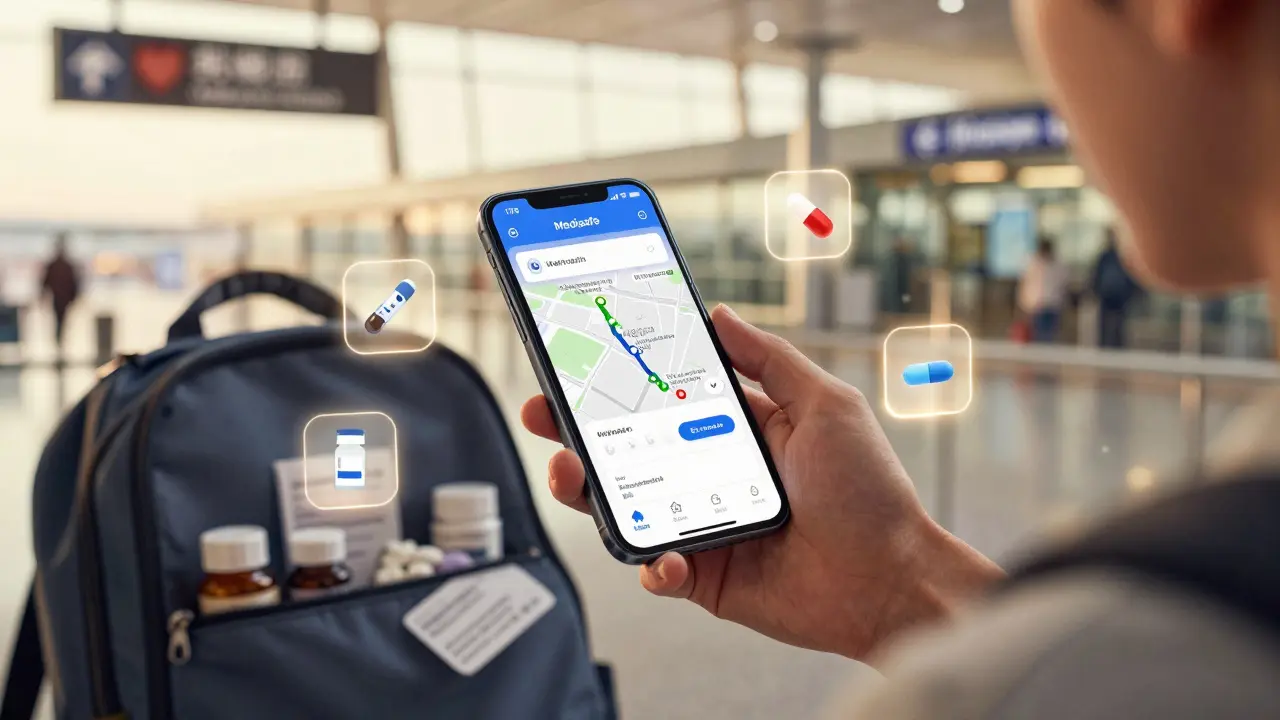
Use a Travel Medication App
Trying to calculate time zone shifts in your head while juggling a boarding pass and a cooler bag? That’s how mistakes happen. Use a dedicated app like Medisafe, which has been downloaded over 1.2 million times. It lets you input your flight details-departure, arrival, layovers-and automatically adjusts your dosing schedule based on your medication’s half-life and your personal routine. It sends alerts in your home time zone or local time, whichever you prefer. You can even share your schedule with a travel companion so someone else knows when you need to take your meds.
Apps don’t replace professional advice, but they do cut down the mental load. And they’re far more reliable than trying to remember if you’re on “eastbound” or “westbound” adjustment rules. Just make sure you enter your meds correctly: brand name, generic name, dose, frequency. One wrong entry can lead to a dangerous misalignment.
Bring the Right Gear: Coolers, Labels, and Backup
Temperature matters. About 35% of time-sensitive meds need to stay cool-insulin, biologics, some antibiotics, even certain eye drops. Don’t trust the airplane’s overhead bin. The cargo hold can drop below freezing. The cabin can hit 85°F. That’s why a portable cooler like the Travelport 3.0 is a game-changer. It keeps meds between 35-46°F for up to 48 hours without power, using phase-change gel packs. TSA allows these through security-even if the gel is partially melted-as long as it’s clearly for medical use.
Always carry meds in their original bottles with pharmacy labels. TSA doesn’t require it, but it avoids delays. Bring a printed list with: drug names (brand and generic), dose, frequency, prescribing doctor, and pharmacy phone number. The CDC says emergency rooms can treat you 83% faster with this info. And never pack all your meds in one bag. Keep a 3-day backup in your carry-on, even if you’re checking a bag. Lost luggage happens. Your meds shouldn’t be part of the casualty list.
Never Fly After Starting a New Med
The FAA warns: don’t fly after taking a new medication for the first time until you’ve waited at least 48 hours. Why? Side effects-dizziness, drowsiness, nausea-can sneak up on you. If you’re on a new anti-seizure drug or a new insulin regimen, wait. Test it at home. See how your body reacts. If you feel off, you won’t be able to call for help mid-flight. This rule applies even if you’re just a passenger. Your safety, and the safety of others, depends on you being alert and stable.
Also, avoid sedating antihistamines like Benadryl or Unisom for jet lag. The FAA says their half-lives are so long that you need to wait 60 hours after the last dose before flying. That’s over two full days. If you’re tempted to pop one for sleep, consider melatonin instead. It’s not sedating and doesn’t interfere with your meds.

Plan Ahead: Talk to Your Pharmacist Two Weeks Out
Most people wait until the night before their flight to think about meds. That’s too late. A Banner Health case series found that travelers who consulted a pharmacist at least two weeks before departure had an 89% success rate managing their schedules. Those who waited until the last minute? Only 47% succeeded. Pharmacists know your meds inside and out. They can tell you:
- Which doses can be shifted
- Which ones must stay rigid
- Whether your meds are legal in your destination country
Some countries ban common U.S. meds. Pseudoephedrine is illegal in 12 countries. Zolpidem (Ambien) requires advance permission in 24. Your pharmacist can help you get prescriptions translated, find local alternatives, or even arrange for a small supply to be shipped ahead. Don’t risk getting arrested or running out because you didn’t ask.
What to Do If You Miss a Dose
Life happens. You oversleep. Your alarm didn’t go off. You’re stuck in a security line. If you miss a dose, don’t panic. Don’t double up. That’s how overdoses happen. Instead:
- Check your drug’s specific guidelines-some say take it if it’s within 2 hours; others say skip it entirely.
- For insulin: test your blood sugar immediately. Adjust with food or correction dose if needed.
- For warfarin: note the time you missed and alert your doctor when you return home. They may want to check your INR sooner.
- For anti-seizure meds: if you miss a dose by more than 4 hours, contact your neurologist. Don’t wait for a seizure to happen.
Always have your doctor’s contact info saved in your phone and written down. If you’re overseas, know how to reach a local pharmacy or clinic. Many countries have 24-hour pharmacies with English-speaking staff. Google “24-hour pharmacy [city name]” before you go.
Final Checklist Before You Board
- ✅ All meds in original containers with labels
- ✅ 3-day backup in carry-on
- ✅ Medication list with names, doses, doctor, pharmacy
- ✅ Temperature-sensitive meds in a certified cooler with gel packs
- ✅ Phone alarm set to home time zone for dosing reminders
- ✅ Medisafe or similar app loaded and synced with flight details
- ✅ Pharmacist consulted at least 14 days before travel
- ✅ No new meds started in the last 48 hours
- ✅ No sedating antihistamines taken in the last 60 hours
- ✅ Destination country’s medication rules checked
Flying with time-sensitive meds isn’t about being overly cautious. It’s about being prepared. The science is clear. The tools exist. The experts have laid out the steps. You’ve got this. Just don’t wait until the last minute. Your body-and your health-depend on it.
Can I carry insulin on a plane?
Yes, you can carry insulin on a plane in any quantity. TSA allows medically necessary liquids, including insulin, beyond the 3.4-ounce limit. Keep it in its original packaging with a pharmacy label. You don’t need a doctor’s note, but having one can speed up security. Always carry it in your carry-on-never in checked luggage. Use a cooling pack if needed, and declare it if asked.
What if my flight is delayed and I miss a dose?
If your flight is delayed and you miss a dose by less than 2 hours, take it as soon as you can. For most time-sensitive meds, a 1-2 hour delay is acceptable. For drugs like immunosuppressants or anti-seizure meds, wait no more than 4 hours. If it’s longer, don’t double up-call your doctor or local pharmacy for advice. Keep a list of emergency contacts in your phone, including your pharmacist’s number.
Is it safe to take my meds on the plane?
Yes, it’s not only safe-it’s recommended. Taking your meds on schedule reduces the risk of complications mid-flight. Don’t wait until you land. If your dose is due during the flight, take it then. Use your phone alarm set to home time zone. Most airlines allow you to take meds during the flight. Just be discreet and keep your meds in a small bag for easy access.
Can I bring my medication cooler through TSA?
Yes, TSA allows portable medication coolers with gel ice packs through security, even if the gel is partially melted. The key is that the cooler must be clearly for medical use. You may be asked to open it for inspection, so keep it easily accessible. Label it with your name and “Medication: Do Not Freeze” if possible. Never pack it in checked luggage-temperature fluctuations there can ruin your meds.
Do I need a doctor’s note to fly with my meds?
TSA doesn’t require a doctor’s note for prescription medications. But having one-especially for controlled substances or large quantities-can prevent delays. It’s especially helpful if you’re traveling internationally. Some countries require documentation for certain drugs. Your pharmacist can help you get a letter that includes your diagnosis, medication details, and dosage. Keep a digital copy on your phone and a printed copy in your wallet.
What should I do if I run out of meds while abroad?
Don’t panic. First, contact your pharmacy back home-they may be able to fax a refill to a local pharmacy. Use a translation app to search for “pharmacy near me” in the local language. Many countries have 24-hour pharmacies. Bring your medication list with generic names, as brand names vary. Avoid buying meds from street vendors or unlicensed clinics. If you’re on a critical drug like insulin or warfarin, go to a hospital emergency room. They can provide temporary treatment while you arrange a refill.
paul walker
January 29, 2026 AT 12:33This is the kind of post I wish I had before my last trip to Tokyo. Took my insulin on local time and nearly ended up in a hospital. Lesson learned: home time for at least 72 hours. Save yourself the panic.
Alex Flores Gomez
January 29, 2026 AT 13:00Lmao people still dont get it. You dont 'adjust' to time zones like your body gives a fuck. Your meds dont care if you're 'jet lagged'. I took my warfarin at 3am local time in Berlin because my body clock said 1am home. Didn't die. Neither will you. Stop overthinking. Just set the alarm and do it.
Frank Declemij
January 30, 2026 AT 22:30The advice here is clinically sound. Consistent timing for narrow therapeutic index drugs is non-negotiable. The 72-hour home-time protocol is backed by pharmacokinetic data. Apps like Medisafe reduce human error by standardizing alerts. This is exactly the kind of practical, evidence-based guidance travelers need.
Pawan Kumar
February 1, 2026 AT 13:05Interesting how the CDC and Johns Hopkins are cited. But who funds them? Who really benefits from you taking meds on 'home time'? The pharmaceutical industry? The airlines? The real issue is that your body adapts faster than they admit. They want you dependent on apps and coolers. Trust your circadian rhythm. Not a phone alarm.
Laura Arnal
February 3, 2026 AT 01:49YESSSS this is gold! 🙌 I’m a nurse and I travel for work with my mom’s anticoagulants. This checklist? Saved her life last year in Bali. The cooler tip? Game changer. I keep a printed copy in my wallet now. You’re not being paranoid-you’re being smart. 💪❤️
Jasneet Minhas
February 4, 2026 AT 08:06Ah yes, the classic 'consult your pharmacist two weeks ahead' advice. Because clearly, the average person has nothing better to do than schedule a pharmacy appointment before vacation. Meanwhile, I’m over here in Mumbai trying to find a pharmacy that doesn’t sell me fake metformin. 🙃
Eli In
February 5, 2026 AT 19:25As someone who’s flown with my kid’s seizure meds to 12 countries, I can say this: the checklist works. I’ve had customs officers ask for the list. I’ve had pharmacies in Bangkok recognize the generic names. And yes, the cooler saved us during a 10-hour delay in Dubai. This isn’t overkill-it’s survival. 🌍✈️
Paul Adler
February 6, 2026 AT 04:48I appreciate the thoroughness. I’ve seen too many people assume their blood pressure meds are 'fine' to shift. They’re not. The half-life distinction is critical. Also, the point about avoiding sedating antihistamines is spot on. Melatonin is safer, and it doesn’t interact with most CNS meds. Well-researched piece.
Doug Gray
February 7, 2026 AT 05:50The epistemological framework here is predicated on a biomedical hegemony that pathologizes temporal fluidity. We are conditioned to perceive the body as a clockwork mechanism, when in fact, circadian rhythms are dynamic systems. Why not let the body recalibrate organically? The app dependency is a symptom of late-stage pharmaceutical capitalism.
Kristie Horst
February 8, 2026 AT 22:30I’m genuinely impressed by the depth of this post. It’s rare to see such a comprehensive, clinically accurate guide that doesn’t feel like corporate fluff. That said-why is no one talking about the emotional toll? The anxiety of checking your phone every 90 minutes, the guilt of waking your travel partner, the fear of forgetting? This isn’t just logistics. It’s mental labor. Thank you for acknowledging that.
rajaneesh s rajan
February 9, 2026 AT 18:15Look, I’m from India. We don’t have Medisafe. We don’t have coolers. We have chai, a phone, and hope. I take my meds when I remember. Sometimes it’s 2 hours late. Sometimes I miss it. I’ve lived 15 years on this stuff. The body adapts. The system doesn’t. Stop making travel feel like a military operation.
DHARMAN CHELLANI
February 9, 2026 AT 20:26You think you're safe because you have an app? What if your phone dies? What if the airline confiscates your cooler? What if your 'trusted' pharmacist is just a guy with a pharmacy degree from online? You're playing Russian roulette with your life. This post is a placebo.
kabir das
February 11, 2026 AT 07:44I’ve been on warfarin for 8 years. I’ve flown 47 times. I’ve missed doses. I’ve had INRs spike. I’ve cried in airport bathrooms. And you know what? I still don’t trust ANY of this. The system is rigged. The meds are expensive. The airlines don’t care. The doctors are overworked. I’m just trying to survive. Why does everything have to be so complicated?
Alex Flores Gomez
February 11, 2026 AT 14:16Dude, if your phone dies, you’re already screwed. But if you wrote down your schedule like the post says? You’re fine. Stop being dramatic. I carry a laminated card in my wallet. It’s 3x5 inches. I’ve had flight attendants help me set alarms. People are decent. Stop assuming the worst.