
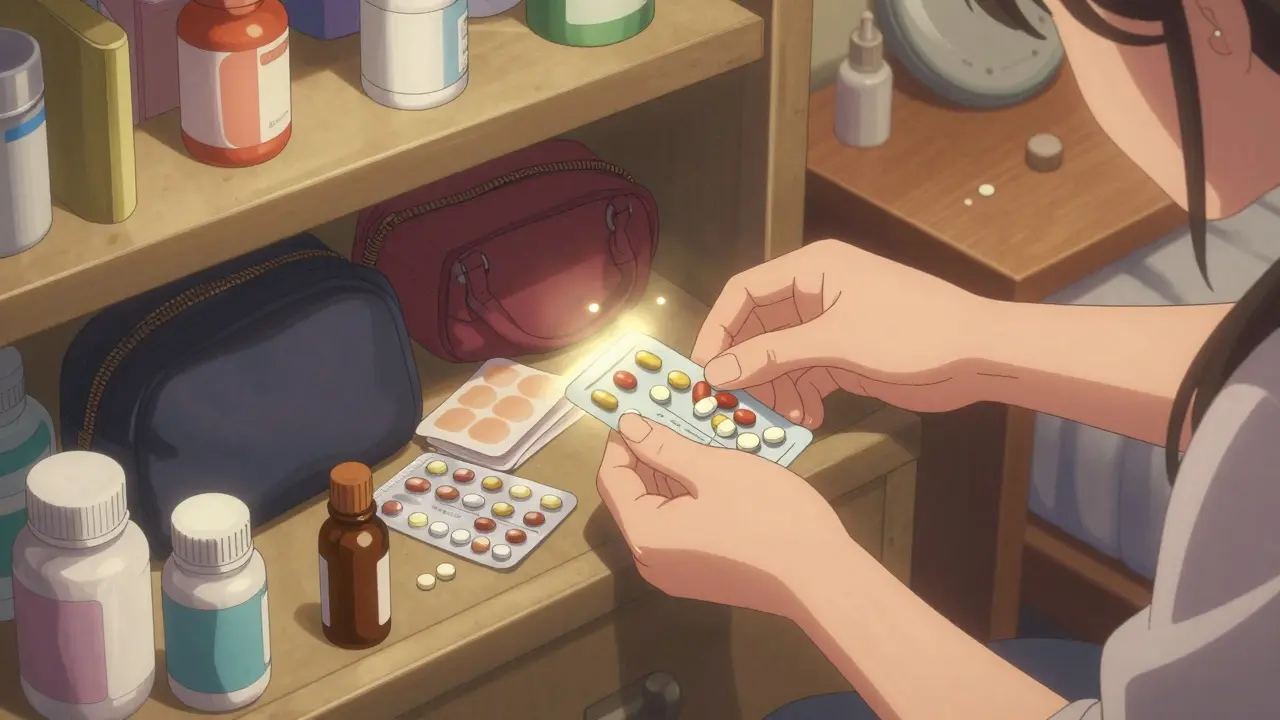
Every year, millions of unused pills, patches, and liquids sit in medicine cabinets across the U.S.-some expired, some no longer needed, all potentially dangerous if they fall into the wrong hands. In 2022, 18.4 million Americans misused prescription drugs, and nearly 70% of those came from family or friends’ home cabinets. The good news? You can help stop this. Taking unused medications to a local take-back event is one of the safest, most effective ways to protect your family, your community, and the environment. But if you’ve ever shown up with a bag of pills only to be turned away, you know the process isn’t always clear. Here’s how to do it right-no guesswork, no stress.
Step 1: Gather All Unused Medications
Start by checking every drawer, bathroom cabinet, and nightstand. Look for:- Expired painkillers like oxycodone or ibuprofen
- Old antibiotics you didn’t finish
- Unused ADHD meds like Adderall or Ritalin
- Prescription patches (fentanyl, nicotine, testosterone)
- Vitamins and supplements you never took
- Pet medications no longer needed
Step 2: Remove Personal Information
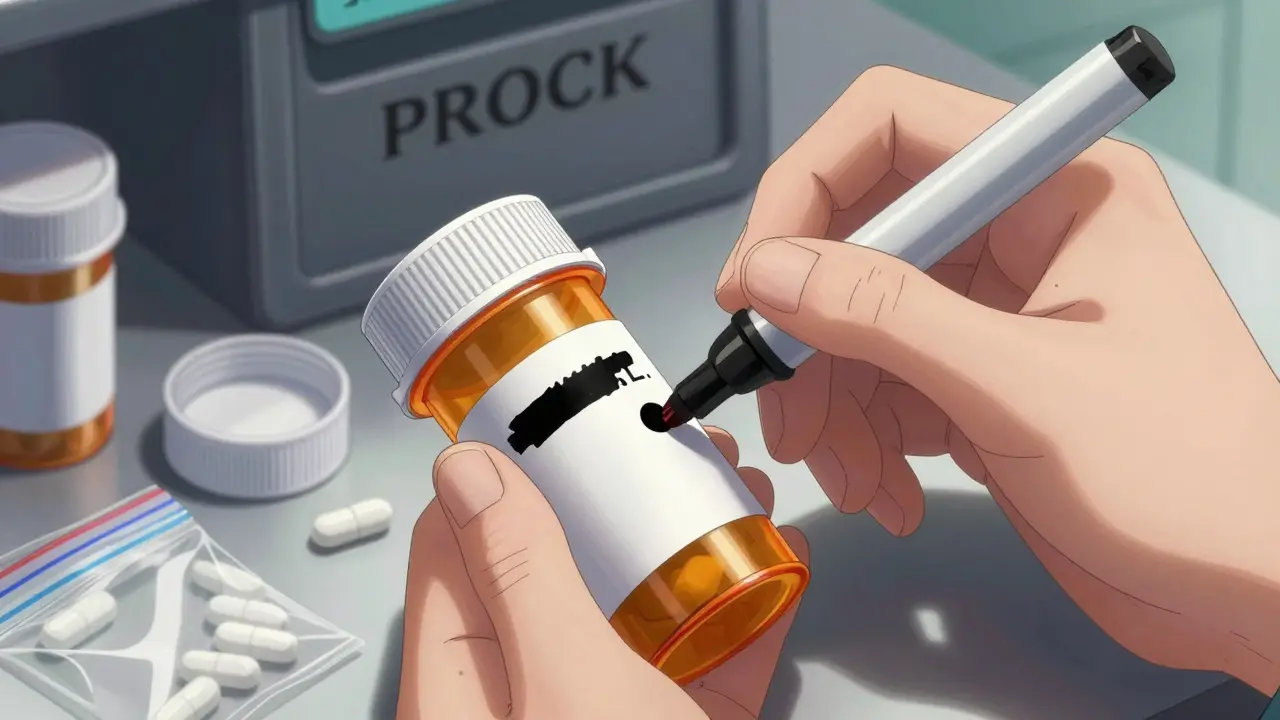
This is non-negotiable. HIPAA protects your health privacy, and take-back sites require it. Use a permanent marker to black out your name, address, prescription number, and any other identifying details on the bottle or label. If the label is faded or hard to read, cover the whole thing. Don’t rely on peeling labels off-that’s messy, risky, and often not accepted. Some sites even provide black markers at drop-off locations, but don’t count on it. Bring your own. Why does this matter? A 2023 study found that 41% of rejected submissions were due to incomplete redaction. Someone could use that label to fake a prescription or track your medical history. It’s not just about privacy-it’s about safety.Step 3: Keep Medications in Original Containers
This is the most common point of confusion. Most collection sites-92% of them nationwide-require medications to stay in their original pharmacy-labeled containers. That means the bottle your pharmacist gave you, with the prescription label (even if redacted). If you lost the bottle? No problem. Use a small, sealable plastic container-a pill organizer with a lid, a clean empty prescription bottle, or a zip-lock bag. But here’s the catch: if you’re using a bag, you must still clearly label what’s inside. Write the drug name in permanent marker on the outside. Liquid medications like cough syrup or antibiotics must be in a sealed container to prevent leaks. Washington State’s guidelines say it best: “Securely sealed” means no spills, no leaks, no open bottles. Avoid mixing medications from different prescriptions in one container. While some sites allow it after redaction, many staff members are trained to reject mixed pills because they can’t verify what’s inside. Stick to one drug per container if you can.Step 4: Know What NOT to Bring
Not everything goes in the take-back bin. These items are strictly prohibited at nearly all sites:- Asthma inhalers and other aerosols (pressurized containers)
- Hydrogen peroxide, alcohol-based solutions
- Iodine-based medications (like Betadine)
- Thermometers (mercury or digital)
- Illicit drugs (cocaine, heroin, etc.)
- Needles or sharps (unless the site specifically accepts them)
Step 5: Find a Take-Back Location Near You
There are now over 16,500 authorized collection sites across the U.S., and 71% of Americans live within five miles of one. You can find them at:- Pharmacies (Walgreens, CVS, Rite Aid)
- Hospitals and VA medical centers
- Police stations
- Public health clinics
Step 6: Drop Off and Walk Away
When you arrive, you’ll likely be asked to hand over your medications to a staff member. They’ll verify your label redaction and container type. This step takes 2-5 minutes. Don’t be surprised if they ask questions-they’re trained to follow strict federal guidelines. Once you hand it over, you’re done. No receipts, no forms, no follow-up. Your meds will be incinerated under federal environmental standards. In 2024 alone, Stericycle alone safely destroyed 29,800 tons of pharmaceutical waste this way.What Happens After You Drop Them Off?
Your medications don’t go to a landfill. They’re not flushed down the toilet. They’re not buried. They’re burned in high-temperature incinerators designed to destroy pharmaceutical compounds completely. This prevents chemicals like oxycodone, estrogen, or antibiotics from leaching into groundwater. The U.S. Geological Survey found 80% of U.S. streams contain traces of pharmaceuticals-mostly from improper disposal. Proper take-back cuts that number dramatically. It also stops diversion. A single bottle of leftover opioids can lead to addiction. By removing these drugs from homes, we reduce the risk of teens stealing them or adults misusing them.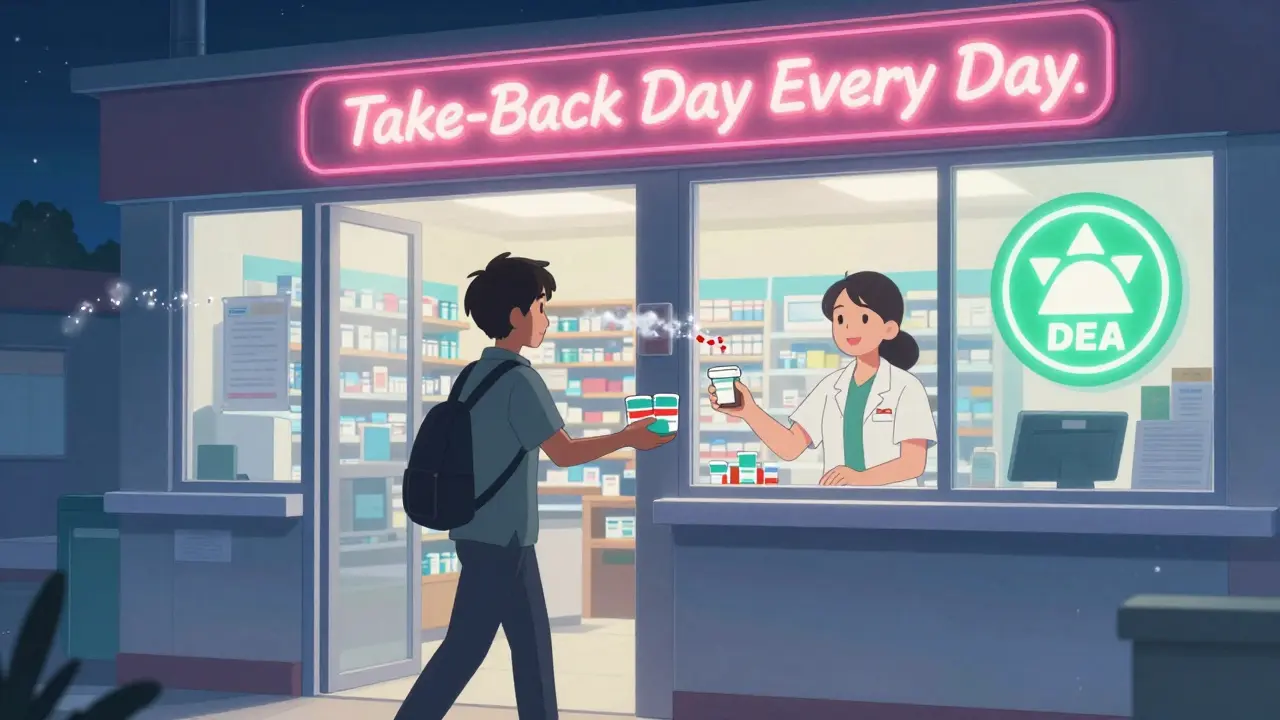
Common Mistakes (And How to Avoid Them)
Most people get it right. But here are the top errors-and how to dodge them:- Mistake: Throwing meds in the trash. Solution: Trash disposal is risky and often illegal. Use a take-back site.
- Mistake: Flushing pills. Solution: Only flush if the label says to (very few do). Otherwise, it pollutes water.
- Mistake: Using a coffee can or yogurt cup. Solution: Use a sealed plastic container or original bottle. Non-standard containers get rejected.
- Mistake: Not removing labels. Solution: Cover every bit of personal info with a black marker.
- Mistake: Assuming all sites accept everything. Solution: Always check the site’s rules first. Call ahead if unsure.
Why This Matters More Than You Think
Right now, only 15% of unused medications are properly disposed of. That means 85% are sitting in homes, tossed in trash, or flushed down drains. The EPA estimates that if participation hit 50%, we could prevent 6.4 million pounds of pharmaceuticals from entering waterways each year. It’s not just environmental. It’s personal. Your neighbor’s teenager might be tempted by leftover painkillers. Your parent might accidentally mix old and new meds. Your child might find a bottle and think it’s candy. Taking five minutes to prepare your meds for a take-back event doesn’t just clean out your cabinet. It protects your community.What’s Changing in 2025?
A major shift is coming. In 2024-2025, 38 state pharmacy boards are testing “universal preparation standards”-a simpler rule: remove personal info, put meds in any sealed container. No more original bottle requirement. Early pilot programs show participation could jump by 22%. The FDA has allocated $8.7 million to educate the public on this new standard. By 2026, you might be able to toss your meds into a zip-lock bag without worrying about the original bottle. But for now, stick to the rules.Final Tip: Make It a Habit
Every time you fill a new prescription, take a minute to check what you’ve got at home. Clear out the old ones before they pile up. Keep a small bag in your car or by the door. When you see a take-back event on the calendar-or even just a Walgreens kiosk-grab it and go. You don’t need to be perfect. You just need to be consistent. One bottle at a time, we can stop the cycle of misuse and pollution.Can I drop off expired vitamins at a take-back event?
Yes. Vitamins, supplements, and herbal products are accepted at all authorized take-back sites. Just make sure to remove your name from the bottle or label. They’re treated the same as prescription drugs during incineration.
What if I don’t have the original bottle for my pills?
You can use a small sealed plastic container-a zip-lock bag, a clean pill organizer with a lid, or an empty prescription bottle. Write the drug name clearly on the outside with a permanent marker. Avoid using food containers like yogurt cups or coffee jars-they’re not accepted.
Can I drop off insulin pens or needles?
Some sites accept insulin pens and sharps, but not all. Hospital-based sites and VA centers are your best bet-89% accept them. Retail pharmacies like CVS and Walgreens usually don’t. Call ahead or use the DEA’s locator tool to find a sharps-friendly location.
Is it safe to flush medications down the toilet?
Only if the label or FDA’s flush list specifically says to. Most medications should never be flushed. Flushing contributes to pharmaceutical pollution in 80% of U.S. streams. Take-back events are the only safe disposal method for almost all drugs.
Why do some sites reject my meds even if I followed the rules?
Staff may be following outdated guidelines, or there’s inconsistency in training. Rural sites have higher rejection rates due to less experience. If you’re turned away, ask why and note the site’s name. Report it to your local health department. Many sites are working to standardize rules under the new “Every Day is Take Back Day” initiative.
Do I need to bring ID to drop off medications?
No. You don’t need to show ID, a prescription, or proof of ownership. Take-back events are anonymous. The only requirement is removing your personal info from the containers. Staff won’t ask who you are.
Can I drop off pet medications?
Yes. Pet medications-including antibiotics, flea treatments, and pain relievers-are accepted at 100% of authorized collection sites. Treat them the same as human meds: remove labels, keep in original containers if possible, and seal liquids.
How often do take-back events happen?
Since January 2024, the DEA’s “Every Day is Take Back Day” initiative means permanent drop boxes at pharmacies and police stations are open year-round. Two national events are still held each year (in April and October), but you don’t need to wait for those. Most locations accept meds anytime during business hours.
Elaine Douglass
December 19, 2025 AT 09:26I just dropped off my mom's old pain meds last week at CVS. She forgot she had them after her hip surgery. Took me 10 minutes. Feels good to not have that stuff lying around.
Also grabbed her vitamins and some pet antibiotics for the dog. They didn't even blink.
Takeysha Turnquest
December 20, 2025 AT 00:57We are not just cleaning cabinets we are erasing the ghost of corporate greed that sold us pills like candy
The real crisis isn't the meds it's the system that made us hoard them like gold
Alex Curran
December 21, 2025 AT 17:37In Australia we have similar programs but they call it Pharmaceutical Takeback. The rules are almost identical. Original containers preferred but sealed bags with labels written on are fine if you explain it to staff. They're usually happy to help.
Also worth noting: pet meds are accepted here too. No distinction between human and animal prescriptions. Makes sense really
Lynsey Tyson
December 23, 2025 AT 12:42I used to throw stuff in the trash until I read that one study about water contamination. Now I keep a little bag in my car trunk. Every time I refill a prescription I toss the old ones in. It's become a little ritual. Kinda peaceful honestly.
Also my kid thinks I'm weird for writing on bottles with a marker but I told her it's like secret agent stuff. She loves it.
Edington Renwick
December 23, 2025 AT 19:59You people are being manipulated. The government wants you to think this is about safety. It's not. It's about control. Why do they need to burn everything? Why not recycle? Why not redistribute? Why the secrecy?
They're hiding something. And you're happily handing over your meds like obedient children.
Sarah McQuillan
December 24, 2025 AT 15:14This whole thing is a scam. The FDA says it's safe to flush but then they say don't flush? Which is it? And why do they care so much about labels but not about the actual environmental damage from incineration?
Also why are we letting the DEA run this? They're the same people who locked up people for weed. Trust them with your meds? LOL.
Aboobakar Muhammedali
December 24, 2025 AT 21:54I live in a small town. Took me 3 weeks to find a place that takes pet meds. Finally found one at the vet clinic. They gave me a sticker that says I'm a good human. I framed it.
My neighbor asked why I was writing on bottles. I told her it's because I care. She cried. We hugged. It was nice.
Laura Hamill
December 25, 2025 AT 01:17I know what they're doing. This is all part of the Big Pharma agenda. They want you to think you're helping by dropping off pills. But guess what? They just make more. And the incinerators? They're owned by the same companies that make the drugs. It's a loop. A money machine.
Also I saw a guy at the dropoff with a badge that said 'DEA Contractor'. I took a picture. You're being watched.
pascal pantel
December 26, 2025 AT 10:51The 92% statistic for original containers is misleading. That's based on outdated DEA guidelines from 2019. The 2024 universal standard pilot programs show 89% acceptance rate for non-original containers when properly labeled. The discrepancy is due to inconsistent staff training, not policy.
Also the 41% rejection rate due to redaction is inflated. Most are from rural sites with untrained volunteers. Properly trained pharmacists reject less than 12%.
Gloria Parraz
December 28, 2025 AT 05:42You're doing amazing. Seriously. Taking those five minutes to clean out your cabinet? That's courage. That's responsibility. That's love for your community.
Don't let anyone make you feel small for doing this. The world needs more people like you. One bottle at a time. You're changing things.
Danielle Stewart
December 29, 2025 AT 07:35I appreciate the guide. However, I must formally note that the EPA's estimate of 6.4 million pounds of pharmaceuticals prevented annually under a 50% participation rate is extrapolated from a non-peer-reviewed modeling study conducted by the University of Michigan in 2021, which utilized a 12% margin of error and assumed linear behavioral adoption curves, which are empirically invalid in public health interventions. A more conservative estimate based on CDC waste stream analysis suggests a maximum of 2.1 million pounds annually under optimal conditions.