
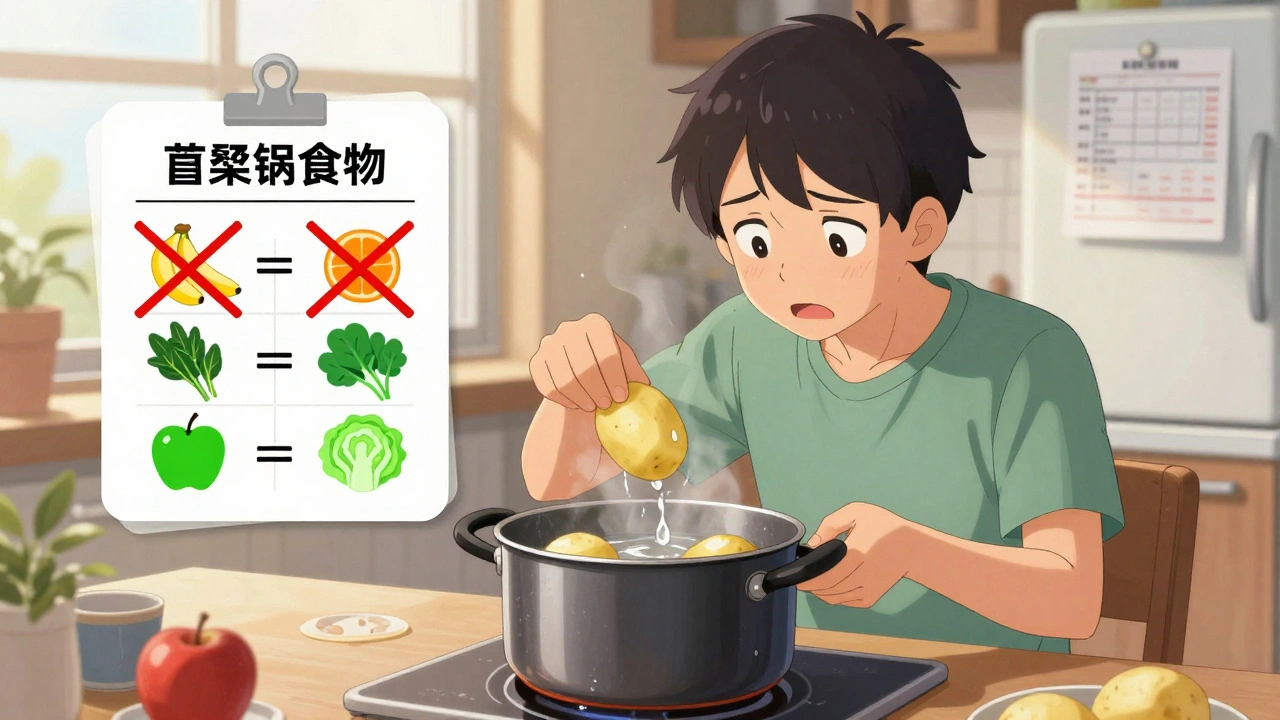
When your kidneys aren't working well, even small changes in your diet can push your potassium levels into dangerous territory. Hyperkalemia - high blood potassium - is one of the most serious and common electrolyte problems in people with chronic kidney disease (CKD). It doesn’t always cause symptoms, but when it does, it can lead to heart rhythm problems, muscle weakness, or even cardiac arrest. The good news? With the right diet, monitoring, and medications, most people with CKD can keep potassium in a safe range and still take the heart-protecting drugs they need.
Why Hyperkalemia Is So Common in CKD
Your kidneys are the main way your body gets rid of extra potassium. When kidney function drops - especially in stages 3b to 5 of CKD - that system starts to fail. About 40-50% of people with advanced CKD who aren’t on dialysis develop high potassium levels at some point. The problem is made worse by the very medications that protect their kidneys and heart: RAAS inhibitors like ACE blockers and ARBs. These drugs reduce protein in the urine and slow kidney damage, but they also reduce potassium excretion. For years, doctors had to choose between protecting the heart or preventing dangerous potassium spikes. Now, we have better tools.What’s a Safe Potassium Level?
For most people without kidney disease, a normal potassium level is 3.5 to 5.0 mmol/L. But for someone with CKD, aiming for 4.0 to 4.5 mmol/L is now the goal. Why? Studies show that levels above 5.0 mmol/L increase the risk of heart rhythm problems and death. Levels above 6.0 mmol/L are life-threatening. Even small rises - from 5.0 to 5.5 - often trigger doctors to lower or stop essential heart medications. That’s dangerous. Research shows that cutting back on RAAS inhibitors raises the risk of heart attack and kidney failure by nearly a third. The key isn’t avoiding these drugs - it’s managing potassium so you can keep taking them.Dietary Limits: What to Eat and What to Avoid
Diet plays a huge role. In early CKD (stages 1-3a), you don’t need to go on a strict low-potassium diet. But once you’re in stage 3b or beyond, most guidelines recommend limiting potassium to 2,000-3,000 mg per day. That’s about half of what most people eat. Here’s what’s high in potassium and often needs to be limited:- Bananas (422 mg per 100g)
- Oranges and orange juice (181 mg per 100g)
- Potatoes (421 mg per 100g)
- Tomatoes and tomato sauce (237 mg per 100g)
- Spinach, Swiss chard, and other leafy greens
- Avocados, nuts, and dried fruit
- Salt substitutes (often contain potassium chloride)

Emergency Treatment: What Happens When Potassium Spikes
If your potassium hits 5.5 mmol/L or higher and you have symptoms like palpitations, muscle weakness, or an abnormal ECG, you need immediate treatment. At 6.0 mmol/L or above, it’s a medical emergency. The first step is protecting your heart. Calcium gluconate (10 mL of 10% solution, given slowly through an IV) doesn’t lower potassium - but it stabilizes heart muscle cells within minutes, preventing dangerous rhythms. This is like putting a safety net under a tightrope walker. Next, you need to move potassium out of your blood and into your cells. The standard combo is insulin and glucose: 10 units of regular insulin with 50 mL of 50% dextrose. This works in 15-30 minutes and can drop potassium by 0.5 to 1.5 mmol/L. But there’s a catch - about 10-15% of people get dangerously low blood sugar from this treatment. Blood sugar must be checked every 30 minutes for at least 2 hours. If you also have acidosis (low bicarbonate), sodium bicarbonate can help. It’s given IV and starts working in 5-10 minutes. It’s not a first-line treatment for everyone, but it’s useful if your blood is too acidic. These treatments are temporary. They buy time. To truly lower total body potassium, you need binders or dialysis.Chronic Management: The New Generation of Potassium Binders
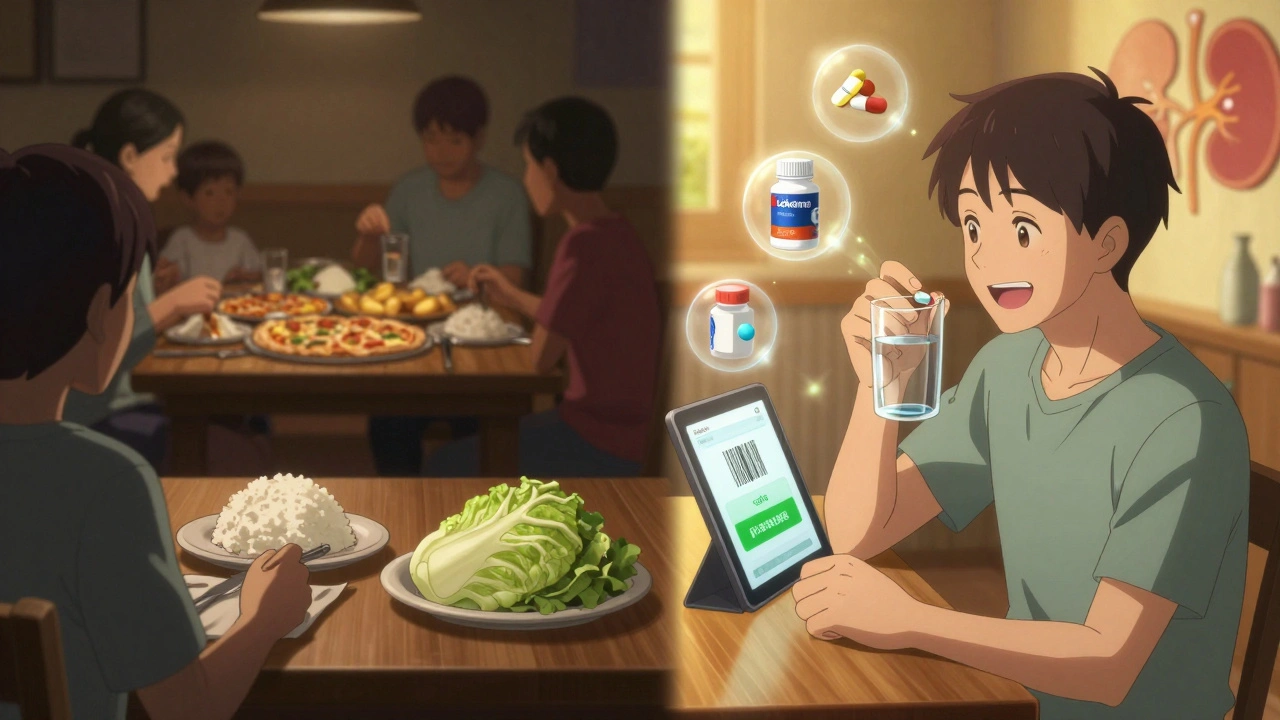
For long-term control, we’ve moved far beyond old-school sodium polystyrene sulfonate (SPS), which had a 1% risk of causing life-threatening colon damage. Today, two newer binders dominate:- Sodium zirconium cyclosilicate (SZC, brand name Lokelma): Works fast - lowers potassium by 1.0-1.4 mmol/L within 1 hour. Great for acute spikes. But it adds sodium - about 1.2 grams per day - which can cause swelling in people with heart failure.
- Patiromer (brand name Veltassa): Slower, taking 4-8 hours to work. But it’s sodium-neutral, so it’s better for people with heart failure or high blood pressure. Side effects include constipation (14%) and low magnesium (19%).
Monitoring and Adherence: The Real Challenge
It’s not enough to just take the binder. You need regular blood tests. After starting or changing a RAAS inhibitor, check potassium in 1-2 weeks. Once stable, every 3-6 months is enough. But if you feel weak, your heart races, or you notice changes in your ECG, get tested right away. Adherence is the biggest hurdle. A study in a major U.S. kidney clinic found only 37% of patients consistently followed their low-potassium diet. Why? Many say it’s isolating. Avoiding bananas, potatoes, and tomatoes means skipping family meals, restaurant dinners, and holiday feasts. One patient survey found 45% of people with CKD felt socially isolated because of their diet. Patiromer’s chalky texture turns off some people - 22% quit because they couldn’t stand how it tasted. SZC comes in powder form and is taken twice daily, which is easier than SPS’s three-times-a-day schedule. Still, cost is a barrier. In the U.S., patiromer costs over $600 a month. SPS? Around $47. Many clinics can’t afford the newer drugs for all patients.The Future: Precision and Technology
The next wave of hyperkalemia management is personalization. Researchers are testing urine potassium tests to tailor diets - not everyone needs to cut back the same amount. New drugs like tenapanor, originally for phosphate control, are showing promise in lowering potassium without systemic absorption. Smartphone apps that scan food barcodes and calculate potassium content are already in pilot testing. One study showed a 32% improvement in diet adherence when patients used these tools. Digital health isn’t a luxury - it’s becoming essential. By 2027, experts predict that 75% of CKD patients on heart-protecting drugs will also be on a potassium binder. The goal isn’t to avoid high potassium - it’s to manage it so you can keep taking the medicines that save your life.What You Can Do Today
If you have CKD and are on RAAS inhibitors:- Ask your doctor for a serum potassium test if you haven’t had one in the last 6 months.
- Request a referral to a renal dietitian - not a general nutritionist. They know exactly what to tell you.
- Don’t stop your blood pressure or heart meds without talking to your nephrologist.
- If your potassium is high, ask about newer binders. Don’t accept SPS unless cost is the only option.
- Use a food tracking app that includes potassium content. Even basic ones help.
- Boil high-potassium vegetables and throw out the water. It’s a simple trick that works.
Lynette Myles
December 6, 2025 AT 05:03The FDA approved these binders without long-term safety data. They’re pushing potassium control so hard because Big Pharma wants you dependent on $600/month pills. Boiling potatoes? That’s what your grandma did. Now they want you on a chemical leash.
Annie Grajewski
December 7, 2025 AT 01:04so like… if i eat a banana and my k+ goes to 5.2 do i just… die? or is this just another medical scare tactic? also why does everyone act like potassium is the devil when it’s literally essential for life??
Harry Nguyen
December 8, 2025 AT 03:14Let me guess - this was written by someone who got a grant from a binder manufacturer. We used to treat this with diet and monitoring. Now we need expensive drugs because the system’s broken. And yes, I’m talking to you, American healthcare.
Philip Kristy Wijaya
December 9, 2025 AT 04:31It is imperative to recognize that the physiological regulation of serum potassium is not merely a biochemical abstraction but a profound systemic equilibrium requiring both pharmacological and behavioral interventions. The notion that boiling vegetables constitutes a meaningful therapeutic strategy is both naive and dangerously reductionist
Jennifer Patrician
December 9, 2025 AT 17:39They don’t want you to know that dialysis centers profit from your potassium spikes. That’s why they scare you with heart attacks. Your doctor’s not trying to save you - they’re trying to keep you coming back. And yes, I’ve seen the paperwork.
Mellissa Landrum
December 10, 2025 AT 03:16potassium is just a buzzword the med industry made up to sell more pills. i used to eat bananas every day and my kidneys were fine. now they tell me i can't have tomato sauce? what’s next, no breathing?
luke newton
December 10, 2025 AT 20:30You people treat your bodies like machines you can tweak with apps and binders. I’ve been on dialysis for 12 years. I eat what I want. I live. You’re not dying from potassium. You’re dying from fear.
Ali Bradshaw
December 11, 2025 AT 14:09Good breakdown. I’ve seen patients give up on RAAS meds because they’re scared of potassium - and then end up in the hospital from heart failure. The binders aren’t perfect, but they’re giving people back their lives. Keep boiling those spuds - it’s free and it works.
an mo
December 11, 2025 AT 20:16Let’s not conflate potassium management with systemic nephrotoxicity mitigation. The pharmacokinetic profile of SZC demonstrates superior cation exchange kinetics versus patiromer, but sodium load remains a critical comorbidity amplifier in HFpEF cohorts. Your dietitian didn’t mention the renal tubular acidosis risk from chronic bicarbonate use - that’s a Class IIa concern per KDIGO 2023.
aditya dixit
December 13, 2025 AT 14:34Life is about balance, not fear. I’ve walked with patients who stopped eating fruit because they were told to. They got weaker, sadder, and more isolated. The real disease isn’t hyperkalemia - it’s the belief that we must sacrifice joy to survive. A small banana, boiled carrots, a binder if needed - that’s not weakness. That’s wisdom.