
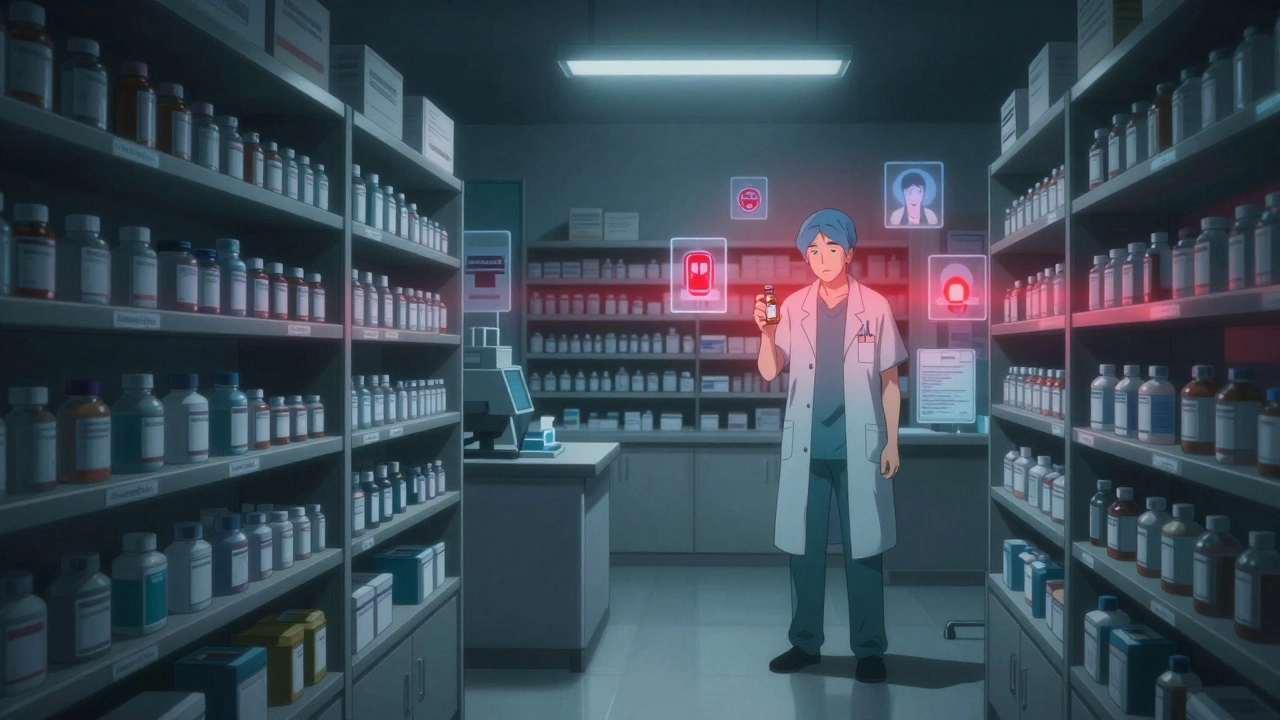
When a patient needs an IV drip, a life-saving antibiotic, or a chemotherapy injection, they expect the medication to be there. But in hospitals across the U.S., that’s no longer a guarantee. As of July 2025, 226 injectable medications remain in short supply-down slightly from earlier in the year, but still at crisis levels. And while retail pharmacies might skip a few pills or switch brands, hospital pharmacies are forced to make impossible choices: delay surgeries, use less effective drugs, or risk patient safety. This isn’t a temporary hiccup. It’s a systemic breakdown-and hospitals are paying the price.
Why Injectables Are the First to Go
Not all drugs are created equal when it comes to supply chain fragility. Sterile injectables-medications given by IV, injection, or infusion-are the most vulnerable. Why? Because they’re complex to make. Unlike pills you can swallow, injectables must be produced in sterile environments, with zero contamination. One tiny error, and an entire batch gets tossed. That’s why manufacturing quality issues cause 55% of all drug shortages, according to FDA data. These drugs also have razor-thin profit margins. Most are generic, meaning manufacturers compete on price, not innovation. Nine out of ten companies that make sterile injectables operate on margins of just 3-5%. When a factory in India gets shut down by an FDA inspection, or a tornado hits a plant in North Carolina, there’s little financial incentive to rebuild quickly. The result? Long-term shortages that drag on for years. The average injectable shortage lasts 4.6 years, far longer than any other drug type.Who Gets Hit the Hardest?
Hospital pharmacies are on the front lines. While community pharmacies might see 15-20% of their inventory affected by shortages, hospitals report 35-40% of their essential meds are unavailable. And nearly 65% of those are sterile injectables. That’s not a coincidence. Hospitals rely on these drugs for everything: anesthesia for surgery, IV fluids for dehydration, antibiotics for sepsis, and chemo for cancer. The most affected categories? Anesthetics (87% shortage rate), chemotherapeutics (76%), and cardiovascular injectables (68%). These aren’t optional. If you’re in the ER with a heart attack, you need epinephrine. If you’re in the ICU with sepsis, you need norepinephrine. If you’re getting surgery, you need propofol. When these drugs vanish, care stalls. Academic medical centers report being hit 2.3 times harder than community hospitals. Why? Because they treat the sickest patients-those who need the most specialized, hard-to-replace drugs. A child with leukemia, an elderly patient with kidney failure, a trauma victim needing emergency sedation-they all depend on injectables that are vanishing.
The Ripple Effect: Delayed Care, Ethical Dilemmas
When a hospital runs out of normal saline, it doesn’t just mean fewer IV bags. It means postponing surgeries, sending patients home with oral hydration instead of IV fluids, or using less effective alternatives. At Massachusetts General Hospital, 37 surgical procedures were delayed in just one quarter because of anesthetic shortages. That’s not just inconvenient-it’s dangerous. Patients wait longer for pain relief. Recovery gets pushed back. Backlogs grow. And then there’s the moral weight. A 2025 survey by the American Society of Health-System Pharmacists found that 68% of hospital pharmacists have faced ethical dilemmas during shortages. Over 42% admitted to using less effective drugs because nothing else was available. One pharmacist on Reddit wrote: “Running out of normal saline for three weeks straight forced us to get creative with oral rehydration for post-op patients-never thought I’d see the day.” That’s not innovation. That’s desperation. These aren’t hypotheticals. The Department of Health and Human Services estimates each drug shortage affects 500,000 people. More than 30% of them are over 65. These are the people most likely to be in hospitals. When their meds disappear, they’re the ones who suffer.Why Solutions Keep Failing
You’d think the government would step in. The FDA has been aware of this for years. The Consolidated Appropriations Act of 2023 required manufacturers to notify the agency earlier about potential shortages. But a 2025 Government Accountability Office report found it only reduced shortage duration by 7%. The FDA’s new Strategic Plan for Drug Shortage Prevention includes incentives for better manufacturing-but no penalties. Without enforcement, companies have little reason to change. Only 12% of sterile injectable manufacturers use advanced techniques like continuous manufacturing, which could make production more reliable. The rest still rely on outdated, fragile systems. And the supply chain is dangerously centralized. 80% of the active ingredients for generic injectables come from just two countries: China and India. A single political disruption, weather event, or regulatory shutdown in either country can ripple across the entire U.S. supply. When a factory in India was shut down in February 2024 over quality issues, cisplatin-a key chemo drug-vanished nationwide.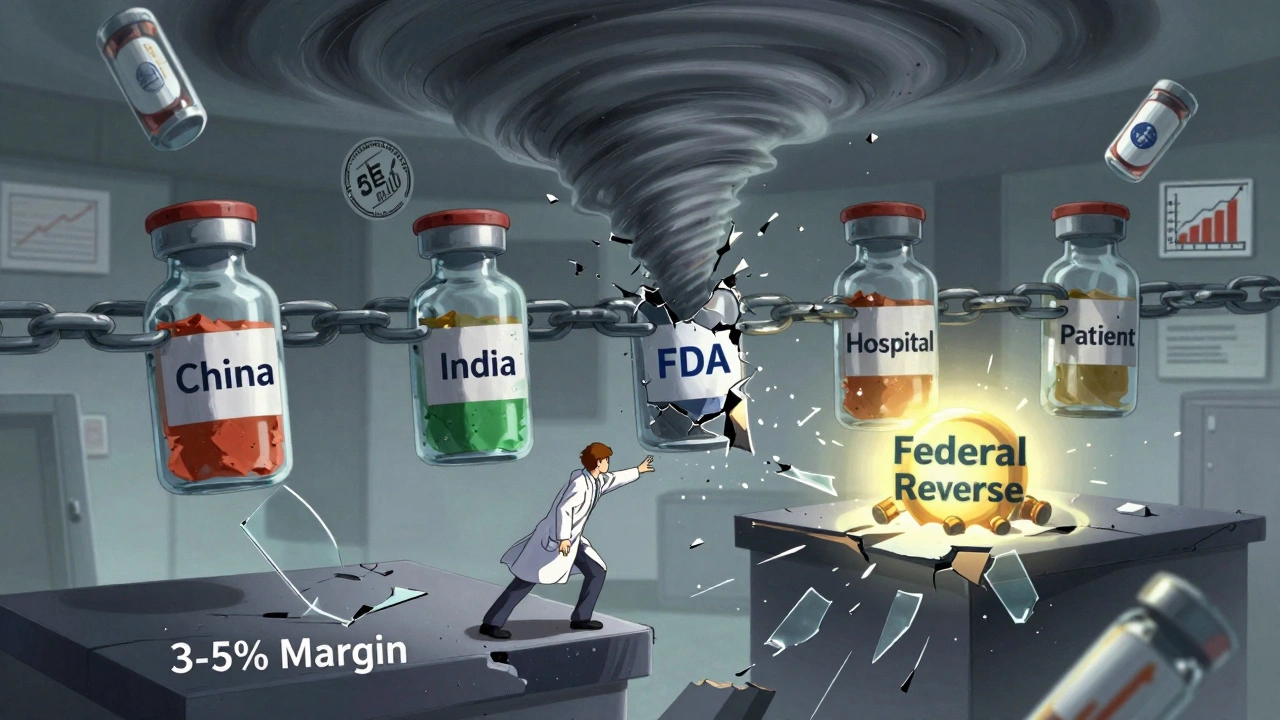
What Hospitals Are Doing to Cope
Hospitals aren’t sitting still. 76% have formed shortage management committees. But only 32% feel they have the staff or budget to handle the scale of the problem. Pharmacists are spending 11.7 hours a week just tracking down alternatives, calling suppliers, and reconfiguring protocols. Some strategies are working, but slowly. Hospitals that consolidate their stock of scarce drugs, create pre-approved therapeutic substitutions, and build direct relationships with backup suppliers see a 15-20% drop in clinical disruption. But it takes 8-12 weeks to implement these systems-and new pharmacy directors take over 6.2 months to become proficient. The problem? Only 45% of hospitals have formal, updated shortage plans. The rest rely on handwritten notes, last-minute calls, and guesswork. That increases the risk of medication errors. One wrong substitution can cost a life.The Road Ahead: No Easy Fixes
The Biden administration’s $1.2 billion push to boost domestic drug manufacturing sounds promising. But experts say it will take 3-5 years to see results. By then, another generation of patients will have faced delays, compromised care, and avoidable risks. The generic injectable market is now dominated by just three manufacturers controlling 65% of essential drugs like saline and potassium chloride. That’s not competition-it’s a single point of failure. One plant goes down, and the whole country feels it. Without major policy changes-like guaranteed minimum profits for critical generics, mandatory use of modern manufacturing tech, or federal stockpiles of essential injectables-hospitals will keep bearing the brunt. The numbers aren’t improving. The root causes aren’t being fixed. And patients? They’re the ones left waiting.Why are injectable medications more likely to be in short supply than pills?
Injectable medications require sterile manufacturing environments, complex production processes, and strict quality controls. Even minor contamination can destroy an entire batch. They also have very low profit margins, so manufacturers lack financial incentive to invest in backup systems or expand capacity. This makes them far more vulnerable to disruptions than oral medications, which are easier and cheaper to produce.
How do drug shortages affect patients in hospitals?
When essential injectables like anesthetics, antibiotics, or chemotherapy drugs are unavailable, hospitals delay surgeries, postpone treatments, or use less effective alternatives. This can lead to longer hospital stays, increased complications, and even higher mortality rates. Over 78% of hospital pharmacists report that shortages have directly caused treatment delays for critically ill patients in the past year.
Why are hospital pharmacies hit harder than retail pharmacies?
Hospital pharmacies rely on sterile injectables for life-saving treatments, which make up 60-65% of all drug shortages. Retail pharmacies mostly stock oral medications, which are easier to substitute and less affected by supply chain issues. Hospitals report 35-40% of their inventory is impacted by shortages, compared to 15-20% for retail pharmacies.
What’s being done to fix the problem?
The FDA has introduced voluntary incentives for better manufacturing and requires earlier shortage notifications. The federal government allocated $1.2 billion to boost domestic production, but experts say results won’t be seen for 3-5 years. Hospitals are creating shortage management teams and stockpiling alternatives, but most lack the resources to handle the scale of the crisis.
Are there any alternatives to the drugs that are in short supply?
Sometimes, but not always. Therapeutic substitutions are possible for some drugs, but injectables often have unique bioavailability, dosing, or side effect profiles. Switching drugs can be risky-especially for critically ill patients. Many hospitals have formal pharmacy and therapeutics committees to approve substitutions, but even then, alternatives may be less effective or harder to administer.
Annie Grajewski
December 4, 2025 AT 18:07so like... we pay 50k for a pill that does nothing but a 20 cent injectable that saves lives is hard to find? 🤡 guess the free market is just great at saving lives when it feels like it
Mark Ziegenbein
December 6, 2025 AT 06:51Let me be perfectly clear: this isn’t a shortage-it’s a systemic collapse of the moral architecture underpinning American healthcare. We’ve outsourced not just manufacturing but our very sense of ethical responsibility to the lowest bidder in a globalized race to the bottom. The fact that we treat life-saving injectables like commodity widgets-negotiating margins like they’re coffee beans-isn’t capitalism-it’s nihilism dressed in lab coats. And now, children with leukemia are paying the price for quarterly earnings reports. We don’t need more reports. We need a revolution.
Norene Fulwiler
December 6, 2025 AT 23:06I’ve worked in three different hospitals across three states. This isn’t new. It’s been getting worse since 2018. I’ve seen nurses cry because they couldn’t give a kid the right chemo dose. I’ve seen patients sent home with IV bags they had to refill themselves. This isn’t just policy-it’s human. We need to treat these drugs like emergency supplies, not afterthoughts.
William Chin
December 8, 2025 AT 02:17It is imperative to note that the structural deficiencies within the current pharmaceutical supply chain are not merely logistical but fundamentally ideological. The prioritization of profit maximization over public health imperatives constitutes a violation of the social contract. Institutional reform is not optional-it is an ethical obligation.
James Moore
December 8, 2025 AT 10:14China and India?! Are you kidding me?! We let our entire injectable supply chain depend on two foreign countries?! That’s not just stupid-that’s treason! We used to make everything here. Now we’re begging for saline from a factory that might get shut down because someone didn’t wash their hands? We need tariffs. We need bans. We need to bring it ALL back. America first, not cheap drugs from overseas!
Kylee Gregory
December 9, 2025 AT 05:51It’s hard not to feel hopeless reading this. But I’ve seen hospitals that turned it around-by sharing inventory across regions, by training pharmacists to be crisis coordinators, by listening to the nurses on the floor. Change doesn’t come from Congress. It comes from people who show up, every day, even when the system’s broken. Maybe that’s where we start.
Laura Saye
December 9, 2025 AT 20:59The emotional toll on pharmacy teams is profoundly underreported. The cognitive load of managing substitutions, the guilt of choosing between patients, the quiet grief of knowing you can’t give someone what they need-it’s not just operational. It’s existential. And yet, we don’t fund mental health support for these workers. We just expect them to keep holding the line.
luke newton
December 10, 2025 AT 20:15Who’s to blame? The CEOs. The politicians. The voters who keep electing people who take corporate donations. You think this is an accident? No. It’s by design. Profit before people. That’s the whole system. And you? You’re part of it. Every time you buy cheap meds, you’re complicit.
Ali Bradshaw
December 12, 2025 AT 10:07Hey, I’m from the UK-we’ve got our own mess with NHS supply chains. But here’s what works: centralized stockpiles, pre-approved alternatives, and pharmacists with real authority. No bureaucracy. No politics. Just救人. We need to stop treating this like a market problem and start treating it like a public health emergency. Simple.
Lynette Myles
December 14, 2025 AT 01:15They’re hiding the real reason. The FDA and big pharma colluded to phase out small manufacturers so only 3 companies control everything. This was planned. The shortages? They’re intentional. To force you into expensive branded drugs. Watch the stock prices. They always spike right after a shortage hits.
Michael Dioso
December 15, 2025 AT 13:31Actually, you’re all wrong. The real problem is that nurses won’t use the alternatives because they’re lazy and scared of liability. If they just trusted the science instead of their gut, we wouldn’t have this mess. Also, why are we still using glass vials? Plastic would be cheaper. Duh.
Mark Curry
December 17, 2025 AT 07:32it’s sad. but people are trying. my cousin’s a pharmacist in ohio. she spent 8 months building a regional swap network. not perfect. but it saved 12 lives last year. small wins. they count.
an mo
December 17, 2025 AT 18:4580% of API from China? That’s not a vulnerability-that’s a weapon. And we’re letting them hold it over our heads. This is bioweapon-level strategic dependency. We’re not in a shortage. We’re in a war. And we’re losing.