
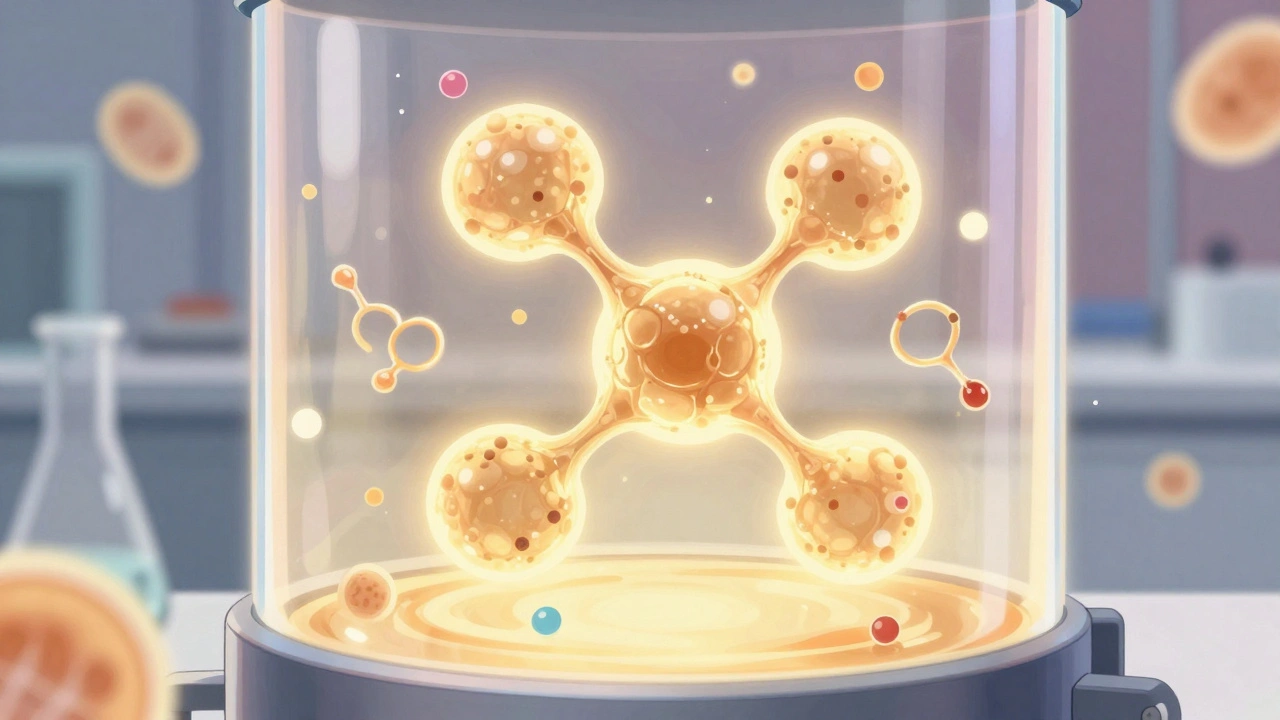
When you take a pill for high blood pressure, you expect every tablet to be exactly the same. That’s because small-molecule drugs are made in a lab using chemical reactions - like baking cookies from the same recipe. But when you get a biologic drug - say, for rheumatoid arthritis or Crohn’s disease - what you’re getting isn’t a single molecule. It’s a complex soup of millions of slightly different versions of the same protein. And that’s normal. It’s not a mistake. It’s biology.
Why biologics aren’t like generics
People often think biosimilars are just like generic drugs. They’re not. A generic version of aspirin is chemically identical to the brand name. Every molecule is the same. Biosimilars? They’re highly similar, but not identical. That’s because biologics are made inside living cells - yeast, hamster ovary cells, bacteria - not in a beaker. These cells don’t follow a perfect script. They make small changes as they build the protein. Sometimes they add extra sugar molecules. Sometimes they tweak an amino acid. These tiny differences are called lot-to-lot variability.The U.S. Food and Drug Administration (FDA) says this variation is inherent. Even the original brand-name biologic has it. Every batch, or lot, of Humira or Enbrel contains millions of slightly different versions of the same antibody. That’s why a biosimilar doesn’t have to be identical - it just has to be similar enough to work the same way and be just as safe.
What causes these differences?
It all comes down to how biologics are made. The process starts with a single cell. That cell is grown in a bioreactor, fed nutrients, and coaxed into producing the therapeutic protein. But living systems are messy. Temperature shifts. Nutrient levels change. Even the pH of the solution can nudge the cell to make a slightly different version of the protein. These changes lead to what scientists call post-translational modifications - mainly glycosylation (adding sugar chains), oxidation, or deamidation (chemical changes to amino acids).These aren’t defects. They’re expected. In fact, the FDA says these variations are part of what makes biologics work. Some of these small changes might even help the drug bind better to its target. The key isn’t eliminating variation - it’s controlling it. Manufacturers must show that their process keeps those variations within a narrow, safe range - and that the range for their biosimilar matches the reference product.
How regulators ensure safety
The FDA doesn’t just look at one batch. They examine dozens. A biosimilar applicant must submit hundreds of analytical tests comparing their product to the original. These tests look at molecular weight, shape, charge, sugar patterns, and more. They use advanced tools like mass spectrometry and capillary electrophoresis to detect differences as small as one part in a million.Then comes the big question: Does any of this variation affect how the drug works in the body? That’s where functional assays come in. Does the biosimilar bind to the same target? Does it trigger the same immune response? Does it last as long in the bloodstream? If the answer is yes across multiple tests - and if clinical trials show no meaningful difference in safety or effectiveness - the FDA approves it.
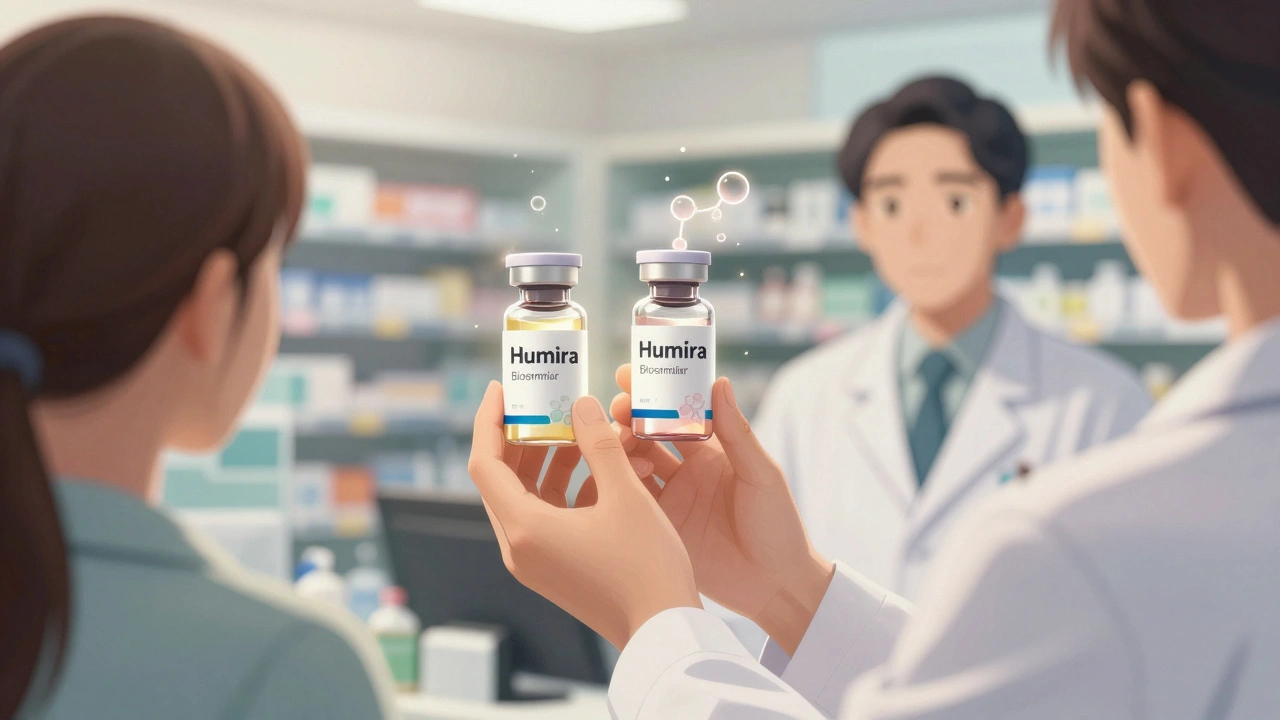
For a biosimilar to be labeled interchangeable, the bar is higher. The company must prove that switching back and forth between the reference product and the biosimilar doesn’t increase risk or reduce effectiveness. That means running studies where patients alternate between the two drugs over months. As of May 2024, 12 biosimilars in the U.S. have interchangeable status - meaning pharmacists can swap them without needing a doctor’s OK.
What this means for labs and testing
Lot-to-lot variability isn’t just a problem for drugmakers. It’s a headache for labs too. When a hospital changes the reagent lot for a blood test - say, to measure HbA1c for diabetes - the new lot might give slightly different results. A 0.5% shift might not sound like much, but for a patient whose HbA1c is hovering at 7.0%, that could mean a misclassification from “well-controlled” to “poorly controlled.”Lab directors report that 78% of them see lot-to-lot variation as a significant challenge. Why? Because quality control materials don’t always behave the same way as real patient samples. A control sample might look fine with the new lot, but patient results could drift. That’s why labs run verification studies using 20 or more patient samples, often with duplicate tests. They track results over time using moving averages - a method first used in the 1960s and still the gold standard today.
Smaller labs struggle the most. Verifying a new reagent lot can take up to 20% of a technician’s time each quarter. For a busy lab, that’s hours diverted from other critical work. But skipping verification? That’s risky. Undetected variation can lead to misdiagnoses, incorrect dosing, or unnecessary treatment changes.

Why this matters for patients
If you’re on a biologic - whether it’s the original or a biosimilar - you might wonder: What if my next refill is a different lot? Should I be worried?The short answer: No. The system is built to handle this. Every lot - whether it’s the original drug or a biosimilar - goes through the same strict controls. The FDA requires manufacturers to prove that their product performs consistently across all lots. Clinicians have been switching patients between lots of the same biologic for decades without seeing safety issues.
But there’s a catch. If you’re on an interchangeable biosimilar, you can be switched at the pharmacy without your doctor’s involvement. That’s by design. It’s meant to lower costs. But if you’ve been stable on one product for years, some doctors still prefer to keep you on the same one - just to minimize any potential disruption, even if the science says it’s safe.
Patients should know: Biosimilars aren’t cheaper because they’re lower quality. They’re cheaper because they don’t need to repeat every single clinical trial the original drug went through. The science behind them is just as rigorous - just more focused on proving similarity, not starting from scratch.
The bigger picture: Where this is all headed
The biosimilars market is growing fast. In 2023, it was worth $10.6 billion. By 2028, it’s expected to hit $35.8 billion. More than 32% of all biologic prescriptions in the U.S. are now filled with biosimilars. That’s saving billions in healthcare costs.As biologics get more complex - think antibody-drug conjugates, cell therapies, gene therapies - lot-to-lot variability will only become more important. These next-generation drugs are even harder to manufacture. But the tools are getting better. New analytics can detect changes we couldn’t see five years ago. Regulatory agencies are adapting their guidance to keep pace.
The future isn’t about eliminating variation. It’s about understanding it, measuring it, and managing it. The goal isn’t perfection - it’s predictability. Patients deserve consistent outcomes, whether they’re taking the original biologic or a biosimilar. And thanks to decades of science and regulation, they’re getting it.
Ada Maklagina
December 5, 2025 AT 18:56So basically our meds are alive and just kinda doing their own thing? Wild.
Juliet Morgan
December 7, 2025 AT 18:03My cousin’s been on a biosimilar for 3 years now and her RA is way more stable than when she was on the brand. I used to worry about the ‘different lot’ thing too-but honestly, if it works, why overthink it? You’re not getting a defective product, you’re getting science that’s been through hell to prove it’s safe.
Deborah Jacobs
December 8, 2025 AT 20:25It’s funny how we treat molecules like they’re supposed to be perfect little robots. But life? Life is messy. Cells don’t read manuals, they improvise. And guess what? That’s why biologics work at all. Those tiny sugar chains? They’re not bugs-they’re features. The body doesn’t care if every protein looks identical. It cares if it fits the lock. And if the lock opens every time? That’s all that matters.
Harry Nguyen
December 10, 2025 AT 19:38So the FDA lets drug companies sell us ‘close enough’ medicine because it’s cheaper? That’s not science-that’s corporate laziness dressed up as innovation. Next they’ll say ‘close enough’ vaccines are fine too. Wake up people, this is how you get pharmaceutical monocultures.
ashlie perry
December 10, 2025 AT 22:06They don’t tell you this but every lot has a barcode that tracks which lab tech had coffee spilled on their keyboard that day. I’ve seen the spreadsheets. It’s not biology-it’s chaos with a compliance stamp.
Norene Fulwiler
December 12, 2025 AT 04:18In my country, we’ve been using biosimilars for over a decade. People don’t panic when they switch. They just get better care at half the cost. This fear of ‘different lot’? It’s not science-it’s marketing. The original makers spent billions convincing us their version was sacred. Turns out, biology doesn’t care about brand names.
Lucy Kavanagh
December 12, 2025 AT 07:07Did you know the same biologic made in the U.S. and the one made in Germany have different glycosylation patterns? And yet they’re both approved? That’s not safety-that’s global regulatory arbitrage. The FDA doesn’t even test the German version. They just trust the paperwork. I’d rather take the brand.
James Moore
December 14, 2025 AT 06:58Let us not forget-this entire paradigm is built upon the false premise that ‘similar’ equals ‘equivalent.’ But similarity is a spectrum, and the FDA’s threshold is dangerously subjective. What is ‘similar enough’? One part in a million? One part in ten thousand? Who decides? And more importantly-who profits? The answer is never the patient.
Kylee Gregory
December 15, 2025 AT 21:20I think the real win here isn’t cost-it’s access. Before biosimilars, many people had to choose between their medication and their rent. Now, someone in rural Ohio can get the same treatment as someone in Manhattan. The science isn’t perfect, but the outcome? It’s profoundly human.
William Chin
December 16, 2025 AT 21:27It is imperative to note that the regulatory framework governing biosimilar approval is predicated upon a rigorous, multi-tiered analytical and clinical validation protocol, which ensures that the product’s pharmacokinetic and pharmacodynamic profiles remain within statistically acceptable parameters relative to the reference biologic. To suggest otherwise is to misrepresent the foundational science.
Stephanie Fiero
December 16, 2025 AT 22:14my lab switched reagents last month and my HbA1c jumped from 6.8 to 7.3 even though i didnt change a thing. they said its ‘normal variation’ but i dont trust it anymore. i asked for the brand even though it costs 3x. worth it to sleep at night.
Laura Saye
December 17, 2025 AT 21:37The post-translational heterogeneity observed in biologics is not merely noise-it’s a functional signature. The glycoform distribution modulates FcγR binding affinity, which in turn influences ADCC and CDC activity. When lot-to-lot variability is constrained within the established control space, therapeutic equivalence is maintained at the systems level, even if molecular heterogeneity persists. This is the essence of modern biopharmaceutical quality.
Katie Allan
December 18, 2025 AT 01:24It’s not about perfection. It’s about consistency. Think of it like a symphony-not every violinist plays the exact same note with the same pressure, but the conductor ensures the harmony holds. That’s what regulators do. They don’t demand robotic uniformity. They demand reliable outcomes. And for millions, that’s enough.
Chris Brown
December 19, 2025 AT 03:10Let me be clear: The FDA’s approval of biosimilars is a surrender to profit over principle. The original biologics were developed through decades of taxpayer-funded research. Now, private companies copy them, slap on a new label, and charge less-while the innovators raise prices on the original. This isn’t competition. It’s exploitation dressed as progress.