

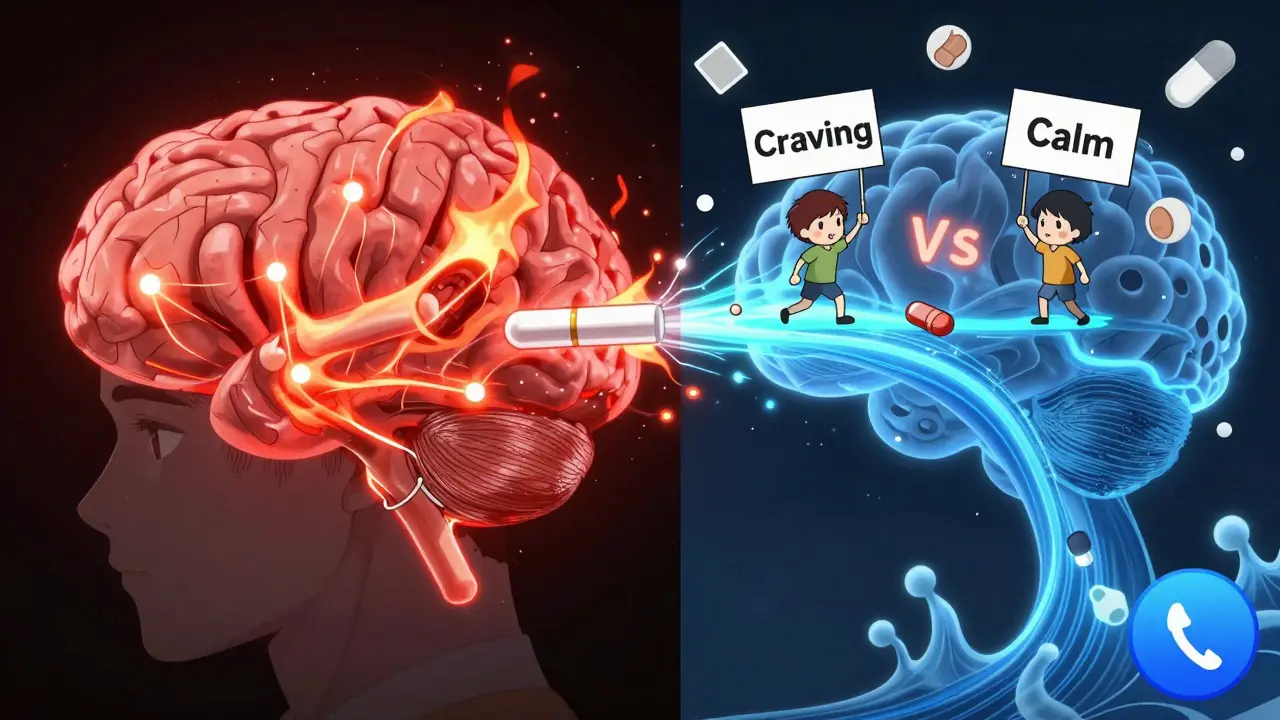
Quitting smoking isn’t just about willpower. It’s a biological battle. Your brain has rewired itself around nicotine, and when you stop, it fights back with cravings, irritability, and even depression. The good news? You don’t have to fight alone. Science has given us real tools - medications and proven strategies - that double or even triple your chances of quitting for good.
What Actually Works: The Three Main Medications
Not all quit-smoking aids are created equal. Three medications are backed by decades of research and approved by the FDA for this exact purpose: varenicline, bupropion, and nicotine replacement therapy (NRT).
Varenicline (brand name Chantix) is the most effective single medication you can take. It works by attaching to the same brain receptors that nicotine does, but it doesn’t give you the full high. Instead, it blocks nicotine from binding and reduces cravings. In clinical trials, about 22% of people who took varenicline stayed smoke-free after six months - nearly double the rate of those who used a placebo. The American Thoracic Society calls it the top choice for quitting. It’s taken as a pill, usually starting one to two weeks before your quit date, and you take it for 12 weeks. Some people need to keep going for another 12 weeks if they’re doing well.
Bupropion (Zyban) is an antidepressant that was accidentally found to help people quit smoking. It doesn’t contain nicotine. Instead, it affects dopamine and norepinephrine in the brain, which helps ease withdrawal symptoms like mood swings and low energy. It’s taken as a pill, twice a day, starting a week before you quit. Studies show around 16% of users stay quit after six months. It’s especially helpful if you’ve struggled with depression or low mood when trying to quit before.
NRT comes in many forms: patches, gum, lozenges, nasal sprays, and inhalers. All of them deliver small, steady doses of nicotine without the tar and poison in cigarettes. Patches give you a slow release over 24 hours. Gum and lozenges work fast - you chew or suck them when a craving hits. The goal is to wean yourself off nicotine gradually. NRT isn’t as strong as varenicline, but it’s safer for people who can’t take pills due to other health conditions. About 15% of users stay quit after six months.
Combining Treatments: The Secret Weapon
The best results don’t come from using just one thing. They come from combining them. The most powerful approach? Varenicline plus a nicotine patch. One major study found that people who used both had over five times the chance of quitting compared to those who used a placebo. That’s not a small boost - that’s life-changing.
Even if you don’t use varenicline, pairing NRT forms works. Try a patch for steady background relief, and keep gum or lozenges on hand for sudden cravings. This combo tackles both the physical dependence and the habit-driven urges. Many people think they’re cheating by using nicotine while quitting, but the science says otherwise. You’re not replacing one addiction with another - you’re replacing cigarettes with a safer, controlled dose while your brain resets.
Side Effects: What to Expect and How to Handle Them
No medication is perfect. All of them have side effects, and knowing what to expect can make or break your quit attempt.
Varenicline’s most common side effect is nausea - about 3 in 10 people feel it, especially in the first week. It usually fades. Taking it with food and a full glass of water helps. Some users report vivid dreams or trouble sleeping. A lot of people on Reddit say the dreams are intense - some say they’re surreal, others say they’re disturbing. If they’re too much, talk to your doctor. You might lower the dose temporarily or switch to another method.
Bupropion can cause dry mouth, trouble sleeping, or dizziness. It’s not safe for people with a history of seizures or eating disorders. If you’re already on antidepressants, check with your doctor - interactions can happen.
NRT side effects are mild: gum can give you jaw pain or hiccups. Patches can cause skin irritation. Nasal spray can make your nose run. These aren’t dangerous, just annoying. If one form doesn’t work for you, try another. Don’t give up on NRT just because one version felt weird.
One myth that won’t die: that varenicline causes depression or suicidal thoughts. Early warnings from the FDA scared a lot of people. But the largest, most rigorous study - the EAGLES trial - found no increased risk compared to placebo or other quit medications, even in people with existing mental health conditions. The American Lung Association and other top groups now say it’s safe for most people.
Behavioral Support: Why You Can’t Skip This
Medication helps your body. But your mind still needs help. Smoking isn’t just a chemical habit - it’s tied to your routines, emotions, and social life. You might smoke after meals, with coffee, when stressed, or with friends. If you don’t change those triggers, you’re likely to slip back.
Even five minutes of counseling from your doctor increases your quit rate by 30%. That’s not a typo. Talking through your triggers, planning for cravings, and getting encouragement makes a huge difference. More structured support - like four or more counseling sessions - pushes success rates even higher, especially when combined with medication.
You don’t need expensive therapy. Free resources exist. The CDC’s quitline (1-800-QUIT-NOW) offers free coaching. Apps like Smokefree.gov or Quit Genius give daily tips and track your progress. Support groups on Reddit or Facebook can help you feel less alone. You’re not just quitting a habit - you’re rebuilding your life. That takes more than a pill.
Cost and Access: What You Can Actually Afford
Cost is one of the biggest reasons people don’t try medication. Varenicline can cost $500 for a 12-week course without insurance. That’s steep. But bupropion? At Walmart’s $4 generic program, a month’s supply is $15. NRT patches cost about $45 for a week’s supply at Walgreens, but you can buy them in bulk.
Insurance coverage varies. Most private plans cover quit medications. Medicaid coverage is patchy - in states that didn’t expand Medicaid, only 29% of users get help paying for it. If you’re uninsured, ask your doctor about patient assistance programs. Pfizer offers free varenicline to low-income patients. Some pharmacies have discount cards.
Don’t let cost stop you. Even if you can only afford one week of gum or a single patch, it’s better than nothing. And if you’re eligible for Medicaid or Medicare, call your local health department - they often have free or low-cost quit programs.
Real People, Real Results
On Reddit’s r/stopsmoking community, thousands share their stories. One user, 42, quit after 25 years using varenicline. He had nausea for the first week but kept going. By day 10, cravings were gone. He says, “I didn’t miss cigarettes. I missed the ritual. That’s what I had to fix.”
Another woman, 58, tried patches for years. Nothing worked. Then she added gum. She started chewing one every time she felt the urge to smoke. After three months, she didn’t need either. “I didn’t feel like I was fighting myself anymore,” she wrote.
These aren’t outliers. They’re the rule when you combine the right tools.

What Doesn’t Work (And Why)
Some methods sound good but don’t deliver. E-cigarettes? They’re not FDA-approved for quitting, and many people end up using both cigarettes and vapes. Cold turkey? Only about 5% of people succeed long-term without any help. Herbal remedies? No solid evidence they work.
And while some people swear by acupuncture or hypnosis, studies show they’re no better than placebo. That doesn’t mean they’re bad - if they help you feel calmer, go for it. But don’t rely on them alone. Stick with what science says works: medication plus behavioral support.
What’s Next: New Options on the Horizon
Research is moving fast. Cytisine, a plant-based drug used in Eastern Europe for decades, is now being studied in the U.S. It’s cheaper than varenicline and works the same way. Early results look promising. A new fast-acting nicotine lozenge was approved in early 2023 for sudden cravings. And scientists are starting to test personalized quit plans based on how fast your body breaks down nicotine. If you’re a slow metabolizer, you might do better with NRT. If you’re fast, varenicline could be your best shot.
For now, the best advice is simple: start with varenicline if you can tolerate it. If not, try bupropion or NRT. Add behavioral support. Don’t quit alone. And if you slip up - and most people do - don’t give up. Each attempt teaches you something. The goal isn’t perfection. It’s progress.
How to Get Started Today
- Set a quit date - pick one within the next two weeks.
- Call your doctor or pharmacist. Ask about varenicline, bupropion, or NRT options.
- Decide which medication to try, and ask for a prescription or purchase plan.
- Sign up for free counseling - call 1-800-QUIT-NOW or visit Smokefree.gov.
- Remove all cigarettes, lighters, and ashtrays from your home and car.
- Plan your first week: what will you do when cravings hit? Walk? Chew gum? Call a friend?
You’ve survived 1000 days without smoking. You can survive 1000 more. And this time, you won’t have to do it alone.
What’s the most effective medication to quit smoking?
Varenicline (Chantix) is the most effective single medication for quitting smoking, according to the American Thoracic Society and multiple clinical trials. It doubles your chances of staying quit at six months compared to placebo and is more effective than nicotine patches or bupropion alone. About 22% of users remain smoke-free after six months.
Can I use nicotine patches and gum together?
Yes, combining a nicotine patch with fast-acting NRT like gum or lozenges is one of the most effective strategies. The patch gives you steady nicotine to reduce overall cravings, while the gum or lozenge gives quick relief for sudden urges. This combo is proven to increase success rates by up to 25% compared to using just one form of NRT.
Is varenicline safe if I have depression or anxiety?
Yes. Early concerns about varenicline causing mood changes were based on limited data. The large EAGLES clinical trial in 2016 found no increased risk of psychiatric side effects compared to placebo or other quit medications - even in people with existing depression or anxiety. Major health organizations now consider it safe for most people with mental health conditions.
How long should I take smoking cessation medication?
Most guidelines recommend 12 weeks of treatment. For varenicline and bupropion, you start one to two weeks before your quit date. If you’re still smoke-free after 12 weeks, continuing for another 12 weeks can help prevent relapse. NRT should be tapered slowly over 8-12 weeks. Don’t stop too soon - your brain needs time to adjust.
What if I start smoking again after quitting?
Relapse is common - most people try multiple times before quitting for good. Don’t see it as failure. Figure out what triggered you: stress? Social situations? Boredom? Adjust your plan. Try a different medication. Add counseling. Get support. Many people who quit successfully had three or more attempts before they did it for good. Keep going.
Do I need to use medication to quit smoking?
No, but your chances of success are much higher if you do. Only about 5% of people quit cold turkey and stay quit for more than a year. With medication and counseling, that number jumps to 20-30%. Medication doesn’t replace willpower - it gives your brain the support it needs to change.
jeremy carroll
December 15, 2025 AT 12:42man i tried the patch for like 3 weeks and it did nothing for me. then i got my hands on some varenicline and holy crap it was like my brain finally got the memo. no more constant itch to smoke, no more weird mood swings. i was shocked how fast it worked. 3 days in and i just didn’t care about cigarettes anymore. weird how something so simple can flip a switch like that.
Thomas Anderson
December 15, 2025 AT 13:33if you’re scared of side effects, start with gum. cheap, easy, no prescription. chew one every time you feel the urge. it’s not magic, but it buys you time until the craving passes. i used gum for 2 months, then switched to a patch. now i’m 8 months clean. no drama, no drama, just steady progress.
Daniel Wevik
December 15, 2025 AT 23:13The pharmacodynamics of varenicline as a partial agonist at the α4β2 nicotinic acetylcholine receptor provide a mechanistic advantage over NRT monotherapy by simultaneously reducing withdrawal symptoms and blocking nicotine reinforcement. Clinical efficacy data from the EAGLES trial confirm a statistically significant improvement in 6-month abstinence rates (22.2% vs 9.8% placebo), with no elevated risk of neuropsychiatric adverse events in populations with comorbid psychiatric disorders. Combination therapy with transdermal nicotine further enhances bioavailability kinetics and craving modulation, yielding a relative risk reduction of 5.3x compared to placebo. This is not anecdotal-it’s evidence-based cessation science.
Sinéad Griffin
December 16, 2025 AT 10:18USA FOR FUCKING WINNING 🇺🇸🔥 i quit using varenicline + gum and now i’m running 5Ks. my lungs aren’t full of tar, my breath doesn’t smell like an ashtray, and i saved over $3k in a year. if you’re still smoking, you’re literally paying to kill yourself. get your ass to the doctor and stop being weak. we got better things to do than cough up lung juice.
Wade Mercer
December 18, 2025 AT 09:23People think they’re being brave by quitting smoking, but honestly? It’s just basic self-respect. You wouldn’t let someone pour poison into your gas tank, so why are you letting it into your lungs? The fact that you need a pill to stop doing something so obviously stupid says more about your relationship with discipline than it does about nicotine.
Alexis Wright
December 20, 2025 AT 05:10Let’s be real: varenicline isn’t a miracle drug-it’s a chemical leash. You’re replacing one addiction with a pharmaceutical one, just with fewer carcinogens. The real issue? Society has pathologized willpower. We’ve turned a behavioral habit into a medical crisis so we can sell pills and therapy sessions. The truth? Most people who quit do it cold turkey because they hit a wall. Medications help, sure-but they don’t fix the root: the psychological void smoking filled. And that void? That’s yours to fill. No pill can do that for you.
Rich Robertson
December 21, 2025 AT 18:26I’m from Nigeria, and here we use cytisine-it’s called Tabex. Costs like $10 for a full course. Works just like varenicline, but way cheaper. My cousin quit in 2 weeks using it. The U.S. should import this stuff instead of letting people pay $500 for Chantix. It’s the same science, different price tag. Global health equity isn’t a buzzword-it’s a damn pill on a shelf.
Daniel Thompson
December 23, 2025 AT 04:50Thank you for this comprehensive breakdown. As a physician, I’ve seen patients abandon cessation attempts due to misinformation and cost barriers. I routinely prescribe bupropion generics at $15/month and pair them with CDC quitline referrals. The data is unequivocal: combination therapy increases success by 200–300%. What’s missing isn’t science-it’s access. We need policy changes to ensure Medicaid covers all FDA-approved cessation aids universally. Until then, clinicians must advocate aggressively for their patients.