

Tetracycline Photosensitivity Risk Calculator
Enter your antibiotic information to calculate your photosensitivity risk level. This tool uses data from the article to give you personalized sun protection recommendations based on your specific situation.
What Is Tetracycline Photosensitivity?
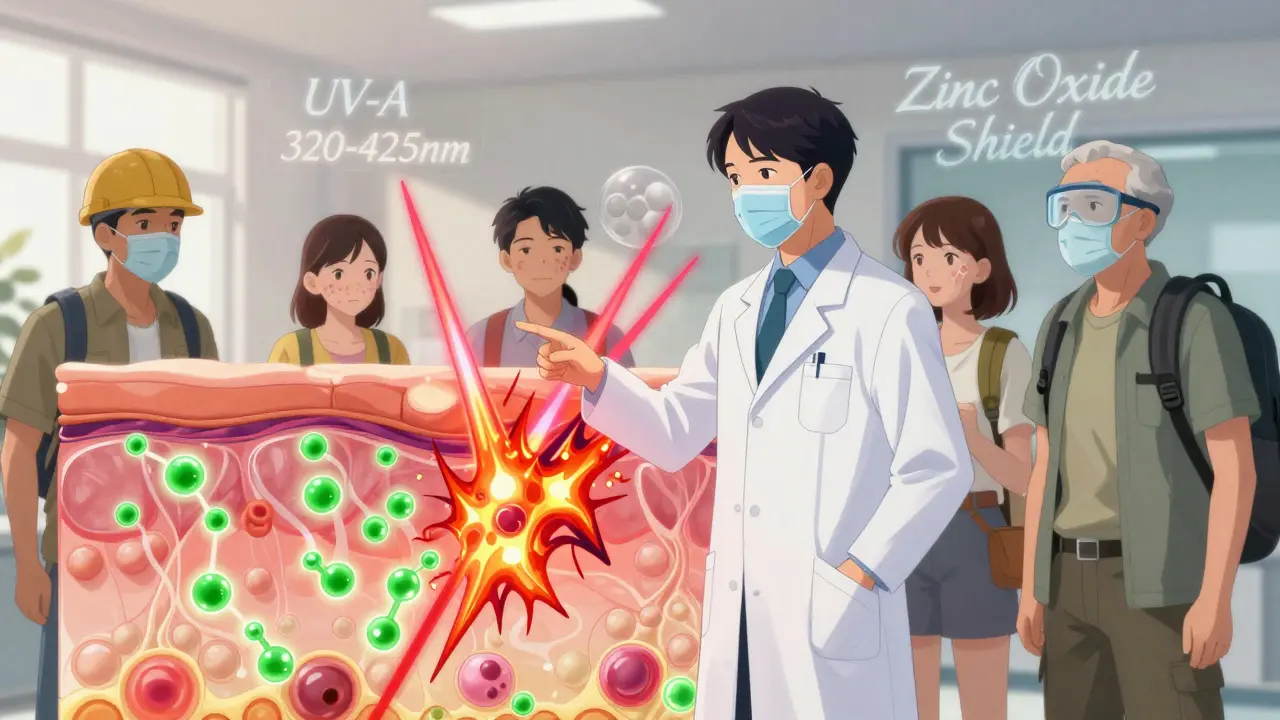
You’re on tetracycline-maybe doxycycline for acne, or tetracycline for a respiratory infection-and you get a bad sunburn after just 20 minutes outside. It’s not just bad luck. It’s tetracycline photosensitivity, a common and preventable side effect. This isn’t a regular sunburn. It’s a chemical reaction triggered when the antibiotic in your system absorbs UV light, especially UV-A rays between 320 and 425 nanometers. The result? Red, painful skin, sometimes with blisters, and often lasting long after the sun exposure ends. Up to 10% of people taking tetracycline-class antibiotics experience this. And in 70% of those cases, dark spots stay on the skin for months-even after stopping the drug.
Why Some Tetracyclines Are Worse Than Others
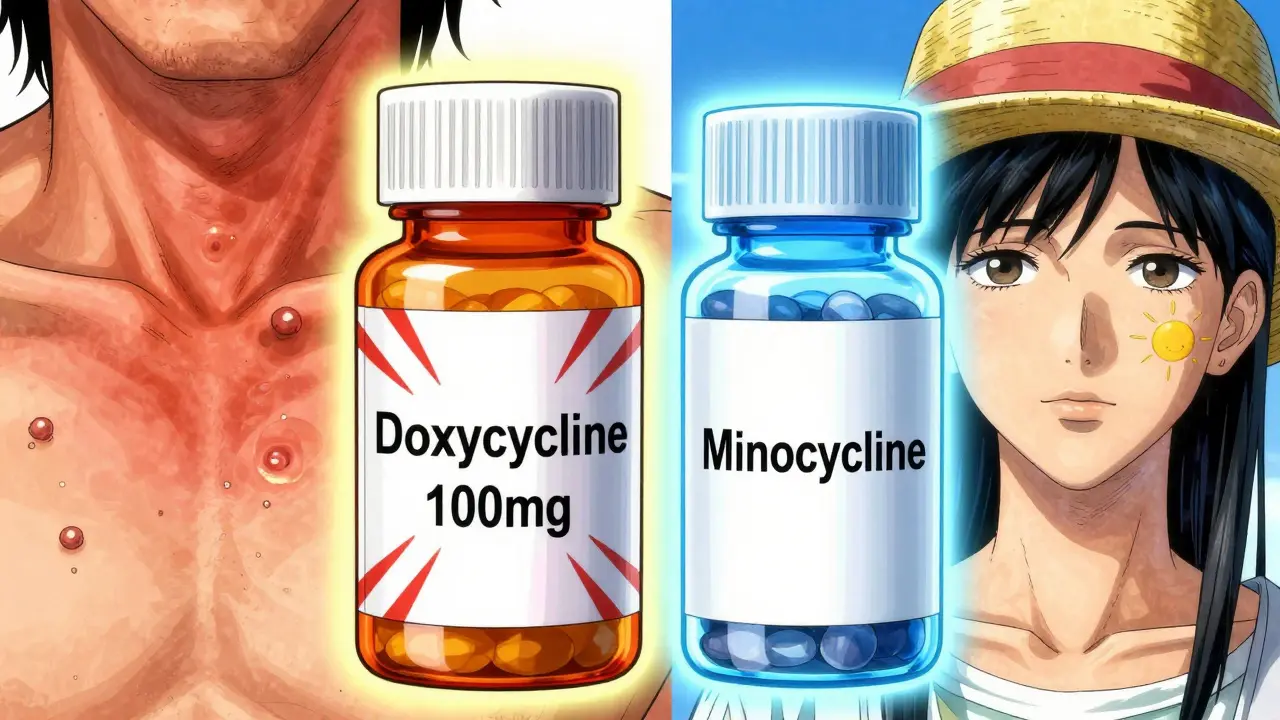
Not all tetracyclines are the same when it comes to sun sensitivity. Doxycycline is the biggest culprit. At a standard 100 mg daily dose, about 15% of users get a phototoxic reaction. At higher doses, like 200 mg, that number jumps to over 40%. Demeclocycline is almost as bad. But minocycline? It’s a different story. Less than 2% of people on minocycline report noticeable sun reactions. That’s why dermatologists often choose minocycline for patients who work outdoors or live in sunny climates-even though it costs a bit more.
Chlortetracycline and tetracycline hydrochloride? Almost no photosensitivity risk. But they’re rarely used today. Sarecycline and omadacycline are newer options with lower phototoxic potential, but they’re expensive. If you’re on doxycycline and spend time outside, switching to minocycline might be worth discussing with your doctor.
How It Actually Damages Your Skin
The reaction isn’t an allergy. It’s phototoxicity-like your skin is catching fire from the inside. When UV light hits tetracycline molecules in your skin, they become energized and start producing reactive oxygen species. These unstable molecules attack cell membranes, proteins, and even your DNA. That’s why you get sunburn-like redness, blistering, and long-term darkening. In some cases, your nails can separate from the nailbed (photo-onycholysis), or turn yellow or brown. A rare but serious condition called pseudoporphyria can cause fragile skin, blisters, and tiny white bumps, especially on your hands and face.
Studies show this isn’t just about sunburn. The DNA damage from this reaction can accumulate over time. While it doesn’t cause skin cancer directly, repeated damage increases your overall risk. And because the reaction can happen even on cloudy days or through car windows, you can’t just avoid the beach and call it done.
Who’s Most at Risk?
Anyone taking tetracycline can get this reaction-but some are more vulnerable. People with fair skin, light eyes, and a history of sunburns are at higher risk. But even darker skin tones aren’t immune. The dark spots from hyperpigmentation can be more noticeable and longer-lasting in people with medium to deep skin tones.
Age doesn’t protect you. Teens on acne treatment, older adults on doxycycline for Lyme disease, and even athletes training in the sun are all at risk. The biggest factor? Dose and UV exposure. Taking 200 mg of doxycycline and spending lunchtime outside? That’s a recipe for trouble. A 2022 survey found that 68% of patients who had severe reactions said their doctor never warned them about sun risk. That’s not just negligence-it’s preventable harm.
How to Protect Yourself (Real-World Tips That Work)
Stopping the antibiotic isn’t always an option. So here’s what actually works:
- Use mineral sunscreen daily-zinc oxide or titanium dioxide. Chemical sunscreens (like avobenzone or oxybenzone) don’t block the full UV-A range that triggers tetracycline reactions. Look for SPF 50+ with zinc oxide as the first ingredient. CeraVe Mineral SPF 50 and EltaMD UV Clear are top choices among dermatologists.
- Reapply every two hours, even if you’re not sweating. Most people apply only 25% of the amount needed. Use about a teaspoon for your face and neck.
- Avoid sun between 10 a.m. and 4 p.m. That’s when UV-A rays are strongest. Walk in the early morning or late afternoon.
- Wear UPF 50+ clothing. A regular white T-shirt only blocks about 50% of UV. UPF-rated shirts, hats with wide brims, and UV-blocking sunglasses cut exposure by 90% or more.
- Don’t rely on car windows. Standard glass blocks UV-B but not UV-A. You can get a reaction driving to work. Install UV-protective window film if you’re in the car a lot.
- Check your nails. If you notice one or more nails starting to lift or change color, tell your doctor. Photo-onycholysis can start weeks after you begin the drug.
What to Do If You Get a Reaction
If you notice redness, burning, or blistering within hours of sun exposure:
- Cool the skin with cold water or a damp cloth-no ice.
- Stop using any harsh skincare products-no retinoids, acids, or scrubs.
- Apply a fragrance-free moisturizer with ceramides or aloe vera.
- Take an OTC pain reliever like ibuprofen if needed.
- Call your doctor. Severe blistering or widespread rash may need a short course of oral steroids.
Don’t wait for it to get worse. If you’ve had one reaction, you’re more likely to have another. Your doctor might switch you to minocycline or another antibiotic altogether.
Alternatives to Tetracycline
If sun exposure is unavoidable-say, you’re a construction worker, lifeguard, or live in Arizona-there are other options. For acne, topical clindamycin or azelaic acid can be just as effective without the sun risk. For Lyme disease or other infections, amoxicillin or cefdinir are alternatives, depending on the bacteria involved.
Fluoroquinolones like ciprofloxacin also carry phototoxic risk, but newer ones like moxifloxacin are safer. Always ask: Is there a non-photosensitizing antibiotic that works for my condition? Don’t assume tetracycline is your only choice.
Why This Matters More Than You Think
Every year, an estimated $18.7 million is spent in the U.S. treating severe tetracycline photosensitivity reactions. That includes ER visits, dermatology appointments, and treatments for scarring and pigmentation. But the real cost? Lost time, anxiety, and damaged skin that never fully returns to normal.
Doctors aren’t always trained to warn patients. Patients aren’t always told. But the data is clear: this reaction is predictable, preventable, and common. You don’t need to suffer through a sunburn because no one mentioned it. Ask your provider: "Which antibiotic has the lowest sun risk for my condition?" and "What specific sun protection do I need?"
Final Thought: Sun Protection Isn’t Optional
If you’re on tetracycline, sunscreen isn’t just for beach days. It’s part of your medication regimen-like taking it with water and avoiding dairy. Skip it, and you’re not just risking a bad burn. You’re risking long-term skin damage, nail problems, and unnecessary medical visits. Treat it like a side effect that needs daily management. Because it is.
Can I still go outside if I’m taking tetracycline?
Yes, but you must protect yourself. You can go outside, but avoid direct sun between 10 a.m. and 4 p.m. Wear UPF 50+ clothing, a wide-brimmed hat, and a mineral sunscreen with zinc oxide or titanium dioxide. Reapply every two hours. Even on cloudy days or in the car, UV-A rays can trigger a reaction.
Is minocycline safer than doxycycline for sun exposure?
Yes. Minocycline has a phototoxic reaction rate of less than 2%, compared to 15-40% for doxycycline depending on the dose. If you’re active outdoors, work in the sun, or live in a sunny climate, minocycline is often the preferred choice among dermatologists-even though it costs more. It’s equally effective for acne and many infections.
Do I need to stop tetracycline if I get a sunburn?
Not always. Mild redness can be managed with sun protection and skincare. But if you get blisters, severe pain, or nail changes, contact your doctor. You may need to switch antibiotics. Stopping the drug too soon could let your infection return, but continuing without protection could cause lasting skin damage. Your provider can help you weigh the risks.
Can sunscreen prevent all tetracycline photosensitivity?
No sunscreen blocks 100% of UV-A rays, especially in the 320-425 nm range that triggers this reaction. But mineral sunscreens with zinc oxide or titanium dioxide come closest. Combined with protective clothing and avoiding peak sun hours, they reduce reactions by up to 80%. Don’t rely on sunscreen alone-layer your protection.
How long does photosensitivity last after stopping tetracycline?
The drug clears from your system in 1-2 days, but your skin can remain sensitive for up to 10 days after your last dose. Hyperpigmentation (dark spots) can last months or even years. Continue sun protection for at least two weeks after finishing the antibiotic to be safe.
Are there any new antibiotics without this risk?
Yes. Sarecycline (Seysara) and omadacycline (Nuzyra) are newer tetracycline derivatives with significantly lower phototoxic potential-under 5% compared to doxycycline’s 18-40%. But they’re much more expensive. Research is ongoing into next-generation tetracyclines and even "smart" sunscreens that neutralize the reaction before it starts.
Kegan Powell
January 28, 2026 AT 05:27just got back from hiking and my arms look like i got branded 😅 i thought it was just bad sunscreen but turns out i was basically cooking my skin from the inside out. tetracycline is wild. never knew it was that serious. now i wear a hat like it's a fashion statement and reapply zinc like it's my job. thanks for the heads up 🙌
Patrick Merrell
January 30, 2026 AT 05:07People treat antibiotics like candy. You take something that alters your biochemistry and then act surprised when the sun burns you like you're a vampire. No one warned you? Then you didn't ask. Simple as that. Wear sunscreen or stay inside. The world doesn't owe you a tan while you're on drugs.
Paul Taylor
January 30, 2026 AT 10:00I've been on minocycline for two years now for acne and honestly it's been a game changer. I work construction in Texas, 10 hour days in full sun, and I've only had one minor reaction and that was because I forgot to reapply after sweating through my shirt. The key is consistency. Mineral sunscreen, UPF shirts, wide brim hat, and sunglasses. It's not hard, it's just a habit. And yeah it costs more but so does treating permanent hyperpigmentation or getting a blister that takes weeks to heal. I wish my dermatologist had told me this upfront but better late than never. If you're outdoorsy and on tetracycline, don't gamble with your skin. Minocycline is worth every penny.
John O'Brien
January 31, 2026 AT 14:32bro i was on doxycycline for 3 months and i got so burnt i looked like a lobster. my girlfriend thought i had some weird rash. turns out i was just a walking phototoxic reaction. i switched to minocycline and now i can go outside without treating every sunny day like a nuclear event. why do doctors even give you doxycycline if they know this? it's lazy. just prescribe the safer one. it's not that hard.
Andrew Clausen
January 31, 2026 AT 21:06The claim that 'standard glass blocks UV-B but not UV-A' is technically correct, but misleading without context. UV-A transmission through standard window glass is approximately 50-75% depending on thickness and tint, not 100%. Also, the 320-425 nm range includes UV-AII and UV-AI, and not all tetracycline derivatives absorb equally across this band. Minocycline has lower molar absorptivity in the critical 340-380 nm window. Also, 'up to 10%' is an outdated statistic; recent meta-analyses show 4.2-6.8% incidence for doxycycline at 100mg. Don't overstate risk.
Anjula Jyala
February 1, 2026 AT 14:04If you're taking antibiotics and still getting sunburned you're doing it wrong. Mineral sunscreen is non-negotiable. Zinc oxide at 20% or higher. UPF 50+ clothing is not optional. You're not a child. You're an adult taking a photosensitizing agent. If you don't know what UV-A is or how sunscreen works, maybe you shouldn't be taking antibiotics without a dermatologist on speed dial. This isn't rocket science. It's basic pharmacology and photobiology. Stop blaming the doctor. Fix your behavior.
Marian Gilan
February 2, 2026 AT 01:18they know this happens on purpose. they want you to buy more sunscreen. they want you to switch to minocycline so they can charge you more. the whole thing is a scam. i saw a guy on youtube say the FDA approved doxycycline knowing it causes skin damage so pharma can sell more high-end sunscreen. and the glass thing? car windows are rigged. i think they're using some kind of UV-A enhancer to make people sick so they buy more meds. i'm not taking anything anymore. i'm going natural. chamomile tea and garlic.
Desaundrea Morton-Pusey
February 3, 2026 AT 12:55this is why i hate America. everyone's always so dramatic about sunburns. i took tetracycline for a month and i didn't even notice. you just need to toughen up. also why are we even talking about this? it's not that big of a deal. just wear a shirt if you're scared. stop making everything a medical emergency.