
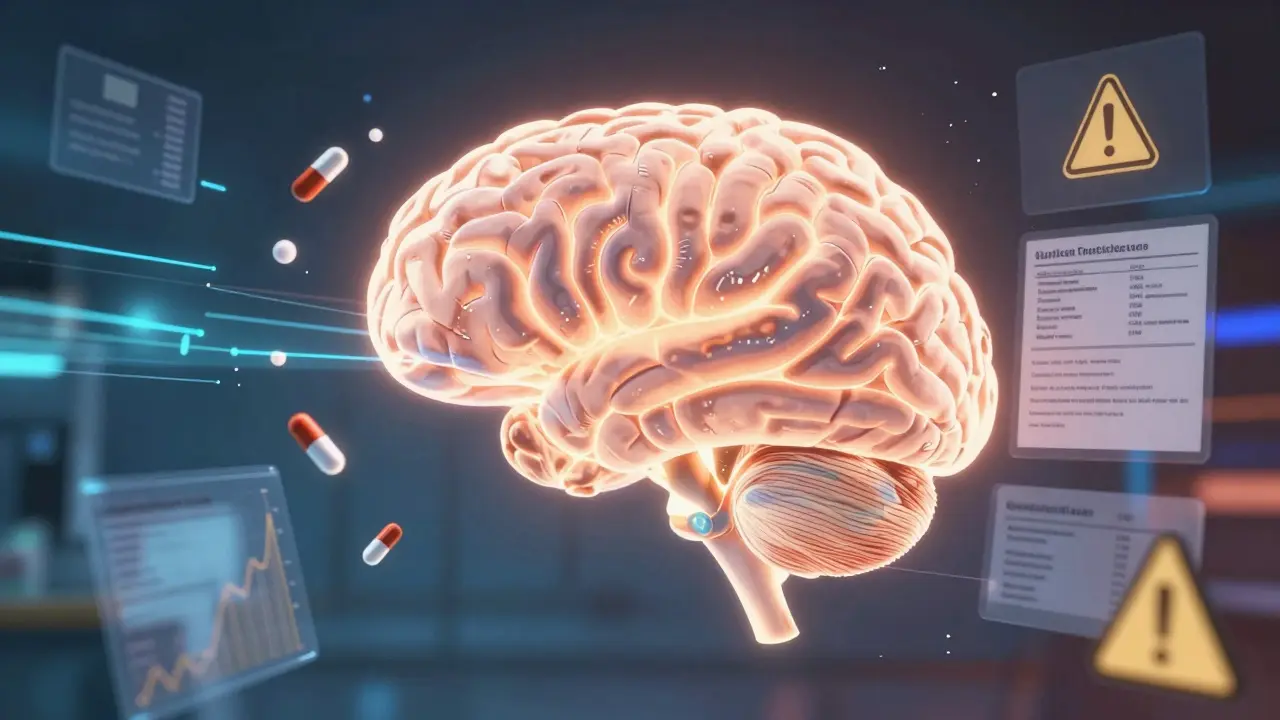
Every time you take a pill, there’s a hidden calculation happening - one that weighs whether the medicine will help you more than it might hurt you. This isn’t guesswork. It’s science. And it’s called medication safety.
Why Medication Safety Isn’t Just About Avoiding Mistakes
Most people think medication safety means not mixing drugs or reading labels correctly. That’s part of it. But the real science goes deeper. It’s about understanding what happens when millions of people take a drug over years, not just the few thousand in clinical trials. Clinical trials are tightly controlled. Participants are healthy, monitored closely, and take the drug exactly as directed. But real life? People forget doses. They take over-the-counter painkillers with their blood pressure med. They’re older, sicker, and on five or six medications at once. That’s where things go wrong - and where real-world evidence steps in. The thalidomide disaster in the 1960s showed the world what happens when we rely only on trial data. Babies were born with severe limb defects because the drug was never tested on pregnant women. Since then, we’ve built an entire field to catch these hidden dangers after a drug hits the market. That field is pharmacoepidemiology.How We Find Hidden Risks After a Drug Is Approved
Once a drug is approved, the FDA doesn’t just walk away. It watches. And so do researchers at places like Kaiser Permanente and the National Institutes of Health. They use massive databases - Medicare claims, electronic health records from 12.5 million patients, Sentinel Initiative data covering over 190 million Americans. These aren’t just numbers. They’re stories. A 72-year-old woman with diabetes who started a new cholesterol drug and ended up in the ER with muscle pain. A young man who took an antibiotic and developed a rare heart rhythm issue. To find patterns in this chaos, scientists use clever study designs:- Cohort studies track groups of people who took the drug versus those who didn’t, watching for outcomes over time.
- Case-control studies look at people who had a bad reaction and compare them to people who didn’t - digging into what they were all taking.
- Self-controlled case series are especially powerful. They compare each person to themselves - before and after taking the drug. This cuts out confounding factors like age or other illnesses because the person is their own control.
The Gap Between Trials and Real Life
A drug might look safe in a trial. But when it’s used in the real world, things change. Take opioids. In trials, they’re given for short-term pain after surgery. In real life, people take them for months for chronic back pain. That’s when addiction and overdose risks climb. In 2022 alone, opioids were linked to over 80,000 deaths in the U.S. Or consider statins. Trials show they reduce heart attacks. But in practice, some people develop muscle pain or even liver issues. These aren’t always caught in trials because the participants are healthier and younger than the typical patient. This is why post-marketing studies matter. Between 2015 and 2020, the FDA required safety studies for 37% of newly approved drugs. And 78% of all FDA safety alerts during that time were based on observational data - not trials.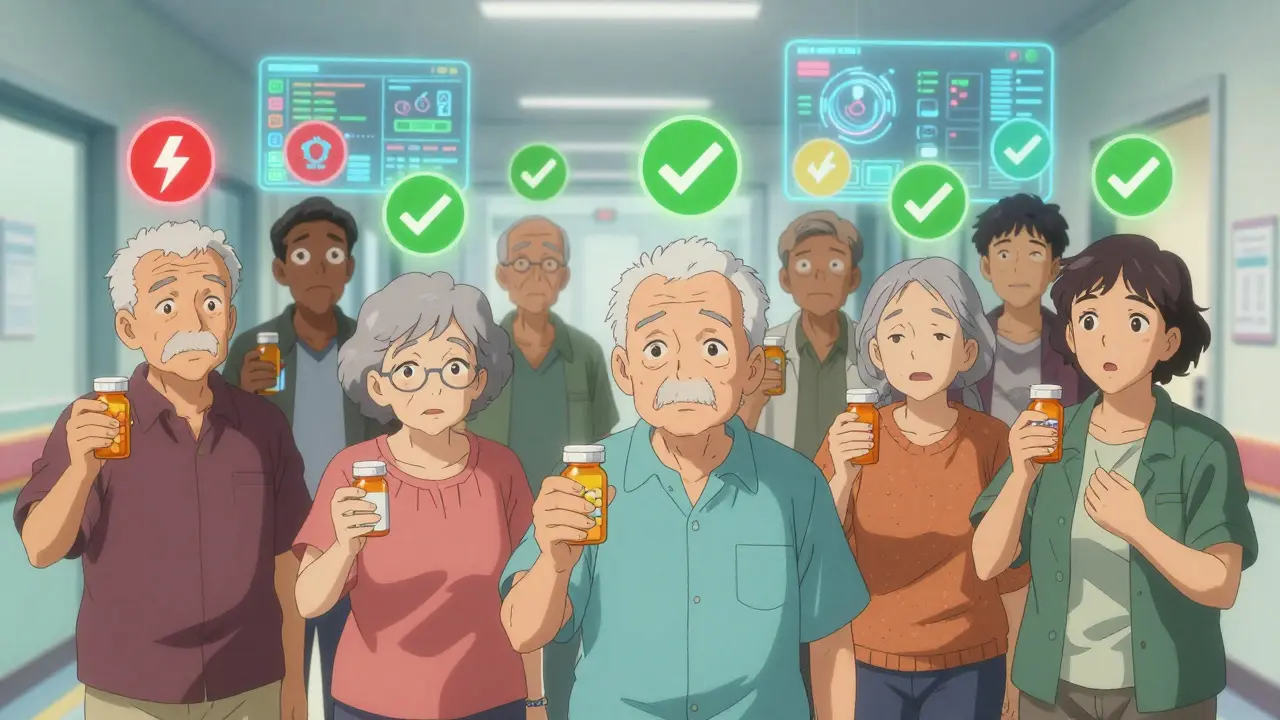
How We Know What Works - And What Doesn’t
Not every association found in observational studies is real. A 2021 review in JAMA Internal Medicine found that 22% of the “significant” links between drugs and side effects in observational studies were later disproven by randomized trials. That’s why experts don’t rely on one type of evidence. They use both:- Randomized trials for proving cause - the gold standard for approval.
- Observational studies for spotting rare, long-term, or population-level risks.
Where Medication Safety Is Failing - And How We’re Fixing It
Even with all this science, mistakes still happen. And they often come from systems, not people. In U.S. hospitals, 38% of preventable adverse drug events are caused by nursing errors - wrong dose, wrong time, wrong patient. In emergency rooms, doctors override 89% of drug interaction alerts because they’re too noisy. One study found that if an alert pops up every 10 minutes for every prescriber, they stop listening. Older adults are especially vulnerable. Fifteen percent of Medicare beneficiaries have a drug-related problem each year. Many are on five or more medications. That’s called polypharmacy. It’s not always necessary - but it’s common. The fix? Better technology - but smarter technology. Kaiser Permanente reduced severe alcohol withdrawal cases by 42% by using a simple, standardized protocol for phenobarbital. That’s medication safety science in action: turning evidence into a clear, repeatable process. Now, AI is stepping in. Early systems use machine learning to predict which patients are most likely to have an adverse reaction based on their history, genetics, and current meds. One pilot program cut high-alert medication errors by 22-35%.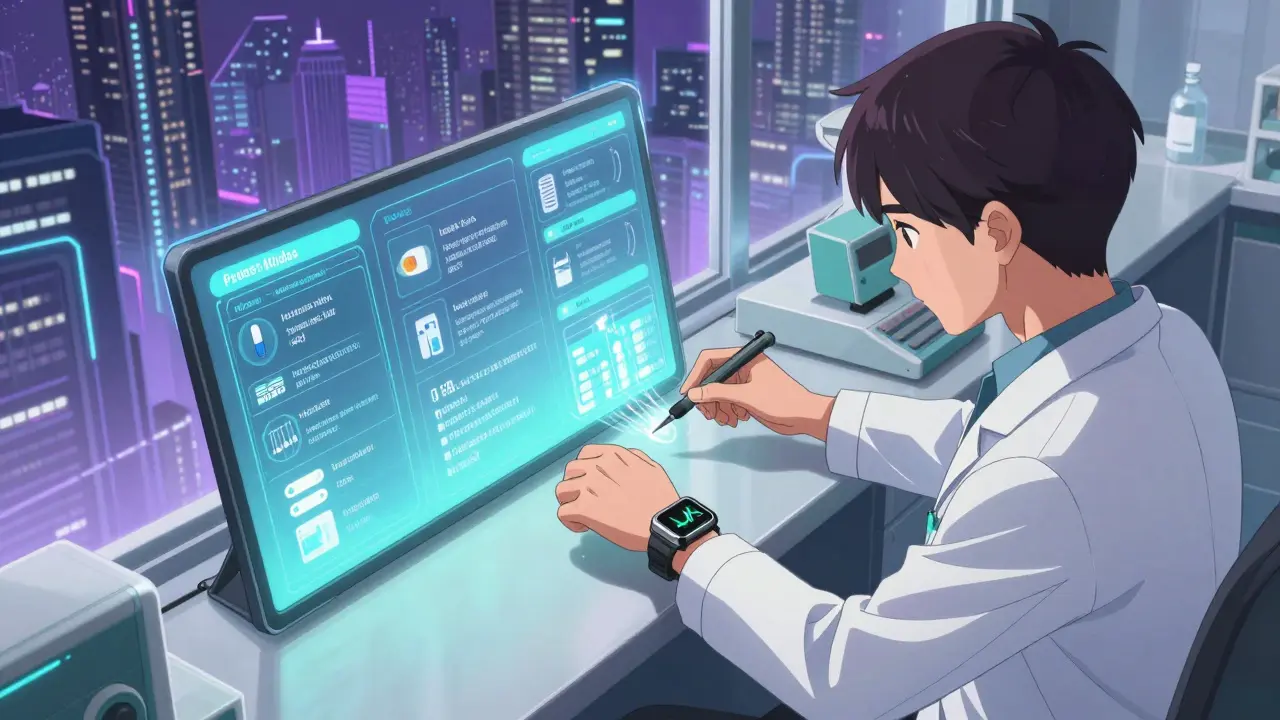
What You Can Do - Even If You’re Not a Doctor
You don’t need a PhD to protect yourself. Here’s what works:- Keep a current list of every medication you take - including supplements, vitamins, and OTC painkillers. Bring it to every appointment.
- Ask your pharmacist: “Could this interact with anything else I’m taking?” Pharmacists are medication safety experts.
- Don’t ignore side effects. If you feel weird after starting a new drug, don’t just “wait it out.” Call your doctor. That weird feeling might be the first sign of something serious.
- Use one pharmacy. It helps them spot dangerous combinations across all your prescriptions.
- Know your high-risk meds. Blood thinners, insulin, opioids, and seizure drugs are top offenders. Double-check dosing.
The Future of Medication Safety
The field is growing fast. The global pharmacovigilance market is projected to hit $11.7 billion by 2028. Why? Because the population is aging. By 2030, 16% of Americans will be over 65. And 35% of them will be taking five or more medications daily. New tools are coming. The FDA plans to use data from smartwatches and fitness trackers to monitor heart rate, sleep, and activity changes after drug use. Imagine a wearable that detects a sudden drop in heart rate after a new medication - and alerts your doctor before you even feel sick. But the biggest shift? Regulatory agencies are starting to accept real-world evidence as part of the approval process. Not just for safety - sometimes for effectiveness too. That’s a big deal. It means drugs could get to patients faster - but only if we’re sure they’re safe in the real world.What’s at Stake
Medication safety isn’t about perfection. It’s about progress. It’s about accepting that drugs are powerful tools - and like any tool, they can hurt as much as they heal. The science behind it is complex. But the goal is simple: help more people get better - and hurt fewer in the process. We’ve come a long way since thalidomide. But the work isn’t done. Every new drug, every new patient, every new combination - it’s another chance to get it right. And with better data, smarter systems, and more attention to real-world use, we’re getting closer.What is pharmacoepidemiology and why does it matter for medication safety?
Pharmacoepidemiology is the study of how drugs affect large populations in real-world settings. It matters because clinical trials only test drugs on a few thousand people for a short time. Pharmacoepidemiology uses big data - like Medicare records and hospital systems - to find rare side effects, long-term risks, and how drugs behave when used by older, sicker patients on multiple medications. It’s the main tool used to monitor drug safety after approval.
Can observational studies prove that a drug causes a side effect?
Not definitively. Observational studies can show strong links between a drug and an adverse event, but they can’t prove cause the way a randomized trial can. Confounding factors - like other illnesses, lifestyle, or genetics - can skew results. That’s why researchers use advanced methods like propensity score matching and self-controlled designs to reduce bias. When an observational study finds a strong signal, it usually triggers a follow-up randomized trial to confirm it.
Why do doctors sometimes ignore drug interaction alerts?
Alert fatigue. When electronic health systems flood prescribers with too many warnings - especially for common, low-risk interactions - they start ignoring them. One study found that 89% of drug interaction alerts in emergency rooms are overridden. The problem isn’t the alerts themselves, but how they’re designed. The most effective systems prioritize high-risk interactions and reduce noise by using patient-specific data, like kidney function or age.
Are generic drugs less safe than brand-name drugs?
No. Generic drugs must meet the same FDA standards for safety, strength, purity, and performance as brand-name versions. They contain the same active ingredient and are tested to ensure they work the same way in the body. Differences in inactive ingredients (like fillers) rarely cause safety issues. Most adverse events reported after a drug is approved happen with both brand and generic versions equally.
How can older adults reduce their risk of medication errors?
Older adults often take five or more medications, which increases risk. To reduce errors: keep a written list of all meds (including supplements), use one pharmacy, ask for a medication review with a pharmacist or geriatrician at least once a year, and question whether each drug is still needed. Avoid “prescribing cascades” - when a side effect is mistaken for a new condition and another drug is added. Simple tools like pill organizers and reminder apps also help.