
Why Weight Loss Matters for Fatty Liver Disease
Non-alcoholic fatty liver disease, now called MASH (Metabolic Dysfunction-Associated Steatohepatitis), isn’t just about a little extra fat in the liver. It’s a silent condition that affects nearly 15 million adults in the U.S. and can lead to scarring, liver failure, or even cancer if left unchecked. The good news? Losing weight is the most proven way to reverse it.
Studies show that losing just 5% of your body weight reduces fat in the liver. Lose 10% or more, and you can actually reverse liver scarring. That’s not theoretical-it’s been seen in liver biopsies. Yet, most people struggle to reach even 5%. A three-year study found fewer than one in three people managed it, and only a quarter kept it off. This isn’t about willpower. It’s about knowing what actually works-and what doesn’t.
The Diet That Actually Reverses Fatty Liver
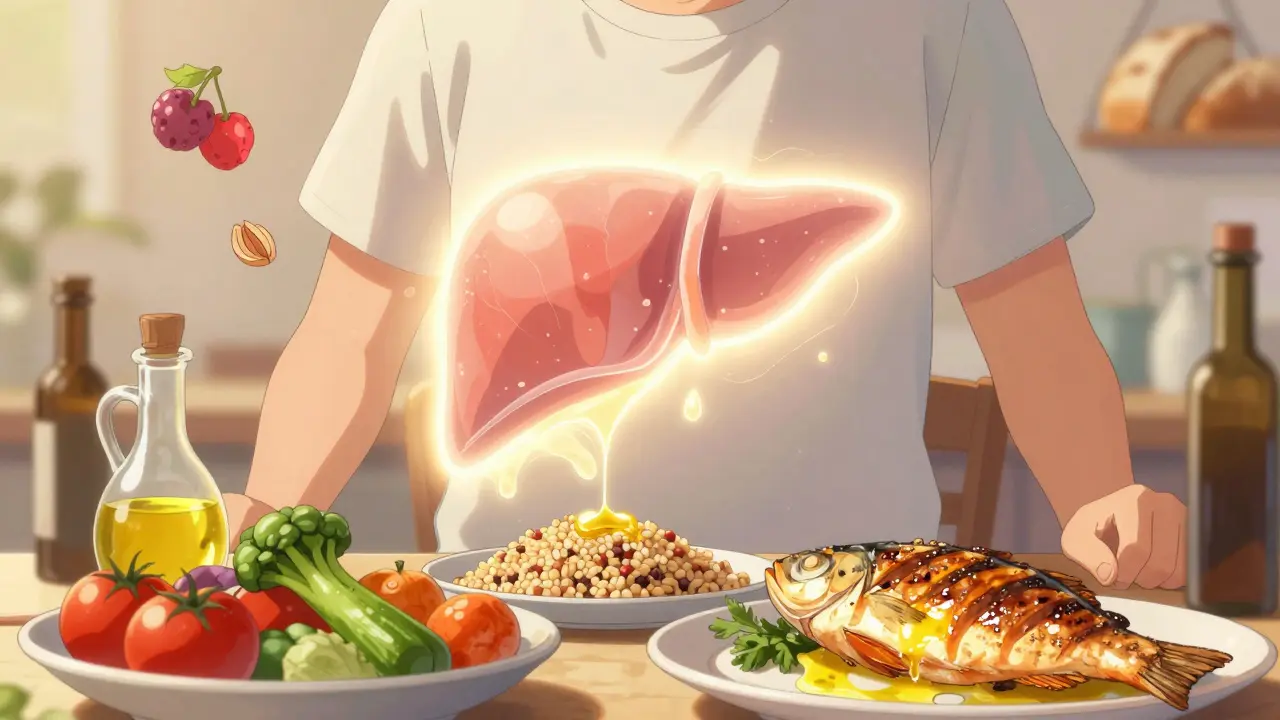
Not all diets are equal when it comes to MASH. Cutting calories alone isn’t enough. You need the right kind of food. The Mediterranean diet stands out in research. It’s not a fad. It’s simple: more vegetables, fruits, whole grains, beans, nuts, olive oil, and fish. Less sugar, refined carbs, and saturated fats.
A major meta-analysis found people following this diet had statistically lower levels of ALT (a liver enzyme that spikes when the liver is damaged), less fat buildup in the liver, and reduced liver stiffness-all signs of healing. One study showed a 20% drop in liver fat over 12 weeks just by switching to this way of eating.
Forget low-fat diets that replace fat with sugar. Those make MASH worse. Instead, focus on fiber and healthy fats. Swap white bread for sourdough. Choose avocado over butter. Eat berries instead of cereal with syrup. These aren’t restrictions-they’re upgrades.
How Much Exercise Do You Really Need?
You don’t need to run a marathon. You don’t even need to join a gym. The American College of Sports Medicine recommends at least 150 minutes of moderate exercise per week. That’s 30 minutes, five days a week. Brisk walking counts. Cycling counts. Gardening counts.
But here’s the kicker: exercise helps even if you don’t lose weight. A 2023 Mayo Clinic review found that regular physical activity reduces liver fat independently of calorie loss. It improves insulin sensitivity, lowers inflammation, and helps your liver process fat better.
Strength training adds another layer. Two days a week of lifting weights or using resistance bands improves muscle mass, which boosts your metabolism. Combine that with walking, and you’re hitting the sweet spot. Most people start seeing changes in liver enzymes after 8-12 weeks of consistent activity.

The New Medication That’s Changing the Game
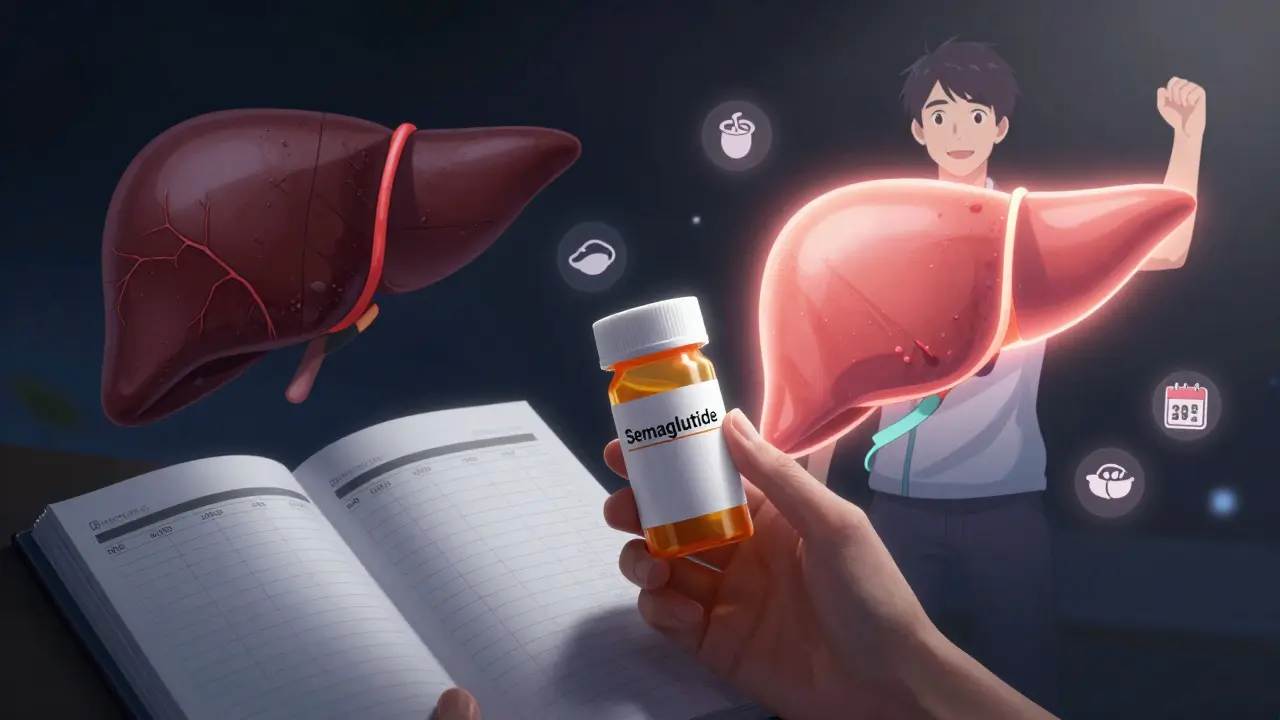
In August 2025, the FDA approved semaglutide (Wegovy) for treating MASH in adults with moderate-to-advanced liver scarring. This is huge. It’s the first drug specifically approved to treat fatty liver disease-not just manage diabetes or obesity.
Semaglutide works by mimicking a natural hormone that tells your brain you’re full. It slows digestion and reduces appetite. In clinical trials, nearly 90% of people stayed on it for a year. Two-thirds saw less liver inflammation. More than one-third had actual reduction in scarring. That’s the kind of result doctors haven’t seen before.
It’s not magic. Side effects like nausea, bloating, or diarrhea happen in about half of users-but they usually fade after a few weeks. The bigger issue? Cost. Without insurance, Wegovy runs about $1,350 a month. That’s more than 30 times the price of metformin, a common diabetes drug that has minimal effect on MASH.
Other Medications: What Works and What Doesn’t
Metformin is often prescribed for people with fatty liver and diabetes. But research shows it doesn’t reliably reduce liver fat or scarring. It helps with blood sugar, sure, but not the liver itself.
Orlistat, a fat-blocking weight-loss pill, has shown some promise in small studies. But there’s no solid proof it improves liver biopsies. SGLT2 inhibitors, like empagliflozin, are being studied for MASH. Early results are encouraging, but they’re not yet approved for this use.
GLP-1 agonists like semaglutide are the only class with consistent, high-quality data showing real liver improvement. Other weight-loss drugs like phentermine/topiramate or naltrexone/bupropion have little to no evidence for MASH. Don’t waste time on them.
Why Lifestyle Still Comes First
Even with a new drug on the market, experts agree: medication doesn’t replace diet and exercise. It supports them. A 2020 review from the National Institutes of Health pointed out that no medication has proven better than effective lifestyle changes. The problem? Most people can’t stick to diet and exercise alone.
Semaglutide helps people do what they couldn’t before. It makes eating less feel easier. It reduces cravings. It gives people the breathing room to build habits. Think of it as a tool-not a cure.
Doctors now recommend a combo approach: start with diet and movement. If you’re not losing weight after 3-6 months, talk to your provider about semaglutide or other options. Don’t wait until your liver is badly damaged.
What to Expect When You Start
Weight loss with MASH isn’t linear. You’ll likely hit plateaus-especially after 6 months. That’s normal. Your body adapts. Your metabolism slows. That’s why consistency matters more than speed.
Track your progress beyond the scale. Measure waist size. Notice if you have more energy. Check your blood work. Liver enzymes often drop before the scale moves. That’s a win.
Many people need help. A registered dietitian can design a meal plan that fits your life. A personal trainer can help you find movement you enjoy. Behavioral therapy can tackle emotional eating or stress-related cravings. These aren’t luxuries-they’re essential.
What You Should Avoid
Alcohol is a hard no. Even small amounts can accelerate liver damage in MASH. No exceptions.
Watch out for "healthy" processed foods. Granola bars, flavored yogurts, and "low-fat" snacks are often loaded with sugar. Read labels. If sugar is in the first three ingredients, skip it.
Don’t rely on supplements. Milk thistle, vitamin E, and omega-3 pills are often marketed for fatty liver. But unless you have a diagnosed deficiency, there’s no strong proof they help. Vitamin E, in particular, can be harmful in high doses. Stick to food first.
When to Talk to Your Doctor
If you have type 2 diabetes, high blood pressure, or high cholesterol, you’re at higher risk for MASH. Get screened. A simple blood test (ALT, AST) and an ultrasound can detect fat buildup early.
If you’ve tried losing weight multiple times and kept hitting walls, ask about semaglutide. Insurance coverage is still spotty, but many plans cover it if you have a BMI over 30 or a BMI over 27 with a related condition like diabetes or high blood pressure.
Don’t wait for symptoms. MASH rarely causes pain or fatigue until it’s advanced. By then, it’s harder to reverse. Prevention and early action are everything.
Can you reverse fatty liver by losing weight?
Yes. Losing 5% of your body weight reduces liver fat. Losing 10% or more can reverse liver scarring. This isn’t guesswork-it’s been shown in liver biopsies from clinical trials. The key is sustained weight loss, not quick fixes.
What’s the best diet for MASH?
The Mediterranean diet is the most studied and effective. Focus on vegetables, fruits, whole grains, legumes, nuts, olive oil, and fatty fish. Avoid added sugar, refined carbs, and processed foods. It’s not about counting calories-it’s about choosing real, unprocessed food.
Does exercise help fatty liver even without weight loss?
Yes. Studies show that 150 minutes of moderate exercise per week reduces liver fat even if you don’t lose weight. It improves insulin sensitivity and lowers inflammation. Walking, cycling, swimming, or strength training all help.
Is semaglutide (Wegovy) worth the cost?
It’s expensive-around $1,350/month without insurance. But if you’ve struggled to lose weight and have moderate-to-advanced liver scarring, it’s the most effective medication available. It’s not a magic pill, but it helps many people stick to lifestyle changes. Check your insurance coverage and ask about patient assistance programs.
Can you take supplements instead of changing your diet?
No. Supplements like milk thistle, vitamin E, or omega-3s have weak or no proof of reversing MASH. Vitamin E in high doses can even be harmful. Food is the foundation. Medication can help, but supplements can’t replace diet and exercise.
How long does it take to see results?
Liver enzymes like ALT often drop within 8-12 weeks of starting diet and exercise. Fat reduction shows up on ultrasound after 3-6 months. Liver scarring takes longer-usually 12-24 months of consistent effort. Patience and persistence matter more than speed.
Ryan Pagan
January 28, 2026 AT 15:56Man, I’ve been fighting this for years. Switched to Mediterranean diet last January-no more white bread, no more sugary coffee creamers, just olive oil, lentils, and salmon. Lost 14% of my body weight in 9 months. My ALT dropped from 120 to 38. No meds, no magic pills-just real food. People think it’s about willpower? Nah. It’s about stopping the war with your kitchen and making peace with avocado.
Paul Adler
January 29, 2026 AT 23:26This is one of the most balanced, evidence-based summaries I’ve encountered on MASH. The emphasis on lifestyle as the foundation-not the afterthought-is critical. Semaglutide is promising, but it must be contextualized within behavioral and environmental factors. Many patients are not given the tools to sustain change, regardless of pharmacological support.
Robin Keith
January 30, 2026 AT 10:33Let me just say-this whole conversation about ‘weight loss’ is so reductive, so violently anthropocentric, you know? We’re not talking about fat on the liver-we’re talking about the collapse of metabolic identity in late-stage capitalism! The body becomes a landfill for processed sugar, a silent protest against the algorithmic tyranny of calorie-counting apps and Fitbit notifications! And semaglutide? It’s not a drug-it’s a neoliberal Band-Aid on a systemic wound! We’re all just trying to survive a world that turns healing into a subscription service! Why do we think we can ‘fix’ our livers when our entire social structure is rotting?! I mean-seriously-
Sheryl Dhlamini
January 31, 2026 AT 09:33I cried when I read that losing 10% can reverse scarring. After three failed attempts at keto, paleo, juice cleanses, and that weird ‘eat only purple foods’ trend… I finally just started walking after dinner. No goals. No scale. Just… movement. And now? My doctor said my liver looks ‘almost normal.’ I didn’t know I could heal this way. Thank you for saying it out loud.
Doug Gray
February 1, 2026 AT 19:25IMO, the whole MASH paradigm is just a symptom of metabolic syndrome commodification. The pharma-industrial complex needs a new revenue stream after the opioid crisis. Semaglutide = next-gen glucagon-like peptide monetization. Meanwhile, the real solution-reducing fructose intake and improving sleep hygiene-isn’t patentable. Also, 🤷♂️
Kristie Horst
February 2, 2026 AT 01:38Oh, so now we’re supposed to be impressed that a $1,350/month drug is ‘the first approved for MASH’? Let me get this straight: we’ve spent decades telling people to eat less sugar, move more, and sleep better… and now the solution is a billion-dollar pharmaceutical that makes you nauseous for six weeks? How very… *American*.
LOUIS YOUANES
February 2, 2026 AT 06:49Look, I tried the Mediterranean diet. I ate a whole damn olive. Felt like I was chewing a salted rock. Then I ate a bowl of oatmeal with honey. My liver probably threw a party. Meanwhile, Wegovy? I’d rather just die than pay that much for a pill that makes me feel like I swallowed a wasp. Real talk: if you’re not losing weight on a $1,350 drug, you’re not losing weight. Period.
Andy Steenberge
February 2, 2026 AT 12:36Just to clarify something: the FDA’s approval of semaglutide for MASH is based on histological improvement in liver biopsies-not just enzyme levels or imaging. That’s a huge deal. But let’s not pretend it’s a standalone solution. The studies show best outcomes when paired with sustained lifestyle changes. Think of it like insulin for type 1 diabetes: it doesn’t cure the disease, but it makes living with it possible. And yes-insurance coverage is a nightmare. But patient assistance programs exist. Ask your doctor. Don’t give up before you’ve even tried.