
Every time you pick up a prescription, you get a small piece of paper with words, numbers, and symbols that could mean the difference between healing and harm. But most people glance at it, toss it in a bag, and forget about it. That’s dangerous. Your prescription label isn’t just a receipt-it’s your safety guide. And if you don’t know what each part means, you’re guessing when you should be sure.
Your Name Is on There for a Reason
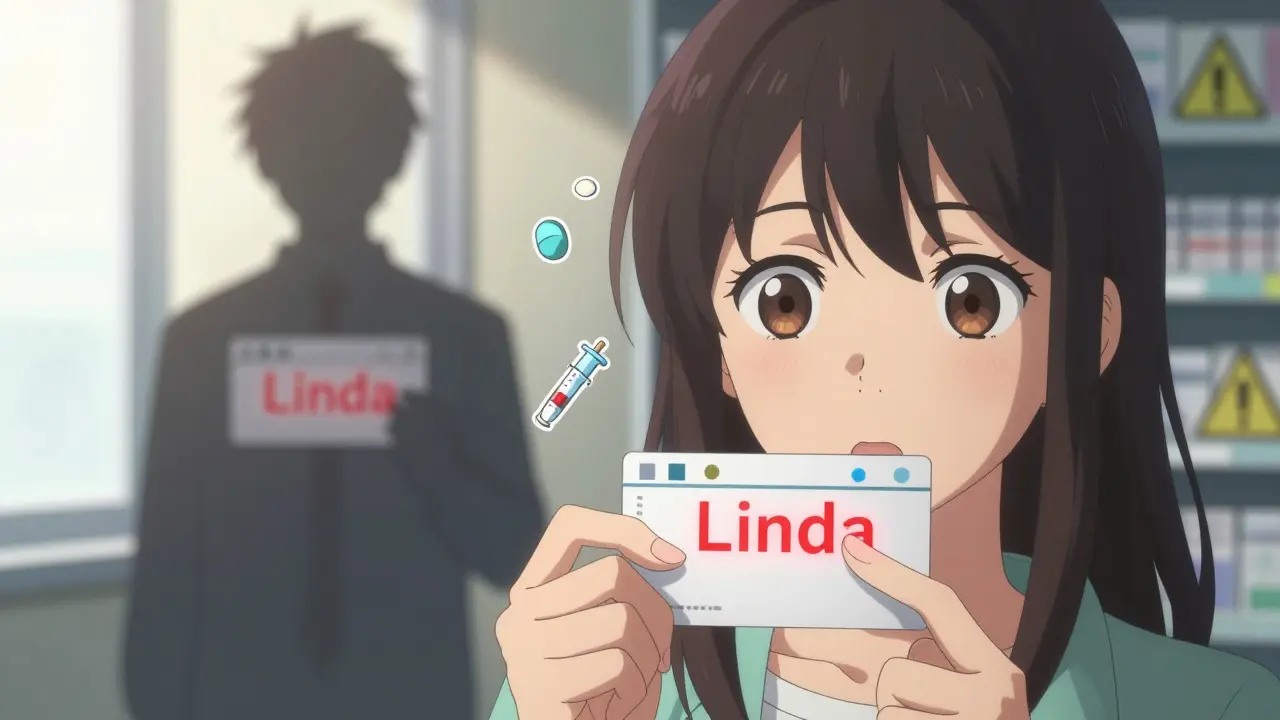
Right at the top, you’ll see your full name. It’s not just for show. Medication mix-ups happen more often than you think-about 1.5 million cases every year in the U.S. alone. A patient named Linda got her neighbor’s blood pressure pill because the labels looked similar. She ended up in the ER. Your name on the label is the first line of defense. Always check it. If it’s wrong, don’t take it. Say something. Pharmacists are trained to catch these errors, but they can’t read your mind.
Brand Name vs. Generic Name: What’s the Difference?
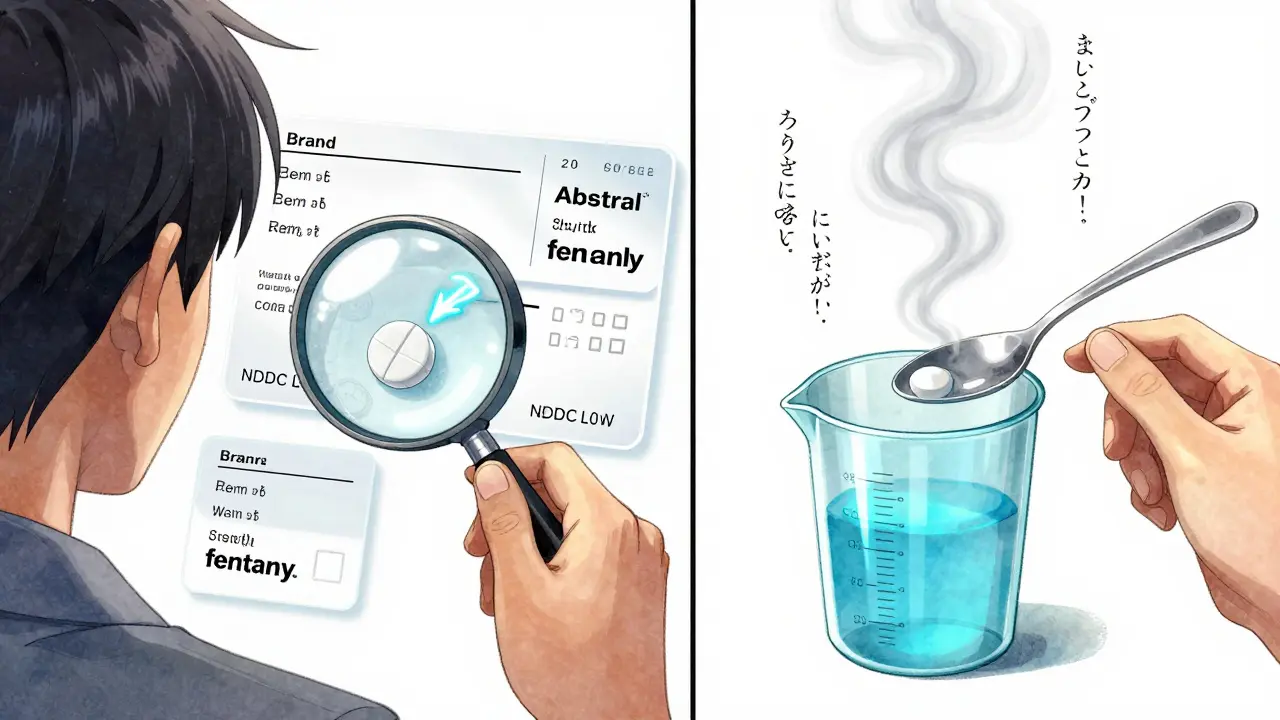
You’ll see two names for your medicine. The first is the brand name-like Abstral. That’s what the company calls it. The second is the generic name-fentanyl. That’s the actual drug. Generic names are the same no matter who makes it. Brand names change depending on the manufacturer. Knowing the generic name helps you avoid duplicates. For example, if your doctor prescribes ibuprofen and your pharmacy gives you Advil, you’re getting the same thing. But if you already took Advil and then get another bottle of ibuprofen, you could overdose. Always know the generic name. It’s your key to safe用药.
Dosage: How Much, How Often?
This part tells you exactly how much to take and when. It might say “100 mcg” or “5 mg.” That’s the strength of each pill or dose. Then comes the instruction: “Take one tablet by mouth every 4 hours as needed for pain.” Don’t guess. If it says “every 6 hours,” that means four times a day-not three. Don’t use spoons to measure liquid meds. A teaspoon isn’t the same as a medicine spoon. The FDA says 43% of parents misread instructions because labels use “tsp” instead of spelling out “teaspoon.” Always look for “mL” (milliliters) and use the syringe or cup that came with the bottle. If there’s no measuring tool, ask for one. It’s free.
Expiration Date: Don’t Use Old Medicine
That date on the label isn’t just a suggestion. It’s the last day the drug is guaranteed to work as intended. Most prescriptions expire 12 to 18 months after they’re filled. After that, the medicine can lose strength-or even break down into harmful substances. A 2021 study found that expired antibiotics didn’t kill bacteria as well as fresh ones. Taking old insulin? It might not lower your blood sugar. Old painkillers? They might not help at all. Toss expired meds properly. Don’t flush them. Most pharmacies have take-back bins. If yours doesn’t, check with your city’s hazardous waste program.
The Rx Number and Pharmacy Info
The Rx number is your prescription’s ID. It’s how the pharmacy tracks refills and links your order to your doctor’s original request. If you call in for a refill and they ask for your Rx number, that’s why. The pharmacy name, address, and phone number are right there too. Save that number. If you have side effects, questions, or think you got the wrong drug, call them first. They’re the experts on your meds. Your doctor’s name is also listed. That’s not just for records-it’s your backup contact if the pharmacy is closed and you’re unsure what to do.
What Your Medicine Looks Like
Some labels include a visual description: “white, round, film-coated tablet” or “blue, oval capsule with ‘A12’ imprinted.” This helps you recognize your pill if you have to take it out of the bottle. Say you get a new bottle and your pill looks different. That’s not always a mistake. Different manufacturers make generics with different shapes or colors. But if the color or imprint doesn’t match what you’ve taken before, ask. A patient in Toronto noticed her levothyroxine was now a different shade of yellow. She called her pharmacist. Turns out, the generic brand had switched. She was fine-but she could’ve panicked if she hadn’t checked.
The National Drug Code (NDC)
You’ll see a string of numbers like 0078-0650-11. That’s the NDC. It’s like a barcode for your medicine. It tells you exactly which company made it, what the drug is, and what size bottle it came in. You don’t need to memorize it, but if you’re researching your drug online or reporting a problem to the FDA, you’ll need it. The FDA has required this since 1987. It’s part of a system that tracks drugs from factory to pharmacy to you.
Storage Instructions: Keep It Right
Some meds need to be kept cold. Others can’t handle humidity. Your label might say “Store at room temperature, 68°-77°F” or “Refrigerate.” If it says refrigerate, don’t leave it on the counter. Insulin, certain antibiotics, and liquid suspensions can go bad fast if not stored right. If it says “protect from light,” keep it in its original bottle-not a pill organizer on the windowsill. Moisture is another enemy. Don’t store pills in the bathroom. The steam from showers ruins them. A kitchen cabinet, away from the sink and stove, is usually best.
Warnings: The Red Flags
This section might say things like “May cause drowsiness,” “Avoid alcohol,” or “Do not use if pregnant.” These aren’t suggestions. They’re safety rules. The FDA requires these warnings for drugs that can cause serious harm. For example, mixing certain painkillers with alcohol can stop your breathing. Some meds make you dizzy. Driving or operating machinery could be deadly. If you see a warning you don’t understand, ask your pharmacist. Don’t assume it’s not for you. The BeMedWise program found that patients who ignored warnings were 3 times more likely to be hospitalized.
Why You’re Taking It: The Missing Piece
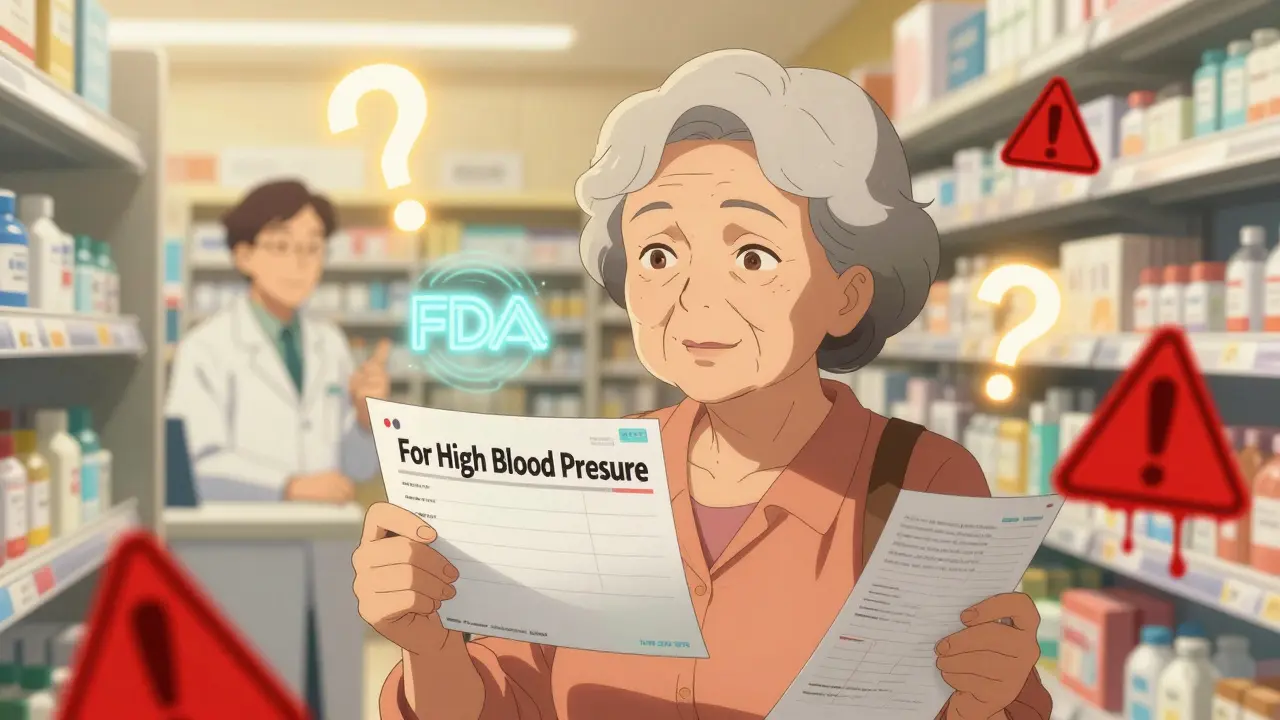
Here’s the biggest gap in most labels: the reason you’re taking the medicine. Most still don’t say it. But that’s changing. The FDA says 78% of patients take meds incorrectly because they don’t know why they were prescribed. A 2023 study showed that when labels included the purpose-like “for high blood pressure” or “for thyroid replacement”-wrong-drug errors dropped by 55%. If your label doesn’t say why, ask. Write it down. If you’re taking five pills a day, knowing why each one is there helps you catch mistakes. One woman in Toronto realized she was taking her husband’s heart pill because she didn’t know what hers was for. She stopped before she had a stroke.
What to Do When You’re Confused
Don’t guess. Don’t search online and assume the first result is right. Use the FDA’s “5 Questions to Ask About Your Prescription”:
- What is the name of the medication and what is it for?
- How and when do I take it?
- What should I do if I miss a dose?
- What side effects should I expect?
- Will this interact with other meds I’m taking?
Also try the “Ask Me 3” method: 1) What is my main problem? 2) What do I need to do? 3) Why is it important? If your pharmacist doesn’t explain these, ask again. Or ask for a printed handout. Many pharmacies now offer them. If you’re still unsure, call your doctor. It’s your health. You have the right to understand it.
What’s Changing Soon
By 2025, the U.S. Pharmacopeia wants every prescription label to include the reason for use. That’s huge. Right now, only 38% of pharmacies do it routinely. But pilot programs in California and Massachusetts cut medication errors by 40%. The FDA is pushing for clearer fonts, pictograms for dosing, and labels in multiple languages. If you’re 65 or older, or have trouble reading small print, ask for a large-print label. Most pharmacies can do it. If you’re not fluent in English, ask for a translated label. It’s your right.
Final Check Before You Take It
Before you swallow anything, run through this quick list:
- Is my name on the label?
- Does the drug name match what my doctor told me?
- Is the dose and frequency clear?
- Is the expiration date still good?
- Do I know why I’m taking this?
If even one answer is “I’m not sure,” stop. Call your pharmacy. Don’t risk it. Medication errors kill 7,000 people a year in the U.S. Most of them are preventable. You’re not being annoying by asking questions. You’re being smart.
What should I do if my prescription label looks different from last time?
If the pill looks different-color, shape, or imprint-it could be a different generic brand. That’s normal. But always check the name, dose, and instructions. If those changed, call your pharmacy. Don’t assume it’s safe. A patient once took a new version of her blood thinner and didn’t realize the dose had doubled. She ended up in the hospital. When in doubt, ask.
Can I take my medication after the expiration date?
It’s not recommended. Some meds, like antibiotics or insulin, can become ineffective or even harmful after expiration. Others, like pain relievers, might just lose strength. But you can’t tell which is which. The FDA says expired drugs are rarely toxic-but they’re not guaranteed to work. If you need it for a serious condition, get a new prescription. Don’t gamble with your health.
Why doesn’t my label say why I’m taking this medicine?
Most labels still don’t include the reason, even though it’s proven to reduce errors. Many pharmacies use old pharmacy systems that don’t support adding that info. But it’s changing. The USP is pushing for it to be required by 2025. Until then, always ask your pharmacist or doctor. Write it down on the label yourself if you can. Knowing why you’re taking a drug makes you less likely to skip doses or stop too soon.
What if I can’t read the small print on the label?
Ask for a large-print version. Most pharmacies can print labels with bigger font, higher contrast, or even include pictograms. You’re not being difficult-you’re protecting yourself. The National Assessment of Adult Literacy says 36% of older adults struggle with small text on labels. Pharmacies are required to help you understand your meds. If they refuse, ask to speak to the manager.
Should I keep my old prescription labels?
Keep them for at least 30 days after you finish the bottle. They help you track what you’ve taken and when. If you have a reaction or need to see a new doctor, those labels give a clear history. After that, shred them to protect your privacy. Don’t just throw them in the trash. Your name, address, and medication info are sensitive data.
Peyton Feuer
January 3, 2026 AT 17:04lol i always just glance at the label and hope for the best. last week i took my buddy's ibuprofen cause mine was out and i was like 'eh, same thing right?' turned out he was on blood thinners. i'm fine but now i check my name first. thanks for the reminder.
Shanna Sung
January 4, 2026 AT 20:25they’re hiding the real reason you’re on this drug. the label doesn’t say it because the pharma companies don’t want you to know you’re being drugged to keep you docile. the ‘reason’ is always vague on purpose. they want you dependent. read the fine print. the NDC? it’s a tracking chip. you think that’s coincidence?
John Ross
January 5, 2026 AT 03:17the pharmacoeconomic architecture of prescription labeling is fundamentally flawed when it comes to patient-centric communication. the absence of indication labeling constitutes a systemic failure in medication safety protocols. according to the USP 2023 benchmarking report, labeling with therapeutic intent reduces polypharmacy errors by 55%-a statistically significant delta (p<0.001). until all EHRs and pharmacy dispensing systems integrate standardized indication fields, we’re just optimizing the symptom, not the disease.
Ashley Viñas
January 5, 2026 AT 17:01you people don’t even read the label? wow. i mean, honestly. if you can’t tell the difference between a 5mg and a 10mg tablet, maybe you shouldn’t be managing your own meds. i keep a color-coded spreadsheet with every pill, its purpose, expiration, and the exact time i take it. i even label my pill organizer with tiny sticky notes. it’s not hard. it’s just you’re lazy. and now you’re wasting everyone’s time by not knowing basic stuff.
Mandy Kowitz
January 6, 2026 AT 16:06oh wow. so the label has words on it. revolutionary. next you’ll tell me the sky is blue and water is wet. i’m sure the FDA spent billions on this groundbreaking discovery.
Justin Lowans
January 8, 2026 AT 05:03This is one of the most vital public health reminders I’ve seen in months. The quiet heroism of the pharmacist-often overlooked-is the final checkpoint between chaos and safety. Every time someone takes a moment to read, verify, and ask, they’re not just protecting themselves-they’re strengthening the entire system. Keep speaking up. Keep asking. You’re not a burden. You’re the reason this works.
Michael Rudge
January 8, 2026 AT 20:22you’re telling me people don’t know what ‘take one daily’ means? how are you still alive? i once saw someone take their thyroid med with coffee and then wonder why they were shaking. it’s not rocket science. if you need a diagram to understand your pill, maybe you shouldn’t be living alone.
Ethan Purser
January 10, 2026 AT 01:36we’re all just molecules in a machine. the label? a ritualistic incantation to appease the pharmaceutical gods. your name on it? a false promise of individuality. you think you’re safe because you checked the expiration date? darling, the real poison is the belief that you have control. the system designed this label to make you feel empowered-so you’ll keep swallowing. you’re not reading it. you’re performing obedience. and the worst part? you love it.