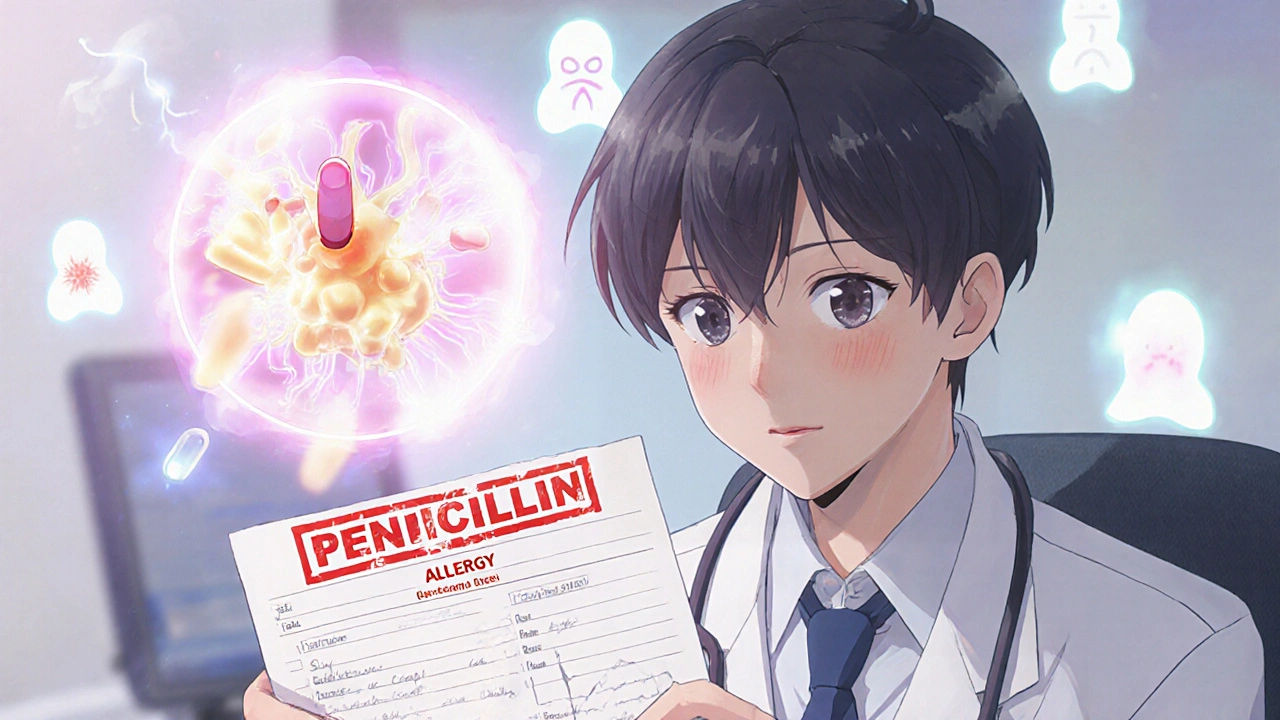
Antibiotic Allergy: What It Is, How It Happens, and What to Do
When your body mistakes an antibiotic allergy, an immune system overreaction to a medication meant to kill bacteria. Also known as drug allergy to antibiotics, it’s not the same as nausea or a stomach upset—it’s your immune system attacking the drug like a virus. This isn’t rare: about 10% of people say they’re allergic to penicillin, but less than 1% actually are. Many confuse side effects—like diarrhea or a mild rash—with true allergies, which can lead to worse treatment choices down the line.
True antibiotic allergy, an immune system overreaction to a medication meant to kill bacteria. Also known as drug allergy to antibiotics, it’s not the same as nausea or a stomach upset—it’s your immune system attacking the drug like a virus. isn’t just a rash—it can mean swelling in the throat, trouble breathing, or a sudden drop in blood pressure. penicillin allergy, the most common type of antibiotic allergy, often triggered by amoxicillin or ampicillin is the usual suspect, but sulfa drugs, cephalosporins, and even tetracyclines can cause reactions too. What’s tricky is that some people outgrow their allergy over time, while others develop it after years of safe use. And here’s the catch: if you’re labeled allergic without proper testing, doctors might skip the best, safest antibiotics and use broader-spectrum ones instead—increasing your risk of resistant infections.
Not every reaction is an allergy. A medication side effect, a predictable, non-immune response to a drug, like nausea, dizziness, or yeast infection is common and usually harmless. But if you break out in hives, your lips swell, or you feel like you can’t breathe after taking an antibiotic, that’s an emergency. Skin tests and blood tests can confirm or rule out a true allergy—something most people never get tested for. Even if you think you’re allergic, getting checked could open up better treatment options.
What you’ll find below are real stories and facts about how antibiotic allergies show up, how they’re misdiagnosed, and what you can do to protect yourself. From how generic meds can trigger reactions due to inactive ingredients, to how side effects get mistaken for allergies, these posts give you the tools to speak up, ask the right questions, and avoid unnecessary risks. No fluff. Just what matters when your next prescription could mean the difference between healing and harm.