
How to Store High-Risk Medications to Reduce Overdose Risk
Learn how to safely store high-risk medications like opioids and benzodiazepines to prevent accidental overdoses in children and others. Simple, science-backed steps can save lives.
When you pick up a prescription bottle, the cap you twist and push down isn’t just for show—it’s a child-resistant cap, a specially designed closure that makes it hard for young children to open medicine containers but still manageable for adults. Also known as childproof caps, these are required by law in the U.S. for most oral prescription and over-the-counter drugs. They’re not foolproof, but they’ve helped cut accidental poisonings in kids under five by more than 80% since the 1970s.
These caps work through a simple but clever mechanism: you have to press down while turning to open them. That’s easy for an adult with hand strength and coordination, but nearly impossible for a toddler who only knows how to twist. But here’s the catch—medication safety, the practice of preventing accidental ingestion, misuse, or errors with drugs doesn’t end at the cap. A lot of parents think if the cap is child-resistant, the bottle is safe to leave on the counter. It’s not. Kids are clever. They learn fast. They watch. They copy. One study found that nearly 60% of accidental ingestions happened because the cap was left loose, the bottle was within reach, or someone forgot to re-engage the safety mechanism after taking a dose.
That’s why pharmaceutical packaging, the entire design of how medicines are stored and labeled to protect users matters so much. It’s not just the cap. It’s where you store the bottle, whether you use a locked cabinet, if you keep meds in original containers, and whether you’re using blister packs or pill organizers that remove the safety features. Even the smallest mistake—like leaving a bottle on a nightstand after giving a nighttime dose—can turn a safety feature into a hazard.
And it’s not just about kids. Seniors with arthritis might struggle with these same caps. That’s why some pharmacies offer easy-open versions—but only with a doctor’s note. It’s a balance: protect the vulnerable without making medication harder for those who need it. The best solution? Always put the cap back properly. Store meds up and away, not in a purse or a drawer kids can reach. And if you’re ever unsure whether a cap is working right, ask your pharmacist. They’ve seen the mistakes, the close calls, and the tragedies that happen when safety is taken for granted.
Below, you’ll find real stories and practical guides from people who’ve dealt with medication safety in homes, hospitals, and schools. From how to check a prescription label to what to pack in an emergency go-bag, these posts show you how to turn simple habits into life-saving routines. Because when it comes to keeping medicine out of the wrong hands, details matter more than you think.
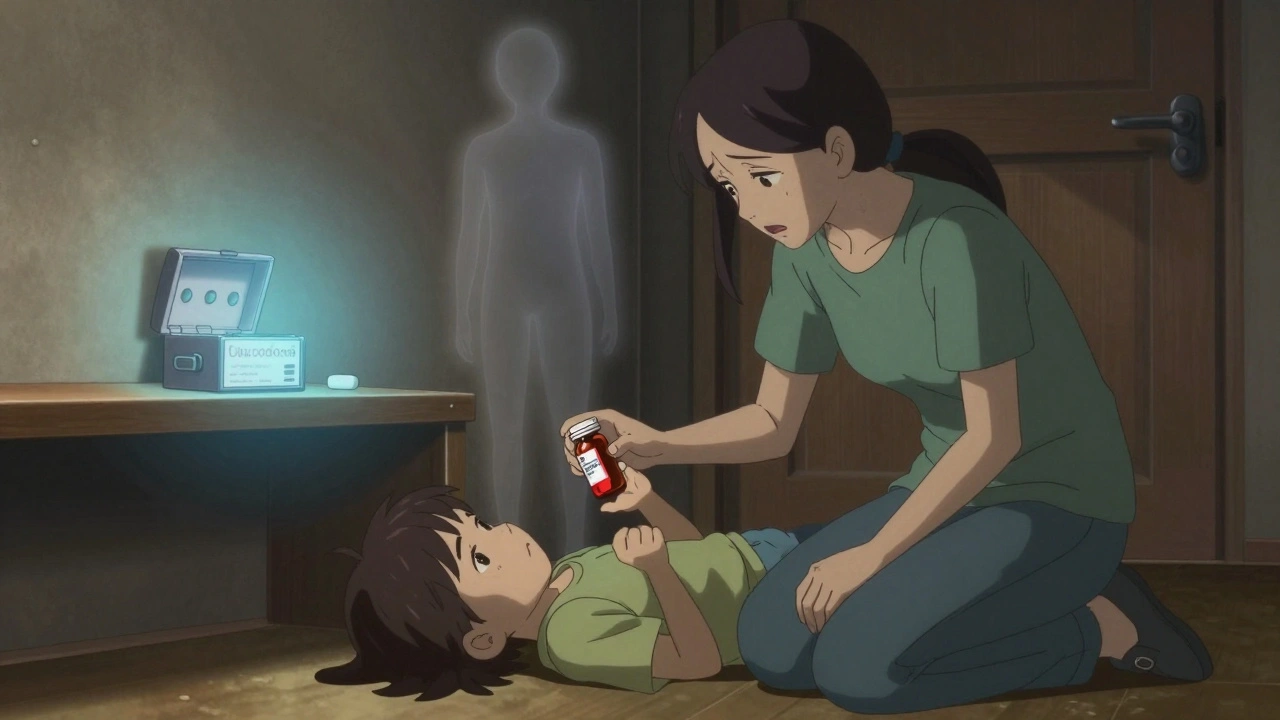
Learn how to safely store high-risk medications like opioids and benzodiazepines to prevent accidental overdoses in children and others. Simple, science-backed steps can save lives.