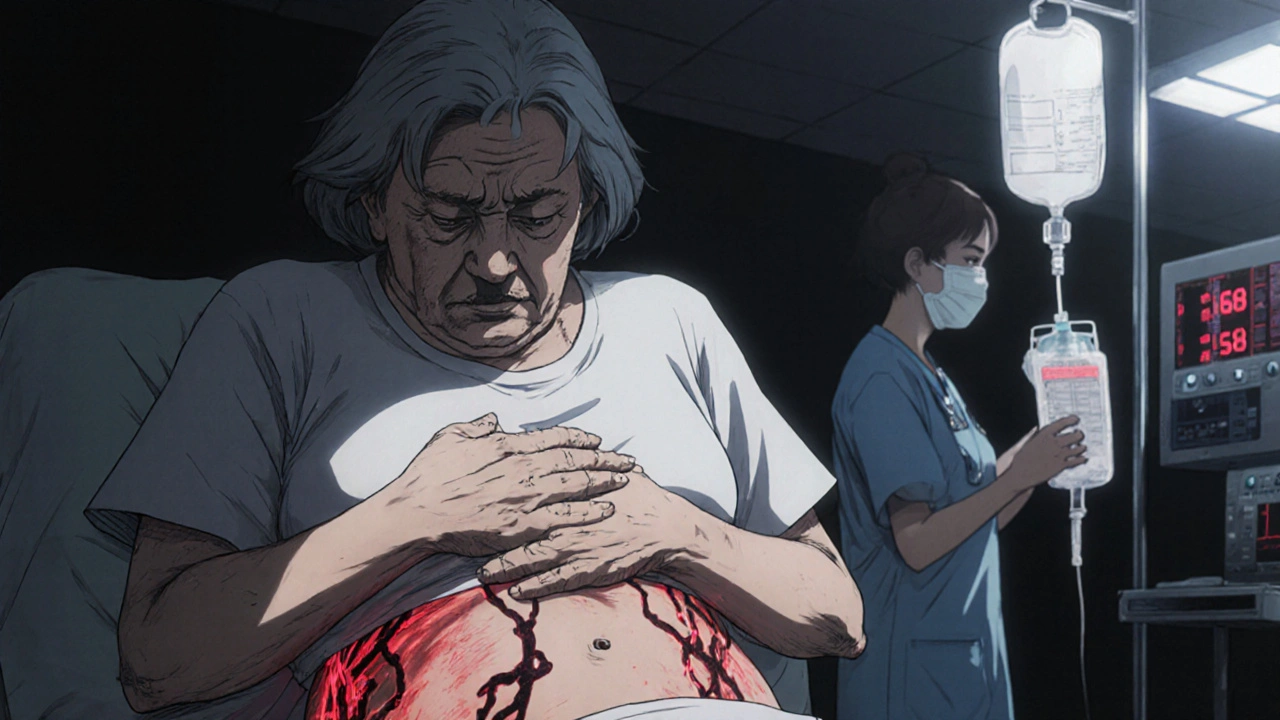
Fournier's gangrene: Causes, risks, and what you need to know
When Fournier's gangrene, a rare and aggressive form of necrotizing fasciitis that destroys skin, fat, and muscle tissue around the genitals and anus. Also known as necrotizing fasciitis of the perineum, it’s not just a serious infection—it’s a medical emergency that can kill within days if ignored. This isn’t something you catch from casual contact. It starts when bacteria—often a mix of E. coli, anaerobes, and staph—invade through a small cut, abscess, or even a minor tear in the genital area. People with diabetes, weakened immune systems, or recent surgery are most at risk, but it can strike anyone.
What makes Fournier's gangrene so dangerous is how fast it spreads. Unlike a typical skin infection, it doesn’t just swell or turn red—it kills tissue from the inside out. You might feel intense pain, swelling, or a crackling sensation under the skin as gas builds up. Fever and confusion follow fast. By the time the skin turns black or purple, the infection is already deep. Hospitals treat it with emergency surgery to cut away dead tissue, plus strong antibiotics and sometimes hyperbaric oxygen therapy. Delay even a few hours, and survival chances drop sharply.
It’s not common, but when it happens, it’s brutal. About 20% of cases end in death, even with treatment. That’s why knowing the signs matters—not just for patients, but for anyone who might notice sudden, worsening pain in the groin or genital area. Many people mistake it for a bad boil or urinary infection and wait too long. If you’ve had recent trauma, surgery, or a chronic condition like diabetes and notice unusual swelling or discoloration down there, don’t wait. Go to the ER.
The posts below cover real-world cases, treatment challenges, and how antibiotics and surgical care have evolved to fight this deadly infection. You’ll find insights on why some patients respond better than others, how underlying conditions like diabetes make recovery harder, and what doctors look for when deciding whether to amputate. This isn’t theoretical—it’s life-or-death medicine, explained plainly.