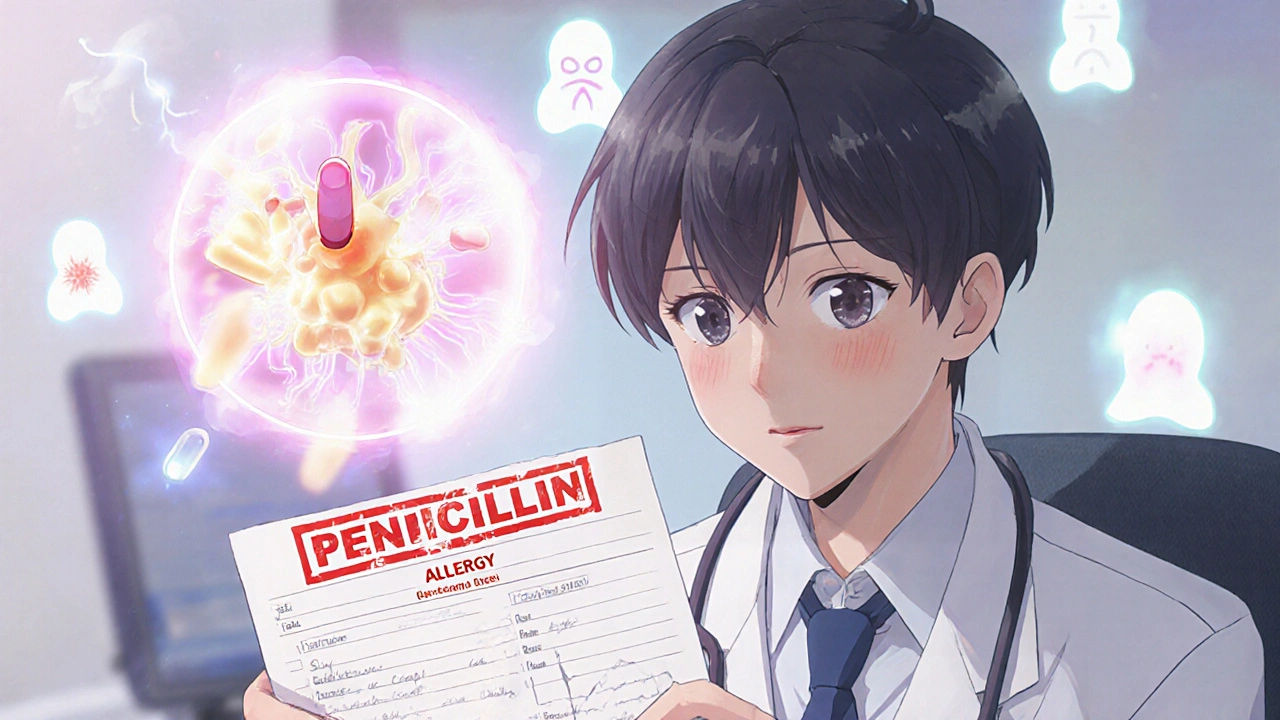
Penicillin Side Effects: What You Need to Know Before Taking It
When you take penicillin, a widely used antibiotic that kills bacteria by breaking down their cell walls. Also known as benzylpenicillin, it’s been saving lives since the 1940s—but it’s not harmless. About 10% of people say they’re allergic to it, but fewer than 1% actually are. Still, even a small risk matters when the reaction can be deadly.
Allergic reactions, the most serious concern with penicillin. Also known as penicillin hypersensitivity, these can start with a rash or itching but quickly turn into swelling, trouble breathing, or anaphylaxis—a medical emergency that needs immediate treatment. If you’ve ever had a reaction before, don’t guess. Tell every doctor and pharmacist. Even if it was years ago. Penicillin allergies can fade over time, but you need testing to know for sure. Then there are the less scary but still annoying side effects: diarrhea, nausea, or yeast infections. These happen because penicillin doesn’t just kill bad bacteria—it wipes out the good ones too, especially in your gut. Some people get stomach cramps or loose stools and think it’s just a virus. It might be the drug.
Cross-reactivity, the risk that other beta-lactam antibiotics trigger the same reaction. Also known as penicillin family drugs, this includes amoxicillin, ampicillin, and even some cephalosporins. If you’re truly allergic to penicillin, your body might react to these too. That’s why doctors don’t just switch you to another antibiotic—they check your history first. And if you’ve been told you’re allergic but never had a confirmed test, you might be avoiding safe, effective meds for no reason. Side effects aren’t always about allergies. Some people get headaches, dizziness, or even changes in taste. Rarely, penicillin can affect kidney function or cause blood cell problems. These are uncommon, but they show up in medical records—and they’re why you should never take leftover penicillin from an old prescription.
What you find below isn’t just a list of symptoms. These posts dig into real cases: why some people react to penicillin and others don’t, how to tell if it’s a true allergy or just a coincidence, and what to do when side effects make you stop taking your meds. You’ll see how common side effects impact adherence, how to talk to your pharmacist about alternatives, and why even a simple rash shouldn’t be ignored. This isn’t theory. It’s what people actually experience—and what works when things go wrong.